
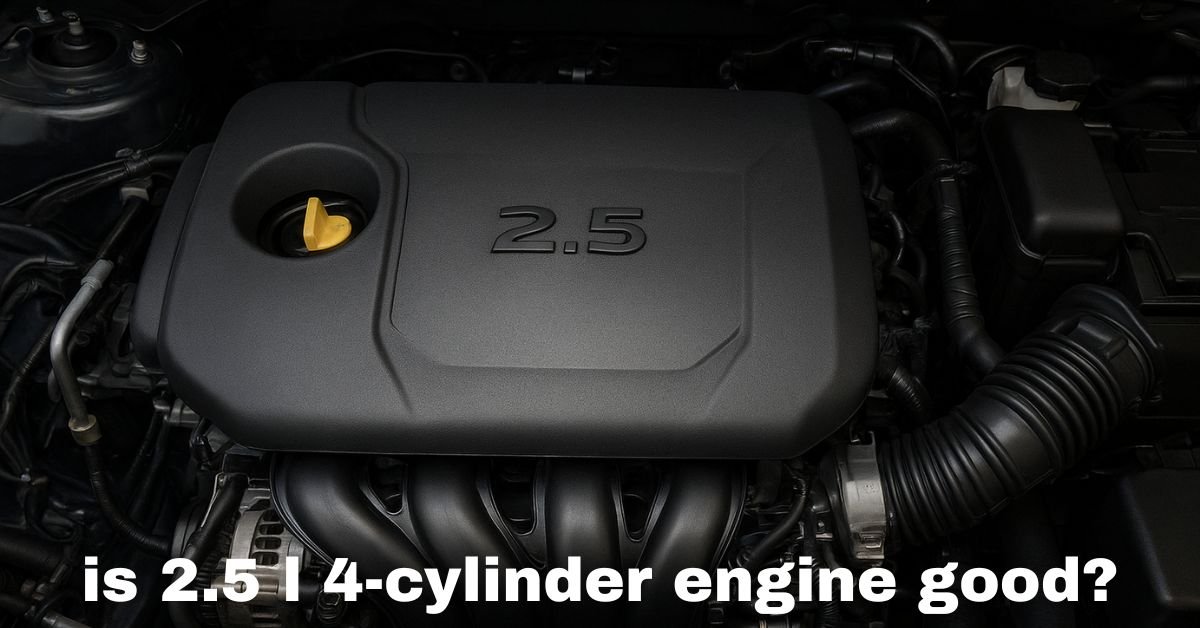
When shopping for a new car, you’ll often see engine specifications like 2.0L, 2.5L, or 3.0L, and the number of cylinders — typically 4, 6, or 8. One of the most common modern setups, especially in sedans, SUVs, and even some trucks, is the 2.5-liter 4-cylinder engine. But is it really good? Let’s take a closer look at its performance, efficiency, reliability, and overall value to help you decide.
Is a 2.5L 4-Cylinder Engine Good? Here’s What You Need to Know
Understanding What a 2.5L 4-Cylinder Engine Means
Before judging if a 2.5L 4-cylinder engine is good, let’s break down what that actually means.
- 2.5L refers to the engine displacement, or the total volume of all the cylinders in the engine. It measures how much air and fuel the engine can burn in one full cycle.
- 4-cylinder means the engine has four combustion chambers (or cylinders), which is the most common configuration for small to mid-sized vehicles.
Generally, a 2.5L 4-cylinder engine sits between smaller 1.5L–2.0L engines and larger 3.0L–4.0L V6 engines. It aims to offer a balance between power and fuel economy.
Performance: Power Without Excess
A 2.5L 4-cylinder engine typically produces between 170 to 210 horsepower and around 180 to 190 lb-ft of torque, depending on the manufacturer and tuning. That’s more than enough power for most daily driving needs — whether you’re commuting to work, overtaking on the highway, or carrying passengers and luggage.
For example:
- The Toyota Camry and RAV4 use a 2.5L 4-cylinder engine, delivering a good mix of responsiveness and efficiency.
- The Mazda CX-5 and Mazda 6 also use similar engines that feel sporty and refined.
If you’re not looking to tow heavy loads or race on a track, a 2.5L engine provides smooth and consistent power for most lifestyles.
Fuel Efficiency: One of Its Strongest Advantages
Fuel economy is where a 2.5L 4-cylinder shines. Compared to V6 or V8 engines, the 4-cylinder design uses less fuel because it burns smaller amounts per cycle and has fewer moving parts.
Most 2.5L engines today are equipped with direct fuel injection, variable valve timing, and sometimes turbocharging — technologies that boost performance while keeping fuel consumption low.
In real-world numbers:
- A midsize sedan with a 2.5L engine can get around 28–35 miles per gallon (mpg) combined.
- Compact SUVs often average 25–30 mpg, which is excellent for vehicles of their size.
That means fewer trips to the gas station and lower running costs over time.
Reliability: Proven and Durable
One reason car manufacturers love the 2.5L 4-cylinder engine is its simplicity and reliability. Because it has fewer parts than a 6- or 8-cylinder engine, there’s less that can go wrong. Many of these engines can last over 200,000 miles with proper maintenance.
Toyota’s 2.5L Dynamic Force engine, for example, is well-known for its longevity and minimal mechanical issues. Mazda’s SkyActiv 2.5L engine is also praised for being smooth, efficient, and dependable over the years.
Of course, reliability still depends on regular oil changes, timely servicing, and quality fuel, but overall, a 2.5L 4-cylinder engine is built to last.
Drawbacks to Consider
No engine is perfect. While a 2.5L 4-cylinder offers great efficiency and reliability, it has a few trade-offs:
- Not ideal for heavy towing: It can struggle with large trailers or boats compared to a V6 or V8.
- Less power for enthusiasts: If you crave strong acceleration or sporty performance, you might find it modest.
- Noise at high RPMs: Some non-turbo 4-cylinder engines can sound a bit coarse when pushed hard.
However, for everyday driving, these drawbacks are minor and often unnoticeable.
Verdict: A Smart, Balanced Choice
So, is a 2.5L 4-cylinder engine good?
Absolutely — yes. It strikes a near-perfect balance between power, fuel efficiency, and reliability. It’s ideal for drivers who want a dependable, affordable, and economical engine without sacrificing too much performance.
Whether you drive a sedan, compact SUV, or light-duty truck, a 2.5L 4-cylinder engine can easily handle your daily needs. It’s one of those “sweet spot” engines that blends modern technology with practical performance — and that’s why it’s found in so many of today’s best-selling vehicles.