
When it comes to maintaining your vehicle, one of the most overlooked yet essential components is the transmission fluid. This fluid plays a critical role in keeping your car’s transmission system running smoothly, ensuring that gears shift efficiently and the vehicle performs at its best. But one common question drivers often have is: how much transmission fluid does a car actually hold? The answer depends on several factors — including the type of transmission, the make and model of your vehicle, and whether you’re performing a simple top-off or a full fluid change.
How Much Transmission Fluid Does a Car Hold?
Understanding the Role of Transmission Fluid
Before diving into the numbers, it’s important to understand why transmission fluid matters. Transmission fluid acts as both a lubricant and coolant for the transmission system. It reduces friction between moving parts, keeps the internal components clean, and helps prevent overheating. In automatic transmissions, the fluid also serves as a hydraulic fluid, enabling smooth gear shifts. Without the right amount or type of fluid, your transmission can overheat, slip, or even fail — leading to costly repairs.
Average Transmission Fluid Capacity
The amount of transmission fluid your car needs depends largely on the type of transmission:
- Automatic Transmission:
Most modern automatic cars hold between 8 to 12 quarts (approximately 7.5 to 11 liters) of transmission fluid. Some larger vehicles, such as SUVs or trucks, may require even more — up to 15 or 16 quarts. - Manual Transmission:
Manual transmissions typically require less fluid, usually around 3 to 5 quarts (about 2.8 to 4.7 liters). Because manual gearboxes don’t rely on fluid pressure to shift gears, they don’t need as much fluid as automatic ones. - Continuously Variable Transmission (CVT):
CVT systems are a bit different. They can hold anywhere from 6 to 13 quarts, depending on the manufacturer and design. CVTs use a special type of transmission fluid that’s not interchangeable with regular automatic transmission fluid (ATF).
Top-Off vs. Full Fluid Change
Another factor that affects how much fluid you’ll need is whether you’re topping off or completely changing the transmission fluid.
- Top-off: If you’re just adding a little fluid to reach the correct level, you may only need half a quart to one quart. This is usually done when the fluid is slightly low due to minor leaks or evaporation over time.
- Full change or flush: A complete fluid change, often recommended every 30,000 to 60,000 miles (depending on your vehicle), requires replacing all the old fluid. This typically takes the full system capacity, which, again, ranges from 8 to 12 quarts for most vehicles.
How to Check Transmission Fluid Levels
Checking your transmission fluid regularly can help you avoid major transmission problems. For vehicles with a dipstick, the process is simple:
- Allow the engine to warm up after parking the vehicle on a flat surface.
- With the engine idling and the parking brake on, pull out the transmission dipstick.
- To check the level, clean it, put it back in, and then take it out once more.
- If the fluid is below the “Full” line, add the recommended type of transmission fluid gradually, checking the level as you go.
Many newer vehicles have sealed transmissions without a dipstick, which means fluid levels can only be checked or changed by a professional mechanic using specialized equipment.
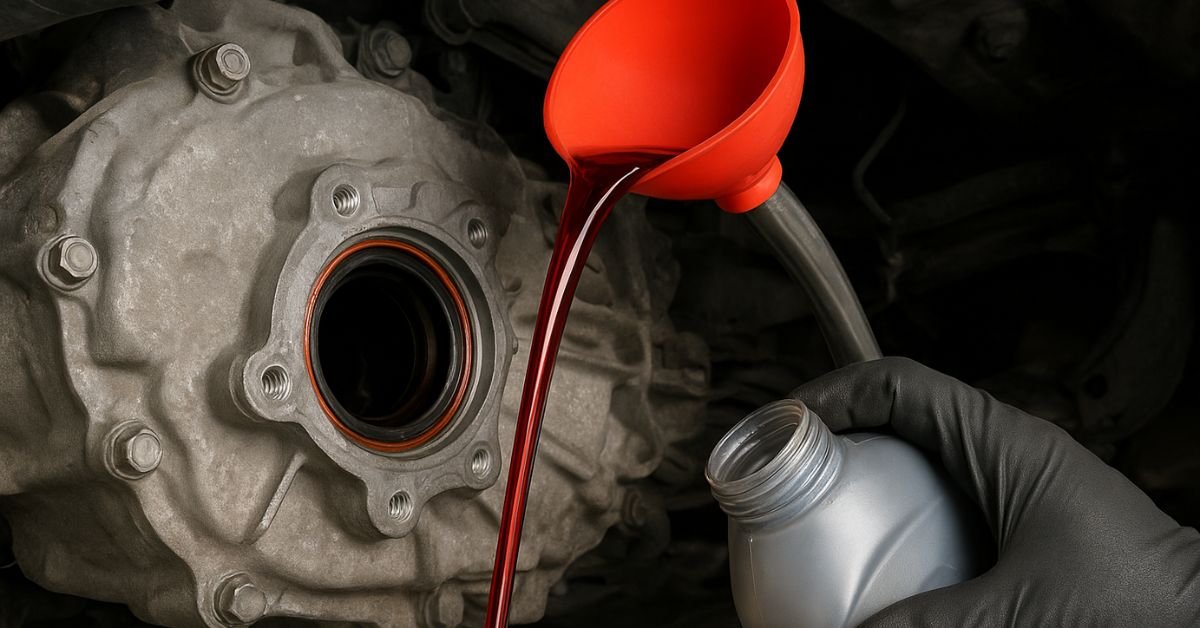
Signs Your Transmission Fluid Is Low
Low transmission fluid can cause noticeable problems in your vehicle’s performance. Here are some cautionary indicators to be aware of:
- Delayed or rough shifting
- Slipping gears
- Unusual whining or clunking noises
- Overheating transmission
- Transmission fluid leaks under your car
If you experience any of these symptoms, it’s best to check your fluid level or take your car to a trusted service center immediately.
Choosing the Right Transmission Fluid
Always consult your owner’s manual to determine the correct type of transmission fluid for your vehicle. Using the wrong kind of fluid can cause significant damage. Common types include Dexron, Mercon, and CVT-specific fluids, each formulated for specific transmission designs.
Final Thoughts
In short, the amount of transmission fluid your car holds varies, but here’s a quick summary:
- Automatic cars: 8–12 quarts on average
- Manual cars: 3–5 quarts
- CVTs: 6–13 quarts
Keeping your transmission fluid at the proper level — and ensuring it’s clean and in good condition — is one of the best ways to extend the life of your car’s transmission and maintain smooth, reliable performance on the road.