
The transmission is one of the most important and complex components of any vehicle. It transfers power from the engine to the wheels and allows your car or truck to change gears smoothly. When transmission problems occur, they can affect performance, fuel efficiency, and overall drivability. In severe cases, transmission failure can leave a vehicle completely inoperable and result in costly repairs.
Understanding what causes transmission problems can help vehicle owners recognize early warning signs, perform proper maintenance, and avoid expensive breakdowns. Below are the most common causes of transmission issues and how they impact your vehicle.
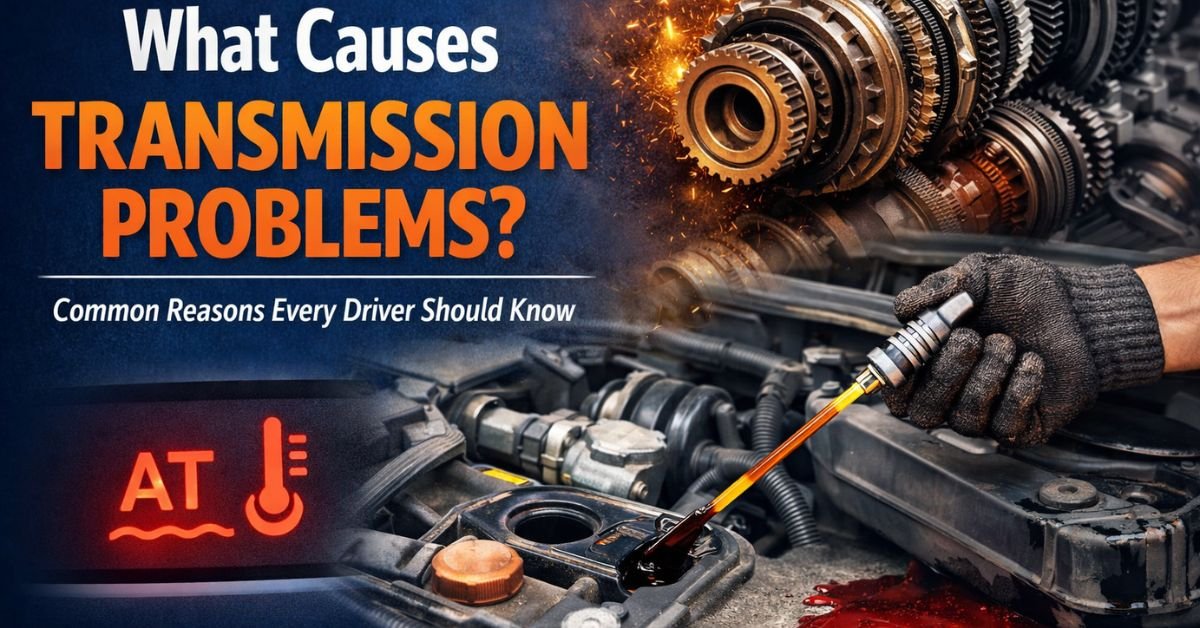
What Causes Transmission Problems? Common Reasons Every Driver Should Know
1. Low or Dirty Transmission Fluid
One of the leading causes of transmission problems is low, old, or contaminated transmission fluid. Transmission fluid lubricates internal components, helps control temperature, and provides hydraulic pressure for gear changes. When fluid levels are low or the fluid is dirty, the transmission cannot function properly.
Low fluid levels may be caused by leaks, poor maintenance, or improper servicing. Dirty fluid can result from heat, friction, and debris buildup over time. Symptoms often include slipping gears, delayed shifting, rough gear changes, or overheating.
Regularly checking and changing transmission fluid according to the manufacturer’s recommendations is one of the best ways to prevent transmission damage.
2. Overheating Transmission
Excessive heat is extremely harmful to a transmission. Overheating can break down transmission fluid, reduce lubrication, and damage internal seals and clutch packs. Heat is often caused by towing heavy loads, stop-and-go driving, poor cooling, or low fluid levels.
When a transmission overheats, drivers may notice a burning smell, warning lights, or erratic shifting. If overheating continues, it can lead to complete transmission failure. Installing a transmission cooler and maintaining proper fluid levels can help reduce heat-related issues.
3. Worn or Damaged Clutch Components
In manual transmissions, clutch wear is a common cause of problems. Over time, clutch plates, pressure plates, and release bearings wear down from regular use. Aggressive driving, riding the clutch, or frequent stop-and-go traffic can accelerate wear.
In automatic transmissions, clutch packs inside the transmission can also wear out. When these components fail, the vehicle may experience slipping, poor acceleration, or difficulty shifting gears.
Replacing worn clutch components early can prevent further damage to the transmission system.
4. Faulty Transmission Solenoids or Sensors
Modern vehicles rely on electronic components such as solenoids and sensors to control shifting. Transmission solenoids regulate fluid flow, while sensors provide data to the vehicle’s computer. When these components fail, shifting can become unpredictable or stop working altogether.
Common symptoms include delayed shifting, being stuck in one gear, harsh shifts, or the transmission going into “limp mode.” Electrical issues are often less expensive to fix than mechanical failures if addressed early.
5. Lack of Routine Maintenance
Skipping regular maintenance is a major contributor to transmission problems. Many drivers overlook transmission servicing because issues may not appear immediately. Over time, neglected maintenance leads to fluid degradation, debris buildup, and excessive wear.
Routine maintenance includes fluid changes, filter replacement, inspections, and addressing minor leaks. Preventive care can significantly extend the life of a transmission and reduce repair costs.
Must Read: Should I Replace Transmission Fluid After 200k Miles?
6. Leaking Seals and Gaskets
Transmission seals and gaskets keep fluid contained within the system. As vehicles age, these components can crack, harden, or wear out. Fluid leaks may develop around the transmission pan, input shaft, or output shaft.
Ignoring leaks can quickly lead to low fluid levels, overheating, and internal damage. Puddles under the vehicle or frequent fluid loss are signs that seals or gaskets need attention.
7. Aggressive or Improper Driving Habits
Driving habits play a major role in transmission health. Rapid acceleration, hard shifting, excessive towing, and sudden gear changes put additional stress on transmission components. Shifting between drive and reverse without fully stopping can also cause damage.
Smooth driving, allowing the transmission to warm up, and following towing guidelines can help reduce wear and tear.
8. Manufacturing Defects or Design Issues
Some transmission problems are caused by factory defects or design flaws. Certain models may experience recurring issues due to weak components or software problems. In these cases, recalls, technical service bulletins, or updated parts may be available.
Staying informed about known transmission issues for your vehicle model can help you address problems early.
Conclusion
Transmission problems can arise from many causes, including low fluid levels, overheating, worn components, electronic failures, and poor maintenance. While some issues develop over time, many transmission failures are preventable with regular care and attention.
By understanding what causes transmission problems, vehicle owners can recognize early warning signs, follow proper maintenance schedules, and drive responsibly to protect their investment. A well-maintained transmission not only improves performance but also saves money in the long run.