
Transmission maintenance is one of the most confusing topics for car owners. Among all the advice floating around, one question keeps coming up again and again: will a transmission flush hurt my car? Some mechanics strongly recommend it, while others warn that it can destroy an older transmission. So what’s the truth?
The short answer is: a transmission flush can help your car—or hurt it—depending on the condition of your transmission, the vehicle’s mileage, and how the service is done. Let’s break it down in simple terms so you can decide what’s best for your vehicle.
Will a Transmission Flush Hurt My Car?
What Is a Transmission Flush?
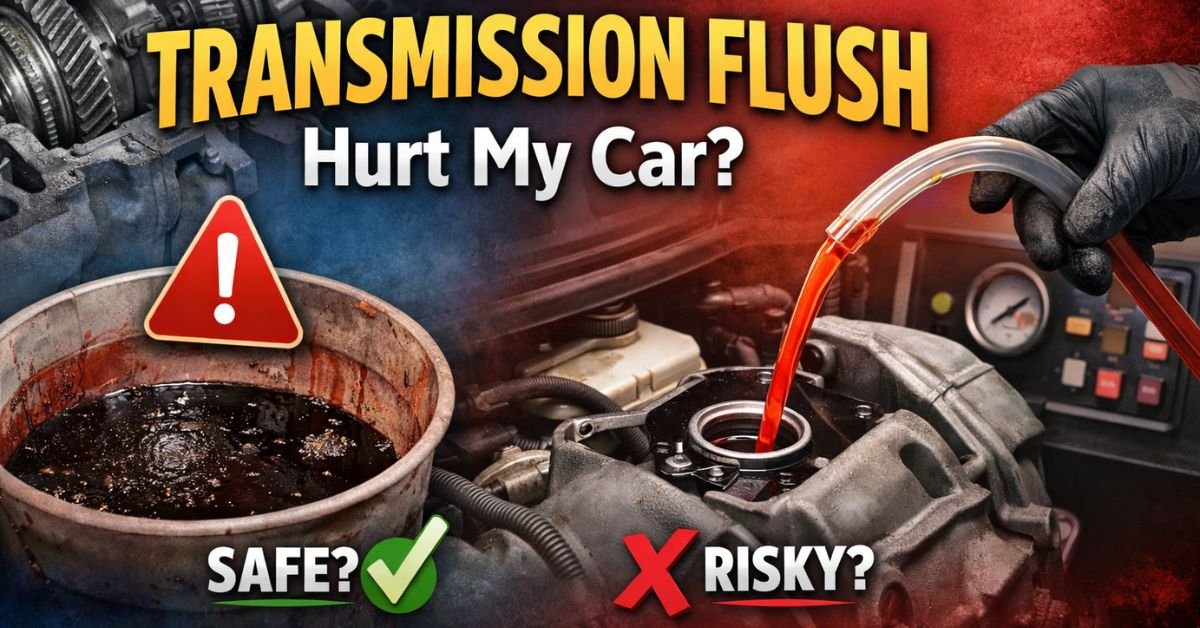
A transmission flush is a service where all old transmission fluid is removed and replaced with new fluid. Unlike a basic drain-and-fill (which replaces only 30–50% of the fluid), a flush uses a machine to push out nearly 100% of the old fluid, including fluid trapped in the torque converter and cooler lines.
Fresh transmission fluid helps with:
- Smooth gear shifting
- Cooling the transmission
- Reducing internal wear
- Cleaning away debris and contaminants
On paper, it sounds like a great idea. But real life isn’t always that simple.
Why Do People Say Transmission Flushes Are Dangerous?
The fear around transmission flushes usually comes from older or poorly maintained vehicles. Here’s why.
Over time, worn transmissions develop friction material, sludge, and metal particles inside. In some cases, this buildup actually helps the transmission keep working by increasing friction between worn parts.
When a flush is performed:
- The detergent action of new fluid can wash away that buildup
- Worn clutches may begin to slip
- Existing problems suddenly become noticeable
This is why some drivers say, “My transmission failed right after a flush.” In most cases, the transmission was already failing—the flush just exposed the problem, not caused it.
When a Transmission Flush Is Usually Safe
A transmission flush is generally safe and beneficial if:
- Your transmission is healthy
- No slipping
- No harsh or delayed shifts
- No burning smell
- The fluid is changed regularly
- Every 30,000–60,000 miles (or per manufacturer guidelines)
- Your vehicle has moderate mileage
- Typically under 100,000 miles with consistent maintenance
- The correct fluid is used
- Using the wrong transmission fluid can cause serious damage
For newer cars or well-maintained vehicles, a flush can extend transmission life and improve performance.
When a Transmission Flush Can Hurt Your Car
A transmission flush may be risky if:
- The transmission has very high mileage (150,000+ miles)
and has never had a fluid change - You’re already experiencing problems, such as:
- Slipping gears
- Rough shifting
- Delayed engagement
- Transmission warning lights
- Burnt or very dark fluid is present
This often indicates internal wear - A high-pressure flush machine is used improperly
Excessive pressure can damage seals and internal components
In these cases, a flush may accelerate failure—but again, it’s usually not the root cause.
Flush vs Drain and Fill: Which Is Better?
If you’re unsure about your transmission’s condition, a drain and fill is often the safer choice.
Transmission Flush
- Replaces almost all fluid
- Cleans internal passages
- Best for well-maintained transmissions
Drain and Fill
- Replaces only part of the fluid
- Lower risk for older transmissions
- Can be repeated over time to gradually refresh fluid
Many mechanics recommend multiple drain-and-fills instead of one flush for older vehicles.
Must Read: When to Check Transmission Fluid Hot or Cold?
What Do Manufacturers Say?
Some modern vehicles—especially those with sealed or “lifetime” transmissions—do not recommend flushing at all. Others strictly specify:
- Exact fluid type
- Service intervals
- Whether flushing is allowed
Always check:
- Owner’s manual
- Manufacturer service bulletins
Ignoring these guidelines can cause warranty or reliability issues.
Signs You Should NOT Flush Your Transmission
Avoid a transmission flush if you notice:
- Slipping during acceleration
- Hard or jerky shifts
- Grinding or whining noises
- Transmission overheating
- Metal debris in the fluid
In these cases, diagnosis is more important than fluid replacement.
Final Verdict: Will a Transmission Flush Hurt My Car?
A transmission flush will not hurt a healthy, well-maintained transmission.
However, it can cause problems in an already worn or neglected transmission.
Best practice:
- Maintain your transmission early and regularly
- Don’t wait until problems appear
- Choose drain-and-fill for older vehicles
- Always use the correct fluid and a trusted mechanic
In the end, a transmission flush is a maintenance tool—not a repair. It makes all the difference to know when and how to use it.