
Continuously Variable Transmissions (CVTs) have become increasingly popular in modern vehicles due to their smooth acceleration, improved fuel efficiency, and simpler driving experience. Automakers like Nissan, Toyota, Honda, Subaru, and others widely use CVT transmissions in many of their models. However, when problems arise, many car owners ask an important question: Can you rebuild a CVT transmission, or does it need complete replacement?
The short answer is yes, a CVT transmission can be rebuilt, but the reality is more complex than rebuilding a traditional automatic or manual transmission. Let’s explore how CVT transmissions work, whether rebuilding is practical, and what car owners should consider before making a decision.
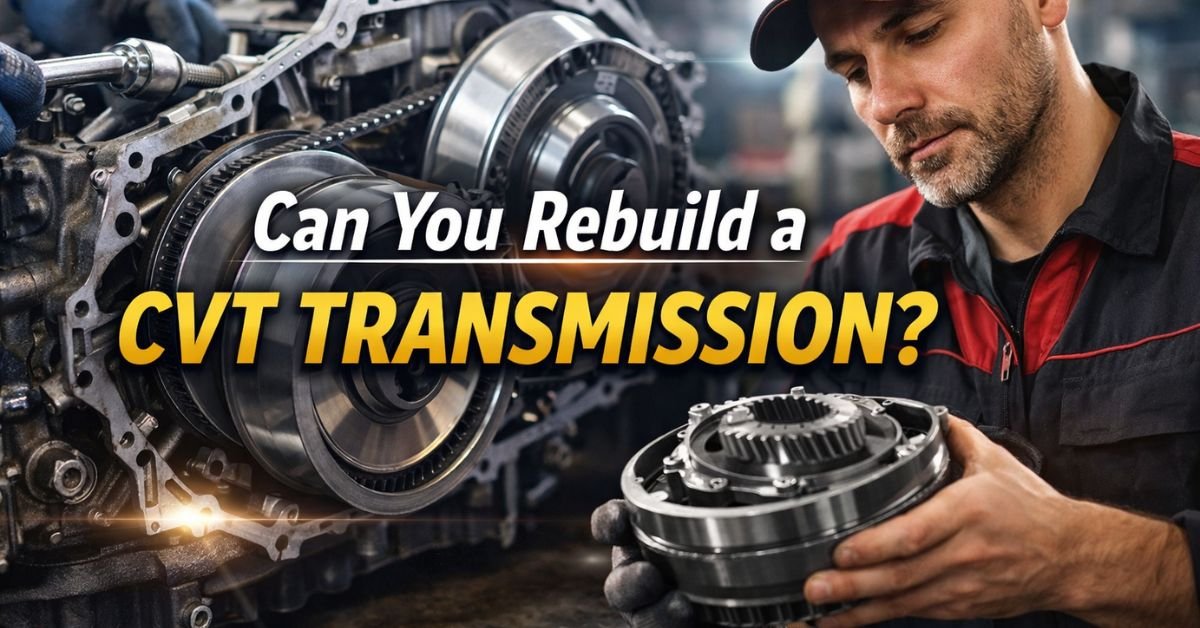
Can You Rebuild a CVT Transmission?
What Makes a CVT Transmission Different?
Unlike conventional automatic transmissions that use fixed gears, a CVT uses a belt or chain and a pair of variable-diameter pulleys to provide a seamless range of gear ratios. This design allows the engine to operate at optimal RPMs, improving fuel efficiency and delivering smoother power.
However, this unique design also makes CVTs more sensitive to wear, heat, and fluid quality. Components like the steel belt, pulleys, valve body, and internal bearings must operate with extreme precision. Even minor damage can cause slipping, whining noises, shuddering, or complete failure.
Can a CVT Transmission Be Rebuilt?
Technically, yes, a CVT transmission can be rebuilt, but it is not always straightforward or cost-effective. Rebuilding a CVT requires:
- Specialized tools
- Manufacturer-specific training
- Precise measurements and calibrations
- Access to hard-to-find replacement parts
Many general transmission shops do not rebuild CVTs because they lack the necessary expertise and equipment. As a result, CVT rebuilding is usually limited to specialized transmission shops or dealership service centers.
What Parts Are Replaced During a CVT Rebuild?
A CVT rebuild typically involves replacing or refurbishing several critical components, including:
- Steel belt or chain
- Primary and secondary pulleys
- Bearings and seals
- Valve body and solenoids
- Torque converter (in some designs)
- CVT fluid and filters
Because these parts are expensive and highly precise, the rebuild process must be done carefully. If even one component is slightly out of specification, the transmission may fail again.
Why Many Shops Recommend Replacement Instead
While rebuilding is possible, many mechanics recommend replacing the CVT transmission instead of rebuilding it. Here’s why:
- High Cost
Rebuilding a CVT can cost nearly as much as installing a remanufactured or used unit, often ranging from $3,000 to $6,000 or more. - Limited Warranty
Rebuilt CVTs often come with shorter warranties compared to factory remanufactured transmissions. - Parts Availability
Some CVT components are not sold individually by manufacturers, making full rebuilds difficult. - Risk of Repeat Failure
If the root cause—such as overheating or improper fluid—is not fully addressed, the rebuilt CVT may fail again.
Must Read: Can a Bad CV Joint Affect the Transmission?
When Is Rebuilding a CVT Worth It?
Rebuilding a CVT may make sense in certain situations, such as:
- The damage is limited (for example, valve body or bearing issues)
- The vehicle is still relatively new or valuable
- A certified CVT specialist is available
- Replacement options are significantly more expensive
In these cases, a rebuild can extend the life of the transmission and save money compared to buying a brand-new unit.
How to Extend the Life of a CVT Transmission
Whether rebuilt or replaced, proper maintenance is key to CVT longevity. Here are some tips:
- Use only the manufacturer-recommended CVT fluid
- Follow recommended fluid change intervals
- Avoid aggressive acceleration and towing beyond limits
- Address warning signs early, such as slipping or unusual noises
- To avoid overheating, keep the cooling system in good working order.
Final Thoughts
So, can you rebuild a CVT transmission? Yes—but it’s not always the best or easiest option. CVTs are complex, precision-based systems that require specialized knowledge to rebuild correctly. In many cases, replacement with a remanufactured unit may be more reliable and cost-effective. However, with the right technician and proper conditions, rebuilding a CVT transmission can be a viable solution.
Before making a decision, always consult a qualified transmission specialist who has experience working specifically with CVT systems. The right choice can save you time, money, and future headaches.