
Transmission overheating is one of the most serious problems a vehicle owner can face. Whether you drive an automatic or manual car, excessive transmission heat can lead to poor performance, expensive repairs, or even complete transmission failure. Many drivers don’t realize their transmission is overheating until warning signs appear—or worse, until damage has already occurred. Understanding what causes a transmission to overheat is the first step in preventing long-term issues and extending the life of your vehicle.
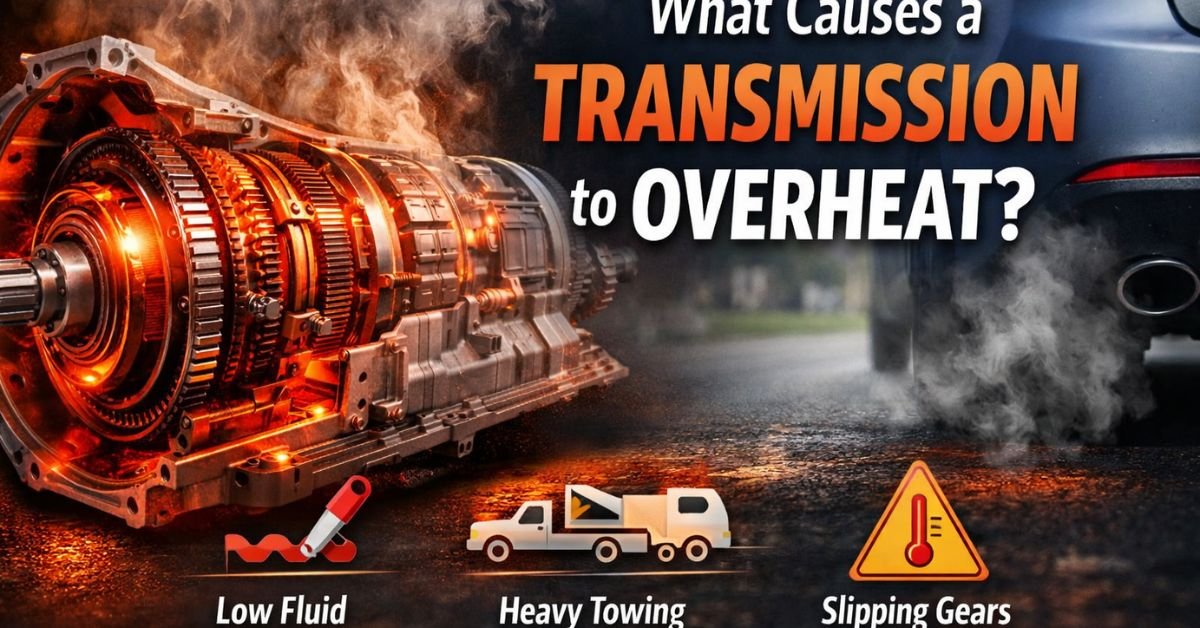
What Causes a Transmission to Overheat?
Why Transmission Temperature Matters
A transmission operates using fluid that lubricates, cools, and transfers power. Most automatic transmissions are designed to run optimally between 175°F and 200°F (80°C to 93°C). When temperatures rise above this range, transmission fluid begins to break down, losing its ability to protect internal components. Prolonged overheating can burn the fluid, damage seals, warp clutch plates, and lead to total transmission failure.
Common Causes of Transmission Overheating
1. Low or Old Transmission Fluid
One of the most common causes of transmission overheating is low transmission fluid. Fluid levels may drop due to leaks, improper servicing, or natural consumption over time. When fluid is low, the transmission cannot properly cool itself, causing temperatures to rise rapidly.
Old or contaminated transmission fluid can also cause overheating. Over time, fluid loses its lubricating and cooling properties, becoming thick, dirty, or burnt. This increases friction inside the transmission, generating excessive heat.
2. Heavy Towing or Overloading
Towing heavy trailers or carrying loads beyond your vehicle’s capacity places extra stress on the transmission. This forces it to work harder, generating more heat than normal. Vehicles not equipped with a transmission cooler are especially vulnerable to overheating during towing, mountain driving, or hauling heavy cargo.
Even short-distance towing can cause overheating if the load exceeds manufacturer recommendations.
3. Stop-and-Go Traffic
Frequent stop-and-go driving, especially in hot weather, can significantly raise transmission temperatures. Constant gear changes prevent the transmission from cooling efficiently. This is particularly common in urban driving or during long traffic jams where airflow is limited.
4. Faulty Transmission Cooler
Most modern vehicles use a transmission cooler, often integrated with the radiator, to regulate transmission temperature. If the cooler becomes clogged, damaged, or blocked by debris, it cannot effectively dissipate heat. A malfunctioning cooler allows temperatures to rise quickly, even under normal driving conditions.
5. Slipping Gears or Worn Components
Worn clutch plates, damaged bands, or slipping gears create extra friction inside the transmission. This friction generates excessive heat, accelerating fluid breakdown and component wear. Gear slipping is not only a symptom of overheating but also a cause, creating a dangerous cycle of rising temperatures and internal damage.
6. Aggressive Driving Habits
Hard acceleration, frequent rapid gear changes, and aggressive driving styles increase transmission workload. High RPM shifts and sudden stops force the transmission to operate under stress, producing more heat than it can safely manage over time.
7. Blocked or Dirty Transmission Filter
The transmission filter keeps dirt, metal shavings, and debris out of the fluid. If the filter becomes clogged, fluid flow is restricted, preventing proper cooling and lubrication. Restricted fluid flow leads directly to overheating and internal wear.
8. Hot Weather Conditions
Extreme ambient temperatures can push a transmission beyond its cooling limits. In very hot climates, the cooling system has to work harder, especially if the vehicle is idling, towing, or driving uphill. While heat alone may not cause overheating, it greatly increases the risk when combined with other factors.
Must Read: Is Transmission Oil the Same as Engine Oil?
Signs Your Transmission Is Overheating
Recognizing early warning signs can prevent costly repairs. Common symptoms include:
- Burning smell from under the hood
- Delayed or hard shifting
- Slipping gears
- Transmission temperature warning light
- Unusual noises while shifting
- Dark or burnt-smelling transmission fluid
If you notice any of these signs, stop driving and have the transmission inspected immediately.
How to Prevent Transmission Overheating
Preventing overheating is often easier and cheaper than repairing damage. Here are a few practical tips:
- Check and change transmission fluid regularly
- Fix leaks as soon as they appear
- Avoid towing beyond recommended limits
- Install an auxiliary transmission cooler if you tow often
- Drive smoothly and avoid aggressive acceleration
- Keep the cooling system and radiator in good condition
Final Thoughts
Transmission overheating is a serious issue that can shorten the lifespan of your vehicle if ignored. Low or old fluid, heavy loads, faulty coolers, aggressive driving, and worn components are among the most common causes. By understanding these factors and performing regular maintenance, you can keep your transmission running at safe temperatures and avoid costly repairs.
Taking care of your transmission today ensures reliable performance and peace of mind for many miles ahead.