
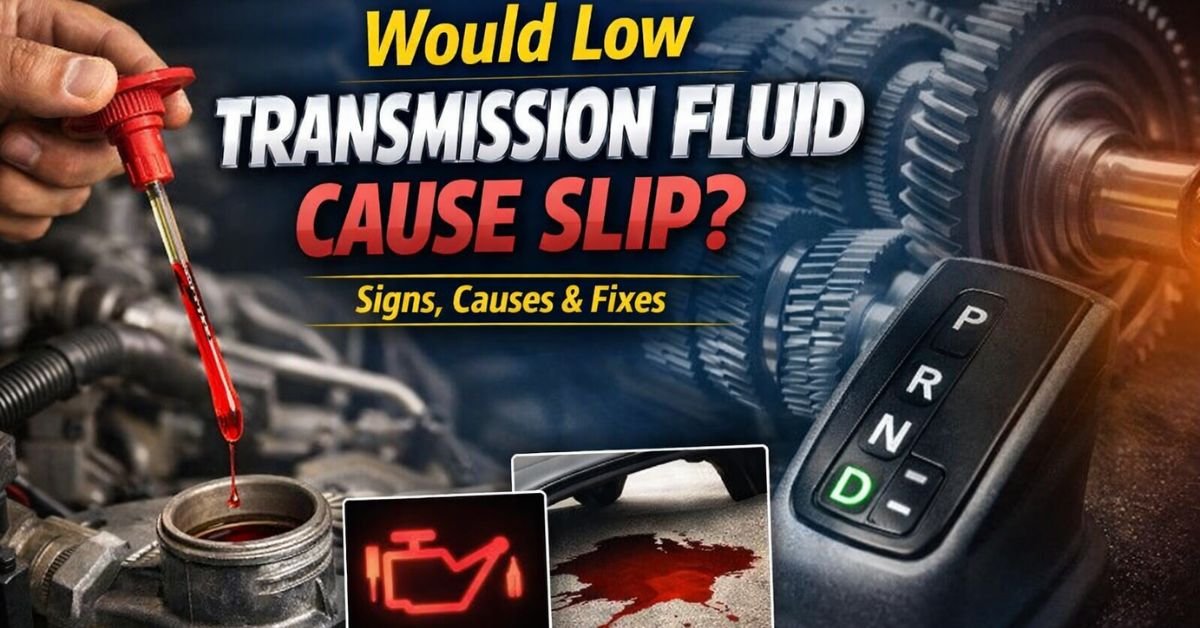
Transmission problems are among the most common and costly issues vehicle owners face. One question that frequently comes up is: would low transmission fluid cause slipping? The short answer is yes, low transmission fluid is one of the leading causes of transmission slipping. However, to fully understand why this happens, it’s important to know how transmission fluid works, the symptoms of low fluid levels, and what steps you should take if you suspect a problem.
Would Low Transmission Fluid Cause Slip?
What Is Transmission Fluid and Why Does It Matter?
For your car to run smoothly, transmission fluid is essential. It serves several essential functions, including:
- Lubricating internal transmission components
- Providing hydraulic pressure for gear changes
- Cooling the transmission system
- Preventing wear, corrosion, and overheating
In automatic transmissions, fluid pressure is what allows gears to engage properly. When the fluid level is low, the transmission cannot generate enough pressure, which directly affects its ability to shift gears smoothly.
Can Low Transmission Fluid Cause Slipping?
Yes, low transmission fluid can definitely cause slipping. Transmission slipping occurs when the vehicle unexpectedly changes gears, hesitates while accelerating, or struggles to stay in gear. This happens because insufficient fluid disrupts the hydraulic pressure needed to keep gears engaged.
When fluid levels drop too low, metal components may not receive adequate lubrication. This increases friction and heat, which can worsen slipping and lead to more serious internal damage if left unaddressed.
Common Symptoms of Low Transmission Fluid
Recognizing the early signs of low transmission fluid can help prevent expensive repairs. Some of the most common symptoms include:
- Delayed or Hesitant Gear Shifts
You may notice a pause when shifting from park to drive or when changing gears while driving. - Transmission Slipping
The engine may rev higher than normal without a corresponding increase in speed, indicating the transmission is not staying in gear. - Unusual Noises
Whining, humming, or grinding sounds can occur due to lack of proper lubrication. - Overheating Transmission
Low fluid levels reduce the transmission’s ability to cool itself, leading to overheating. - Warning Lights
In modern vehicles, a transmission or check engine light may turn on when a problem is detected. - Burning Smell
Overheated or degraded transmission fluid can produce a strong burning odor.
What Causes Low Transmission Fluid?
Several factors can lead to low transmission fluid levels, including:
- Leaks: Cracked seals, damaged transmission pans, or loose drain plugs can cause fluid to leak.
- Lack of Maintenance: Over time, fluid can degrade or burn off if it’s not replaced according to the manufacturer’s schedule.
- Overheating: Excessive heat can break down transmission fluid faster than normal.
- Improper Servicing: Incorrect fluid levels after maintenance can also cause problems.
Is It Safe to Drive with Low Transmission Fluid?
Driving with low transmission fluid is not recommended. While the vehicle may still move initially, continued driving can cause serious damage, such as worn clutch plates, damaged gears, or complete transmission failure. What starts as a simple fluid top-up could turn into a costly transmission rebuild if ignored.
How to Check Transmission Fluid Level
For vehicles equipped with a transmission dipstick, checking the fluid is relatively simple:
- Park the car on level ground.
- Allow the engine to achieve its typical operating temperature after starting it.
- Shift through all gears, then return to park.
- Take out the dipstick, clean it, put it back in, and measure the level.
The fluid should be within the recommended range and appear clean (usually red or pink). Dark, burnt-smelling fluid indicates a problem.
Note: Some modern vehicles have sealed transmissions, which require professional inspection.
Must Read: What Is the Transmission in a 2009 Ford Explorer?
How to Fix Transmission Slipping Caused by Low Fluid
If low fluid is the cause, the solution may be straightforward:
- Top up the transmission fluid with the manufacturer-recommended type.
- Repair any leaks to prevent the problem from recurring.
- Replace old or contaminated fluid if it has degraded.
However, if slipping continues after correcting the fluid level, internal transmission damage may already exist, and professional diagnosis will be necessary.
Preventing Transmission Problems
The secret to prolonging the life of your transmission is preventive maintenance. Here are a few tips:
- Check transmission fluid regularly
- Follow the recommended service intervals
- Address leaks immediately
- Avoid aggressive driving and overheating
- Pay attention to warning signs
Conclusion
So, would low transmission fluid cause slip? Absolutely. Low transmission fluid disrupts proper lubrication and hydraulic pressure, making slipping one of the earliest and most noticeable symptoms. Ignoring this issue can lead to severe and expensive transmission damage. By checking fluid levels regularly and addressing problems early, you can protect your vehicle’s transmission and ensure smooth, reliable performance for years to come.