
When it’s time to replace your vehicle’s brake pads, many drivers wonder whether bleeding the brakes is necessary. Brake maintenance is essential for safety, and understanding what steps are truly required can save you time, money, and frustration. So, do you really need to bleed the brakes when changing pads? The answer depends on the situation. Let’s break it down in simple terms.
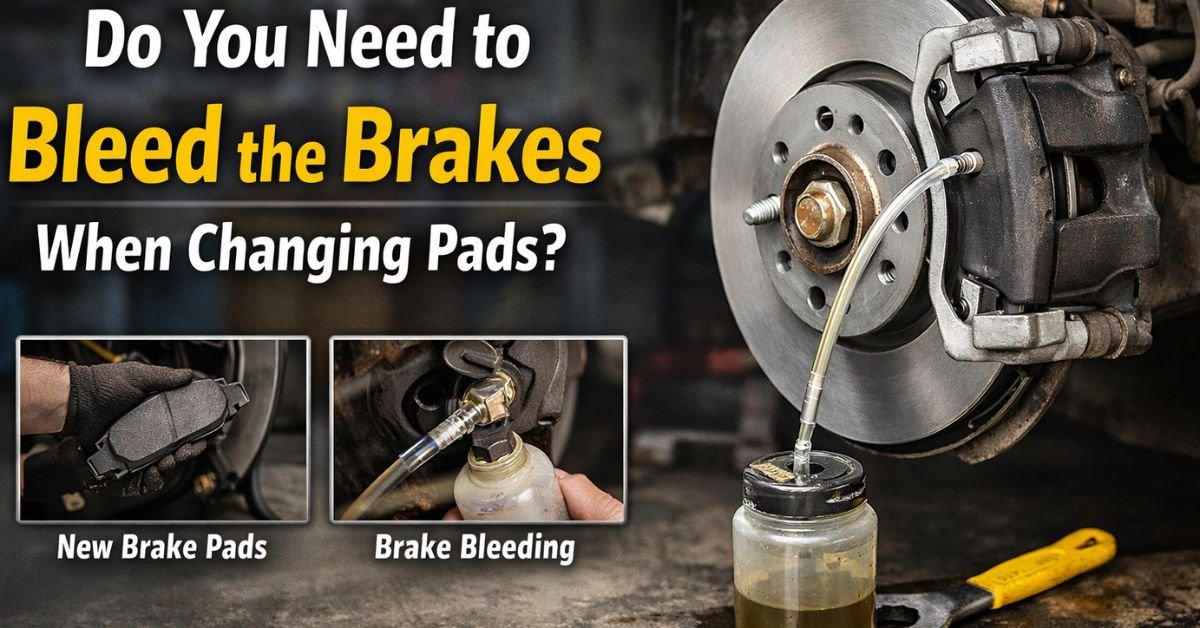
Do You Need to Bleed the Brakes When Changing Pads?
What Does Bleeding Brakes Mean?
The act of eliminating air bubbles from the brake lines is known as bleeding the brakes. Your braking system relies on hydraulic pressure created by brake fluid. When you press the brake pedal, fluid transfers that pressure to the brake calipers, causing the pads to clamp onto the rotors.
Air, unlike fluid, can be compressed. If air enters the brake lines, it reduces braking efficiency and causes a soft or spongy brake pedal. Bleeding removes this trapped air and restores proper brake performance.
Do You Always Need to Bleed Brakes When Changing Pads?
In most cases, you do NOT need to bleed the brakes when simply changing brake pads. A standard brake pad replacement does not require opening the brake system. Since no air enters the lines, bleeding is usually unnecessary.
If you replace your pads correctly without disconnecting brake hoses or opening bleeder valves, your hydraulic system remains sealed. As a result, no air gets inside, and bleeding isn’t required.
When Should You Bleed the Brakes?
Although bleeding isn’t always necessary, there are certain situations where it becomes important:
1. If Brake Lines Were Opened
If you disconnected brake hoses, loosened calipers with fluid lines attached, or opened any part of the hydraulic system, air likely entered. In this case, bleeding is required.
2. If the Brake Pedal Feels Spongy
After changing pads, if your brake pedal feels soft, sinks to the floor, or lacks firmness, it’s a sign of air in the system. Bleeding will help restore normal pedal feel.
3. If You Replaced Brake Fluid
If you flushed or changed brake fluid during pad replacement, bleeding is necessary to remove air and old fluid.
4. If You Changed Calipers or Wheel Cylinders
Installing new brake calipers or wheel cylinders introduces air into the system. Bleeding is mandatory in this situation.
5. If Brake Fluid Level Dropped Too Low
If the master cylinder ran low on fluid during the job, air may have entered. Bleeding is required to fix this.
What Happens If You Skip Bleeding When It’s Needed?
Failing to bleed brakes when necessary can cause serious problems, including:
- Reduced stopping power
- Increased stopping distance
- Spongy brake pedal
- Unsafe driving conditions
- Risk of brake failure
The most crucial safety feature in your car is its brakes. Ignoring air in the lines puts you and others at risk.
How to Know If Your Brakes Need Bleeding
After changing your brake pads, test your brakes carefully. Look for these warning signs:
- Soft or mushy pedal
- Pedal going close to the floor
- Delayed braking response
- Brake warning light
- Uneven braking
If you notice any of these issues, bleeding the brakes is highly recommended.
Basic Brake Bleeding Methods
If bleeding is required, there are several common methods:
1. Manual Bleeding
This method requires two people. One presses the brake pedal while the other opens and closes the bleeder valve.
2. Vacuum Bleeding
A vacuum pump removes air and fluid through the bleeder valve.
3. Pressure Bleeding
A pressure bleeder pushes fluid through the system from the master cylinder.
Must Read: Are Detroit Axle Brakes Good?
4. Gravity Bleeding
Fluid flows naturally through open valves. This method takes longer but is simple.
Each method works, but pressure and vacuum bleeding are usually faster and more effective.
Tips When Changing Brake Pads
To avoid needing to bleed your brakes, follow these tips:
- Do not disconnect brake lines
- Keep the master cylinder cap closed
- Monitor brake fluid level
- Use a brake caliper tool properly
- Avoid spilling brake fluid
- Work carefully and cleanly
These steps help keep air out of the system.
Should You Bleed Brakes “Just in Case”?
Some people choose to bleed their brakes as preventive maintenance, even when it isn’t strictly required. This can be beneficial if:
- Your brake fluid is old
- Your pedal feels slightly soft
- Your vehicle hasn’t had brake service in years
Brake fluid absorbs moisture over time, which reduces performance. Bleeding and flushing every 2–3 years helps maintain strong braking.
Final Answer: Do You Need to Bleed Brakes When Changing Pads?
In most cases, no—you do not need to bleed the brakes when changing pads if the brake system remains sealed. A normal pad replacement does not introduce air.
However, you should bleed the brakes if:
- You opened brake lines
- The pedal feels soft
- You replaced fluid or calipers
- The master cylinder ran dry
When in doubt, checking pedal feel and brake performance is the best way to decide.
Conclusion
Brake pad replacement is a routine maintenance procedure that typically doesn’t involve bleeding. But knowing when bleeding is necessary can prevent dangerous braking problems. Always prioritize safety, inspect your brakes after installation, and don’t hesitate to bleed the system if something feels wrong.
Proper brake care ensures better performance, longer component life, and peace of mind every time you drive.