
Your vehicle’s braking system is one of the most important safety features, and the brake booster plays a key role in making sure you can stop easily and smoothly. Many drivers are unaware of this component until something goes wrong. If your brake pedal suddenly feels hard or your stopping distance increases, a failing brake booster could be the reason.
In this article, we’ll explain what a brake booster does, how it works, common signs of failure, and what you should do if you suspect it’s going bad.
How Can You Tell If a Brake Booster Is Bad? Signs, Symptoms, and What to Do
How Do Brake Boosters Operate?
A brake booster is a device that helps multiply the force you apply to the brake pedal. It uses vacuum pressure from the engine (or hydraulic pressure in some vehicles) to assist you when braking. This makes it easier to slow down or stop without having to press extremely hard on the pedal.
Most modern vehicles use a vacuum brake booster, which is located between the brake pedal and the master cylinder. When you press the brake pedal, the booster uses engine vacuum to increase braking power, giving you smooth and responsive braking.
Without a properly functioning brake booster, stopping your car would require much more physical effort, making driving unsafe and exhausting.
Common Signs of a Bad Brake Booster
Recognizing the warning signs early can help you avoid dangerous situations and expensive repairs. The most typical signs of a malfunctioning brake booster are listed below.
1. Hard or Stiff Brake Pedal
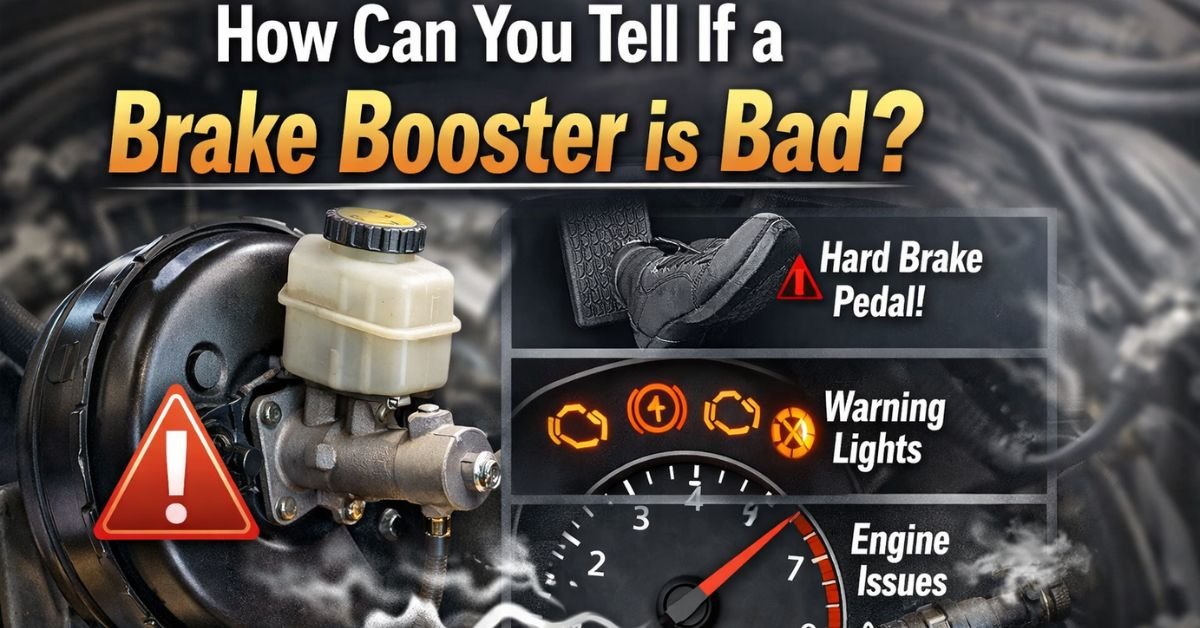
One of the most noticeable signs of a bad brake booster is a hard brake pedal. If you suddenly need to press much harder than usual to stop your car, the booster may not be providing enough assistance.
A stiff pedal usually means there is a vacuum leak or internal damage inside the booster. This is often the first sign drivers notice.
2. Increased Stopping Distance
If your vehicle takes longer to stop than before, your brake booster may be failing. Since the booster is not amplifying your pedal force properly, the braking system becomes less effective.
This can be especially dangerous in traffic or emergency situations, where quick stopping is essential.
3. Hissing or Whistling Noise
A leaking brake booster often produces a hissing or whistling sound when you press the brake pedal. This noise is caused by escaping air from a damaged diaphragm or vacuum hose.
If you hear this sound from under the dashboard or near the engine bay, it’s a strong sign that your booster has a vacuum leak.
4. Engine Performance Issues While Braking
A bad brake booster can affect engine performance because it shares vacuum with the engine. If the booster is leaking, it can disrupt the air-fuel mixture.
You may notice:
- Rough idling
- Engine stalling
- RPM fluctuations when braking
These issues happen because extra air is entering the engine through the faulty booster.
5. Brake Pedal Sinks or Feels Inconsistent
In some cases, a failing brake booster can cause the brake pedal to feel soft, sink slightly, or behave inconsistently. You may notice that braking feels different each time you press the pedal.
This can make driving unpredictable and unsafe.
6. Warning Lights on the Dashboard
Some modern vehicles have sensors that monitor braking performance. If the brake booster is malfunctioning, you may see warning lights such as:
- Brake warning light
- ABS light
- Check engine light
While these lights don’t always mean the booster is bad, they should never be ignored.
How to Check for a Bad Brake Booster
You can perform a simple test at home to check your brake booster:
- Turn off the engine.
- To release any trapped suction, repeatedly press the brake pedal.
- Hold the pedal down.
- Start the engine.
If the brake booster is working properly, the pedal should sink slightly when the engine starts. This shows that vacuum assistance is active.
If the pedal doesn’t move or stays hard, your booster may be faulty.
What Causes a Brake Booster to Fail?
Several factors can lead to brake booster problems, including:
- Vacuum hose leaks or cracks
- Damaged diaphragm inside the booster
- Faulty check valve
- Age and wear
- Brake fluid leaks into the booster
Over time, heat, moisture, and engine vibrations can also weaken the booster’s internal components.
Must Read: Does Brake Fluid Leak When a Car Is Off?
Is Driving with a Bad Brake Booster Safe?
Driving with a failing brake booster is not recommended. While your brakes may still work, they require much more effort. In emergency situations, this extra force may not be enough to stop quickly.
A bad brake booster increases the risk of accidents, especially in city traffic or at high speeds.
If you suspect booster problems, you should have your vehicle inspected as soon as possible.
How Much Does Replacing a Brake Booster Cost?
The cost of replacing a brake booster depends on your vehicle model and location. On average, you can expect:
- Parts: $150 to $400
- Labor: $100 to $300
- Total: $250 to $700
Luxury or performance vehicles may cost more. Always get a professional quote before repairs.
What Should You Do If Your Brake Booster Is Failing?
Take the following actions if you see any warning signs:
- Avoid aggressive driving.
- Check the vacuum hose for visible damage.
- Listen for air leaks.
- Have a mechanic inspect the braking system.
- Replace the booster if necessary.
Ignoring the problem can lead to more serious brake failures and higher repair costs.
Final Thoughts
The brake booster is a vital part of your vehicle’s braking system. When it fails, braking becomes harder, less responsive, and more dangerous. Common signs include a hard pedal, hissing noises, longer stopping distances, and engine issues while braking.
By recognizing these symptoms early and taking action, you can keep your car safe and avoid costly repairs. Regular maintenance and quick attention to brake problems will help ensure that your vehicle remains reliable on the road.
If you’re unsure about your brake system’s condition, always consult a qualified mechanic for professional diagnosis and repair.