
Keeping your Chevy Colorado’s braking system in top condition is essential for safe driving. One of the most important maintenance tasks is bleeding the brakes, which removes trapped air from the brake lines. Air in the system can cause a soft or spongy brake pedal and reduce stopping power. In this guide, you’ll learn how to properly bleed your Chevy Colorado brakes and restore firm, reliable braking performance.
How to Bleed Chevy Colorado Brakes: A Step-by-Step Guide
Why Bleeding Brakes Is Important
Your Chevy Colorado uses hydraulic pressure to apply braking force. When you press the brake pedal, brake fluid transfers pressure to the calipers, allowing the pads to grip the rotors. If air enters the system—due to repairs, fluid changes, or leaks—it interrupts this pressure.
Common signs you need to bleed your brakes include:
- Spongy or soft brake pedal
- Pedal sinking to the floor
- Reduced braking response
- Uneven braking
- Brake warning light (in some cases)
Bleeding removes this trapped air and ensures smooth, consistent braking.
Tools and Supplies You’ll Need
Before starting, gather these tools:
- Brake fluid (DOT 3 or DOT 4, check your owner’s manual)
- Wrench (usually 8mm or 10mm)
- Clear plastic tubing
- Small container or bottle
- Jack and jack stands
- Lug wrench
- Safety gloves and goggles
- Clean rags or towels
Having everything ready will make the process easier and safer.
Step 1: Prepare Your Chevy Colorado
Park your truck on a flat, stable surface and engage the parking brake. Turn off the engine and place wheel chocks behind the rear tires for safety.
Next, loosen the lug nuts slightly, jack up the vehicle, and secure it with jack stands. To reach the brake calipers, take off all four wheels.
Open the hood and locate the brake master cylinder reservoir. To keep dirt out of the system, clean the cap area.
Step 2: Check and Fill Brake Fluid
Remove the master cylinder cap and check the fluid level. Top it off with fresh brake fluid if needed. Throughout the bleeding process, never let the fluid level drop too low, or air will re-enter the system.
Keep extra brake fluid nearby for refilling as you work.
Step 3: Follow the Correct Bleeding Order
For most Chevy Colorado models, follow this order:
- Rear passenger side
- Rear driver side
- Front passenger side
- Front driver side
This sequence works from the wheel farthest from the master cylinder to the closest, ensuring proper air removal.
Step 4: Attach the Bleeder Hose
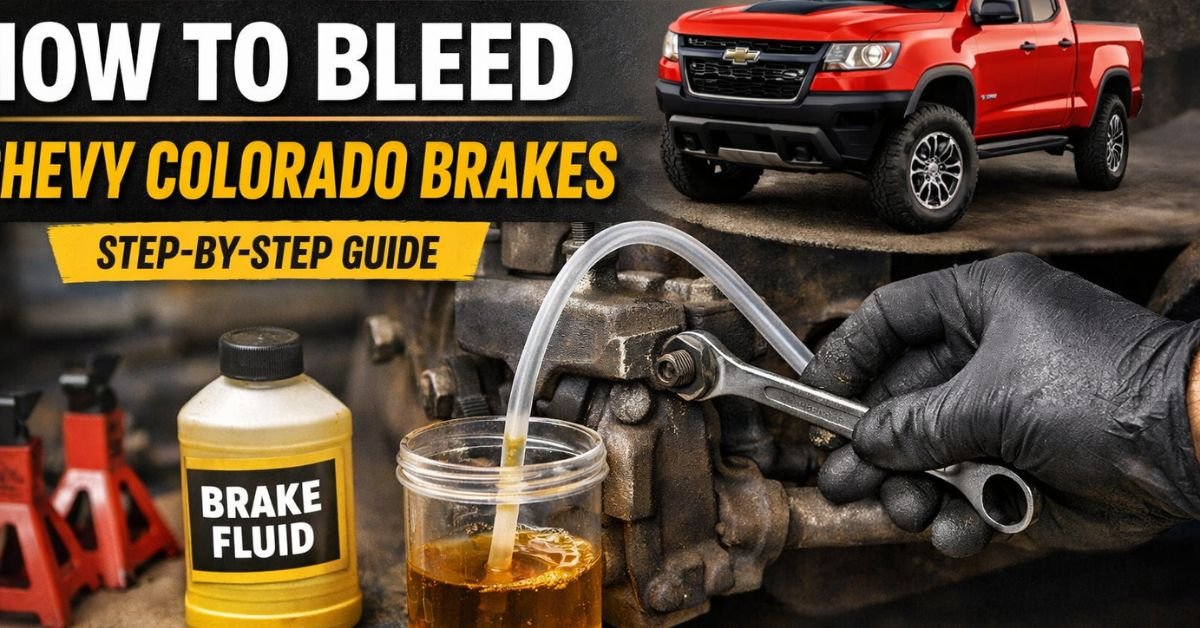
Locate the bleeder screw on the brake caliper. Place one end of the clear tubing over the screw and the other end into a container partially filled with brake fluid. By doing this, air cannot be drawn back into the system.
Make sure the hose fits tightly.
Step 5: Use the Two-Person Bleeding Method
The traditional two-person method is the most reliable way to bleed brakes.
Here’s how it works:
- Ask a helper to sit in the driver’s seat.
- Have them slowly press the brake pedal 3–4 times and hold it down.
- While the pedal is held, loosen the bleeder screw.
- Air and fluid will flow into the hose.
- Tighten the screw before your helper releases the pedal.
- Repeat until no air bubbles appear.
Perform this process 3–5 times per wheel or until the fluid runs clear.
Step 6: Monitor the Fluid Level
After bleeding each wheel, check the master cylinder reservoir and refill if necessary. Letting it run dry can undo all your work by introducing new air.
Always use clean, unopened brake fluid for best results.
Step 7: Repeat for All Wheels
Move to the next wheel in the correct sequence and repeat the same bleeding process. Take your time and ensure each caliper is completely free of air.
Consistency is key for balanced braking.
Must Read: How Can You Tell If a Brake Booster Is Bad?
Step 8: Test the Brake Pedal
Once all wheels are done, reinstall the wheels and tighten the lug nuts. Lower the vehicle and torque the nuts to factory specifications.
Start the engine and press the brake pedal. It should feel firm and responsive. Repeat the bleeding procedure if it still feels soft.
Alternative Method: Vacuum or Pressure Bleeder
If you prefer working alone, you can use:
- Vacuum bleeder
- Pressure bleeder
These tools simplify the process by pulling or pushing fluid through the system. While more convenient, they require extra equipment and careful handling.
Safety Tips When Bleeding Brakes
- Wear gloves and eye protection
- Brake fluid should not be spilled on paint since it ruins finishes.
- Use only recommended fluid types
- Dispose of old fluid properly
- Never drive if brakes feel weak
If you notice leaks, damaged lines, or ongoing brake issues, consult a professional mechanic.
How Often Should You Bleed Chevy Colorado Brakes?
Most manufacturers recommend bleeding brakes every 2–3 years. However, you should bleed them sooner if:
- You replace brake components
- The pedal feels soft
- You open the brake system
- You notice contaminated fluid
Regular maintenance extends brake life and improves safety.
Final Thoughts
Learning how to bleed Chevy Colorado brakes is a valuable skill for any truck owner. It improves braking performance, increases safety, and saves money on repair costs. With basic tools, patience, and careful attention, you can complete this task at home.
Always follow proper procedures and never rush the process. Well-maintained brakes ensure that your Chevy Colorado performs reliably in all driving conditions.