
Brake fluid plays a critical role in your vehicle’s braking system by transferring force from the brake pedal to the brake components. Among the different types of brake fluids, DOT 5 and DOT 4 are commonly used, but they are not compatible with each other. If your vehicle currently uses DOT 5 fluid and you want to switch to DOT 4, the process must be done carefully to avoid brake failure or system damage.
In this guide, we’ll explain why you may want to convert from DOT 5 to DOT 4, what tools you’ll need, and how to complete the conversion safely.
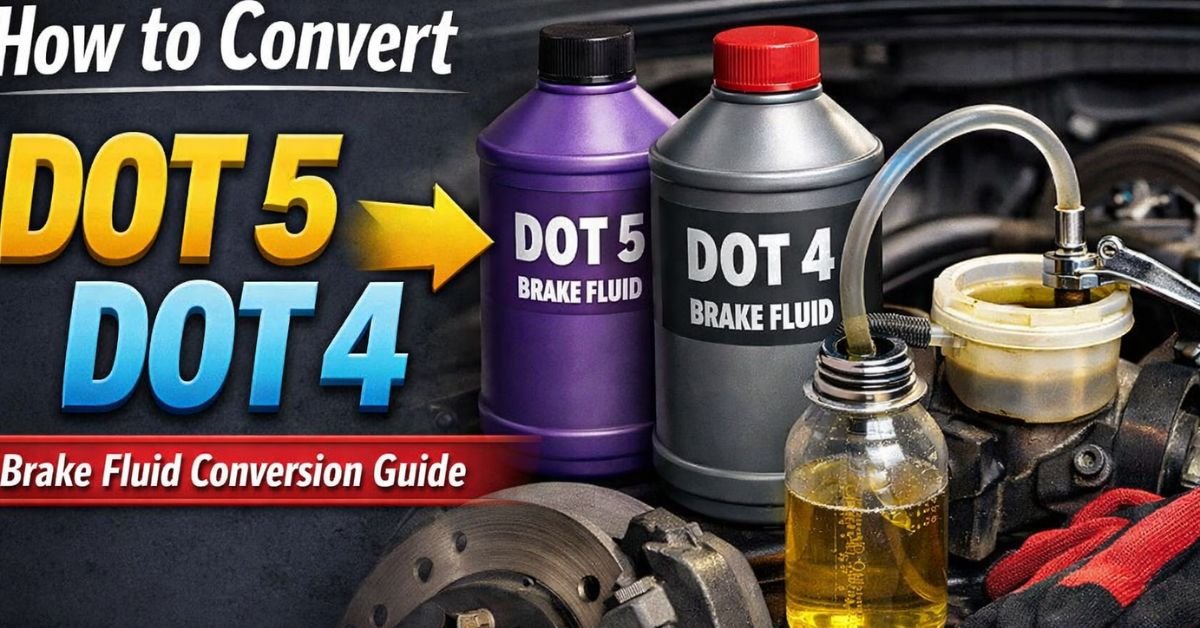
How to Convert a DOT 5 Brake System to DOT 4: A Complete Step-by-Step Guide
Understanding DOT 5 vs. DOT 4 Brake Fluid
Before converting, it’s important to understand the difference between these two brake fluids.
DOT 5 Brake Fluid
- Silicone-based
- Does not absorb moisture
- Non-corrosive to paint
- Often used in classic cars and military vehicles
- Not compatible with ABS systems
- Can trap air bubbles
DOT 4 Brake Fluid
- Glycol-based
- Absorbs moisture
- Higher boiling point than DOT 3
- Common in modern vehicles
- Compatible with ABS systems
- Provides better pedal feel
Because DOT 5 and DOT 4 are chemically different, they cannot be mixed. Even small amounts of DOT 5 left in the system can cause performance issues.
Why Convert from DOT 5 to DOT 4?
There are several reasons why drivers choose to make this conversion:
- Better brake pedal feel
- Improved compatibility with ABS
- Easier availability
- Lower cost
- Better braking consistency
- Easier maintenance
DOT 4 is also more commonly recommended by vehicle manufacturers, making it the preferred option for most modern vehicles.
Tools and Materials Needed
Before starting, gather the following items:
- DOT 4 brake fluid (new and sealed)
- Brake bleeder kit or clear tubing
- Wrench for bleeder screws
- Brake cleaner spray
- Catch bottle
- Turkey baster or fluid pump
- Shop rags
- Safety gloves and glasses
- Jack and jack stands (if needed)
Having everything ready will make the process smoother and safer.
A Comprehensive Guide to DOT 5 to DOT 4 Conversion
Step 1: Prepare the Vehicle
Put the parking brake on and park the vehicle on a level surface. Let the brakes cool completely. Wear safety gloves and eye protection.
Find the brake master cylinder reservoir by opening the hood.
Step 2: Remove Old DOT 5 Fluid
Use a turkey baster or fluid pump to remove as much DOT 5 fluid as possible from the master cylinder reservoir.
Dispose of the old fluid properly. Do not reuse it.
Step 3: Clean the Master Cylinder
Spray brake cleaner inside the reservoir and wipe it clean using a lint-free cloth. Make sure no silicone residue remains.
This step is very important because leftover DOT 5 can contaminate the new fluid.
Step 4: Refill with DOT 4 Fluid
Add new DOT 4 brake fluid to the reservoir. Keep the cap loose but covered to prevent contamination.
Never use old or previously opened brake fluid, as it may contain moisture.
Must Read: How to Clean Oil Off Brake Pads With Lacquer Thinner?
Step 5: Flush the Brake Lines
You now need to flush out all remaining DOT 5 from the system.
The brake calliper that is most distant from the master cylinder should be used first:
- Rear passenger side
- Rear driver side
- Front passenger side
- Front driver side
Put the other end of the transparent tubing in a catch bottle and fasten it to the bleeder screw.
Have an assistant slowly press the brake pedal while you open the bleeder valve. Close it before they release the pedal.
Repeat until clean DOT 4 fluid comes out with no bubbles.
Step 6: Bleed the Entire System
Continue bleeding each brake until:
- Fluid runs clear
- No air bubbles appear
- Pedal feels firm
Always monitor the master cylinder and keep it full. Letting it run dry introduces air into the system.
Step 7: Inspect Seals and Hoses
After flushing, inspect:
- Brake hoses
- Master cylinder seals
- Caliper seals
- Wheel cylinders
Some older rubber components may not react well after switching fluids. Replace any cracked or swollen parts.
Step 8: Test the Brakes
Once finished, firmly tighten all bleeder screws and reinstall reservoir cap.
Start the engine and press the brake pedal several times. It should feel solid and responsive.
To ensure adequate braking performance, take a test drive at a low speed in a secure location.
Important Safety Tips
- Never mix DOT 5 and DOT 4 fluids
- Do not spill DOT 4 on painted surfaces
- Always use sealed brake fluid
- Replace fluid every 2–3 years
- Dispose of old fluid responsibly
Skipping steps can lead to brake failure, which is extremely dangerous.
Common Mistakes to Avoid
Many DIY mechanics make these mistakes:
- Not fully flushing old fluid
- Letting reservoir run dry
- Reusing contaminated fluid
- Ignoring air bubbles
- Overtightening bleeder screws
Avoiding these errors will ensure a successful conversion.
Final Thoughts
Converting a DOT 5 brake system to DOT 4 is a detailed but manageable process if done correctly. The key is complete flushing and proper bleeding to remove all traces of silicone fluid. When done properly, DOT 4 provides better braking performance, easier maintenance, and improved compatibility with modern braking systems.
If you’re unsure about any step, it’s always best to consult a professional mechanic. Your brakes are one of the most important safety systems in your vehicle, and proper maintenance can save lives.