
If you’ve ever pressed your brake pedal and heard a high-pitched squeaking sound, you’re not alone. Brake squeaking is one of the most common concerns drivers experience. While the noise can sometimes be harmless, it may also indicate that your braking system needs attention. Understanding why your brakes squeak can help you prevent costly repairs and keep your vehicle safe on the road.
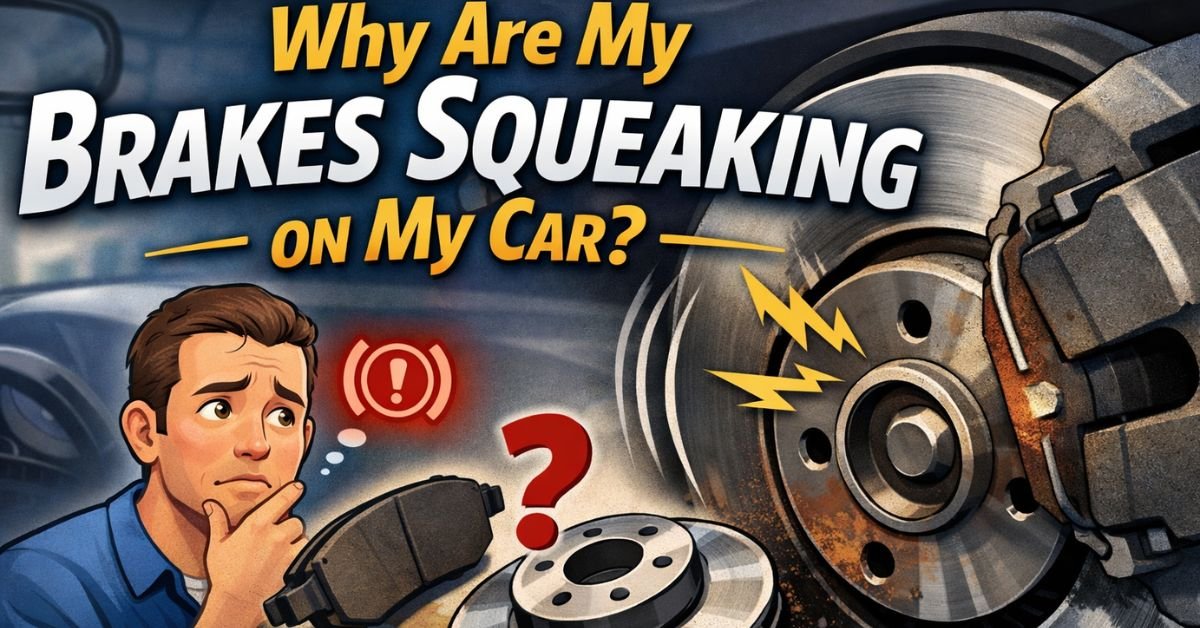
Why Are My Brakes Squeaking on My Car?
Common Reasons Why Car Brakes Squeak
1. Worn Brake Pads
One of the most frequent causes of squeaky brakes is worn brake pads. Most modern brake pads are designed with a small metal indicator called a wear indicator. When the pad becomes too thin, this metal piece contacts the brake rotor and produces a squealing noise.
This sound acts as a warning sign that it’s time to replace your brake pads before further damage occurs.
2. Dust and Debris Between Components
Brake systems constantly collect dust from road dirt, sand, and brake pad material. When debris becomes trapped between the brake pad and rotor, it can cause squeaking or grinding sounds.
This issue is especially common if you drive in dusty environments or after off-road travel. Usually, a simple brake cleaning can solve the problem.
3. Moisture and Weather Conditions
Sometimes squeaky brakes are completely normal. Moisture from rain, humidity, or overnight condensation can form a thin layer of rust on the brake rotors. When you start driving, the brake pads scrape off this rust, creating a temporary squeaking noise.
If the sound disappears after a few stops, there’s typically no need for concern.
4. Low-Quality or Hard Brake Pads
Not all brake pads are made the same. Performance or metallic brake pads often produce more noise than ceramic or organic pads. Harder materials can vibrate against the rotor, creating squeaking sounds during braking.
While these pads may last longer, they often sacrifice quiet operation.
5. Lack of Lubrication
Brake components require proper lubrication at specific contact points. When lubrication dries out or was never applied correctly during installation, vibrations can occur, resulting in squealing noises.
Professional servicing usually includes applying brake grease to prevent this issue.
6. Glazed Brake Pads or Rotors
Brake glazing occurs when pads or rotors become overheated due to aggressive braking or frequent stop-and-go driving. Excess heat hardens the surface, reducing friction and causing squeaking sounds.
Glazed brakes may also reduce braking efficiency, making inspection important.
7. Improper Brake Installation
If brakes were recently replaced and started squeaking afterward, improper installation could be the cause. Missing shims, loose hardware, or incorrectly fitted pads can lead to vibration and noise.
Having brakes installed by a qualified technician helps avoid these problems.
When Should You Be Concerned?
Not every squeak means danger, but you should inspect your brakes if you notice:
- Squeaking that continues while driving
- Grinding or scraping sounds
- Reduced braking performance
- Vibrations when braking
- Brake warning light on dashboard
Ignoring brake noises can lead to rotor damage or complete brake failure over time.
Must Read: How to Wire a Brake Controller?
How to Fix Squeaky Brakes
Depending on the cause, solutions may include:
- Replacing worn brake pads
- Cleaning brake components
- Resurfacing or replacing rotors
- Applying proper lubrication
- Installing higher-quality brake pads
Regular brake maintenance is the best way to prevent recurring noise.
Preventing Brake Squeaking in the Future
You can minimize brake noise by following these simple tips:
- Schedule routine brake inspections
- Avoid aggressive braking whenever possible
- Keep wheels and brake areas clean
- Use high-quality brake parts
- Replace brake pads before they fully wear out
Preventive maintenance not only keeps your car quiet but also improves safety and extends the lifespan of your braking system.
Final Thoughts
Squeaky brakes can range from a minor annoyance to a serious safety warning. While occasional noise caused by moisture or dust is normal, persistent squeaking should never be ignored. Paying attention to unusual sounds and addressing issues early ensures your vehicle remains safe, reliable, and comfortable to drive.
If your brakes continue to squeak, it’s always wise to have them inspected by a professional mechanic. A small repair today can prevent expensive damage tomorrow.