
If you’re new to RVing or just getting familiar with your camper’s electrical system, one common question that comes up is: Does the camper battery charge when I’m plugged into 30 amp shore power? The short answer is yes—in most cases, your camper battery will charge when connected to a 30 amp power source. However, there are a few important details that determine how well and how efficiently this happens.
Does a Camper Battery Charge When Plugged Into 30 Amp Power?
Understanding 30 Amp Shore Power
A 30 amp hookup is one of the most common electrical connections available at campgrounds. It provides 120 volts of power through a single hot wire, neutral, and ground. When you plug your camper into a 30 amp outlet, you’re essentially connecting your RV to a stable external power supply that can run appliances like your air conditioner, microwave, and outlets.
But beyond powering appliances, this connection also plays a key role in charging your camper’s battery.
How Camper Batteries Charge on Shore Power
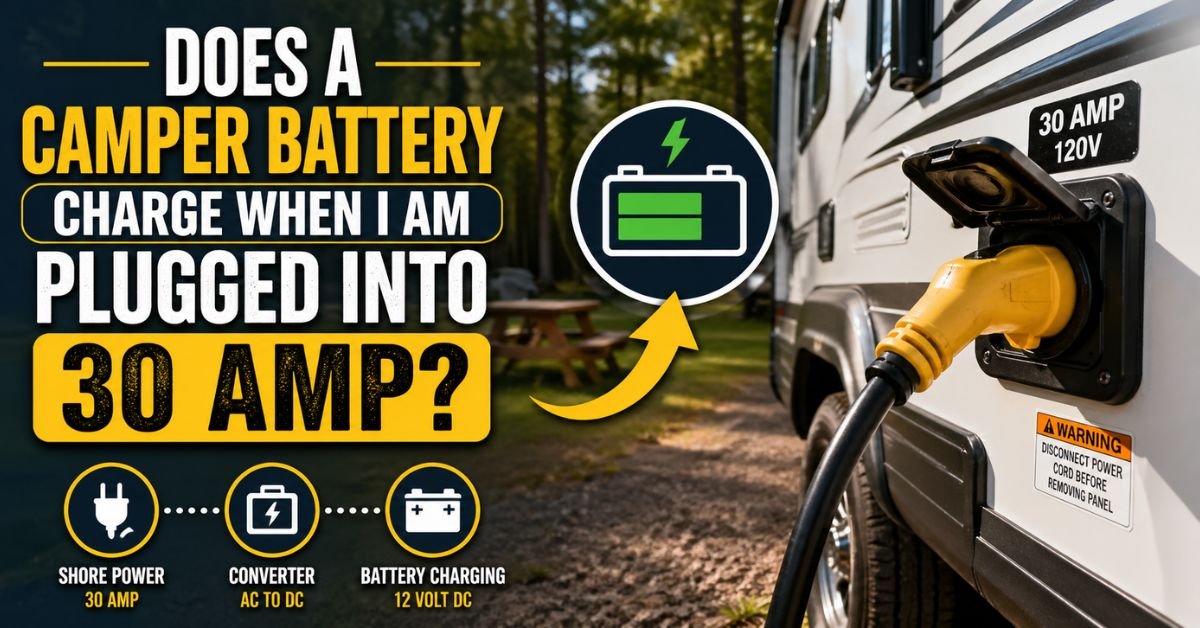
Most modern RVs and campers are equipped with a converter (sometimes part of a converter/charger unit). This device takes the 120-volt AC power from the shore connection and converts it into 12-volt DC power. Your camper’s battery system operates on 12 volts, so this conversion is essential.
When you plug into a 30 amp power source:
- The converter powers your 12V systems (lights, water pump, fans).
- It simultaneously sends current to recharge your battery.
So yes, as long as your camper has a functioning converter, your battery will charge automatically when plugged into shore power.
Factors That Affect Charging
While the answer is generally yes, several factors can influence whether your battery is actually charging and how quickly:
1. Converter Type
Older campers may have basic converters that provide a constant voltage, which can charge the battery slowly or even risk overcharging. Newer RVs often come with smart converters or multi-stage chargers that adjust the voltage based on the battery’s condition, ensuring faster and safer charging.
2. Battery Condition
If your camper battery is old, damaged, or deeply discharged, it may not charge efficiently—or at all. Regular maintenance and testing are important to ensure reliable performance.
3. Wiring and Connections
Loose or corroded wiring can interrupt the charging process. Make sure battery terminals are clean and connections are secure.
4. Blown Fuses or Breakers
Sometimes the issue is as simple as a blown fuse between the converter and battery. If your battery isn’t charging, checking fuses is a good first step.
5. Battery Disconnect Switch
Many RVs have a battery disconnect switch. If it’s turned off, the battery won’t charge even if you’re plugged into shore power.
Must Read: Does the 2023 Chevy Traverse Have a Separate Start-Stop Battery?
How to Confirm Your Battery Is Charging
If you want to be sure your camper battery is charging when plugged into 30 amp power, here are a few easy ways to check:
- Use a multimeter: A fully charged battery reads around 12.6 volts when disconnected. When charging, it should read between 13.2 and 14.4 volts.
- Check your control panel: Many RVs have built-in monitors that show battery status.
- Look for signs of life: Lights getting brighter or fans running more steadily can indicate proper power flow.
What About While Driving?
It’s worth noting that your camper battery can also charge while towing, usually through the tow vehicle’s alternator. However, this is separate from shore power and may not charge as quickly or efficiently unless properly set up.
Final Thoughts
So, does a camper battery charge when plugged into 30 amp power? In most cases, yes—it absolutely does. Your camper’s converter is designed to both power your RV’s 12-volt systems and recharge the battery whenever you’re connected to shore power.
That said, the effectiveness of this charging depends on your equipment, battery health, and overall system condition. If you’re not seeing expected results, a quick inspection of your converter, fuses, and connections can often solve the problem.
Understanding how your camper’s electrical system works not only gives you peace of mind but also helps you avoid power issues on the road. Whether you’re staying at a campground or preparing for your next trip, knowing your battery is charging properly ensures a smoother and more enjoyable RV experience.