
Car batteries are essential for starting your vehicle and powering its electrical systems. While most modern vehicles use maintenance-free batteries, many older cars, commercial vehicles, and deep-cycle batteries still require regular maintenance, including checking and adding water. Knowing when should you add water to a battery can help extend battery life, improve performance, and prevent costly replacements.
In this guide, you’ll learn when to add water, why it matters, how to do it safely, and common mistakes to avoid.
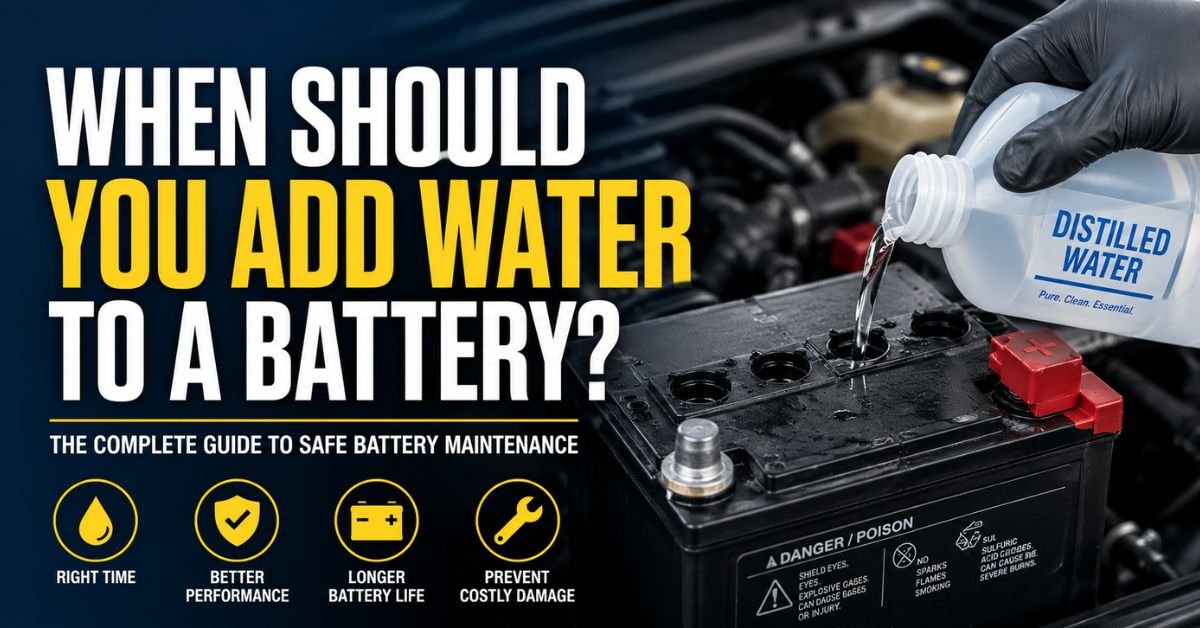
When Should You Add Water to a Battery? A Complete Guide
Why Do Some Batteries Need Water?
Traditional lead-acid batteries contain a mixture of sulfuric acid and distilled water, known as the electrolyte. During normal charging and discharging, a small amount of water evaporates or is broken down into hydrogen and oxygen gases. Over time, this lowers the electrolyte level inside the battery cells.
If the water level drops too low, the lead plates inside the battery become exposed. This can reduce battery performance, shorten its lifespan, and even cause permanent damage.
Maintenance-free batteries are sealed and generally do not require water, but flooded lead-acid batteries should be inspected regularly.
When Is It Time to Fill a Battery with Water?
The best time to add water depends on the battery’s condition and charging status.
1. Check Water Levels Regularly
Inspect the battery every one to three months, especially if you drive frequently or live in a hot climate. Elevated temperatures hasten the evaporation of water.
You should add water if:
- The electrolyte level is below the top of the battery plates.
- The battery manufacturer recommends topping off the electrolyte.
- The battery has removable vent caps for inspection.
2. Add Water After Charging (When Possible)
In most cases, it is best to add water after the battery has been fully charged. Charging causes the electrolyte to expand, so checking the level after charging provides a more accurate reading.
However, if the plates are already exposed before charging, add just enough distilled water to cover them before charging. Once charging is complete, top off the battery to the recommended level.
3. Avoid Overfilling
Never fill the battery to the very top. Most batteries have a fill indicator or split ring inside each cell. Overfilling may cause electrolyte overflow during charging, leading to corrosion and damage around the battery terminals.
Signs Your Battery Needs Water
Several warning signs may indicate that your battery’s water level is low:
- Slow engine cranking
- Dim headlights
- Reduced battery performance
- Visible battery plates inside the cells
- Frequent need for jump-starts
- Battery overheating during charging
Regular inspection helps catch these issues before they become serious.
How to Add Water to a Battery Safely
Adding water to a flooded lead-acid battery is a simple maintenance task if done correctly.
Step 1: Gather Your Supplies
You’ll need:
- Distilled water
- Safety gloves
- Safety glasses
- Clean cloth
- Funnel or battery filling bottle (optional)
Step 2: Turn Off the Vehicle
Switch off the engine and allow the battery to cool if it has been charging or running.
Step 3: Clean the Battery
Wipe away dirt and debris around the battery caps to prevent contamination inside the cells.
Step 4: Open the Battery Caps
Carefully remove the vent caps to inspect each cell.
Step 5: Check the Electrolyte Level
If the liquid is below the lead plates, slowly add distilled water until it reaches the recommended fill level.
Step 6: Replace the Caps
Secure the caps tightly and clean up any spilled liquid.
Why You Should Only Use Distilled Water
Always use distilled water when topping up a battery.
Tap water contains minerals such as calcium, iron, and magnesium that can contaminate the electrolyte. These contaminants may lower the battery’s service life and decrease its efficiency.
Distilled water is free from minerals and helps maintain the proper chemical balance inside the battery.
Common Mistakes to Avoid
Many battery failures happen because of simple maintenance errors.
Avoid these common mistakes:
- Using tap water instead of distilled water
- Overfilling the battery cells
- Adding acid instead of water
- Ignoring exposed battery plates
- Checking water levels too infrequently
- Adding water to sealed maintenance-free batteries
Following proper maintenance procedures helps maximize battery performance.
Must Read: How to Change a Porsche Key Battery?
How Often Should You Check Battery Water?
The inspection schedule depends on how the battery is used.
General recommendations include:
- Every month during hot summer weather
- Every two to three months under normal driving conditions
- Before long road trips
- After extended charging sessions
- More frequently for commercial or heavy-duty vehicles
If your vehicle sits unused for long periods, check the battery before driving again.
Can Low Water Damage a Battery?
Yes. Low electrolyte levels can permanently damage a lead-acid battery.
When the lead plates become exposed:
- Sulfation develops more quickly.
- Battery capacity decreases.
- Charging becomes less efficient.
- Internal heat increases.
- Battery lifespan is significantly reduced.
Maintaining the correct water level is one of the easiest ways to prevent premature battery failure.
Final Thoughts
Knowing when should you add water to a battery is an important part of maintaining flooded lead-acid batteries. Regular inspections, using only distilled water, and filling the battery to the proper level can significantly improve battery performance and longevity.
Remember that not every battery requires water. Always check whether your battery is a serviceable flooded lead-acid model or a sealed maintenance-free battery before attempting any maintenance.
By following these simple maintenance practices, you can reduce the risk of unexpected battery problems, improve reliability, and extend the life of your vehicle’s battery for years to come.