
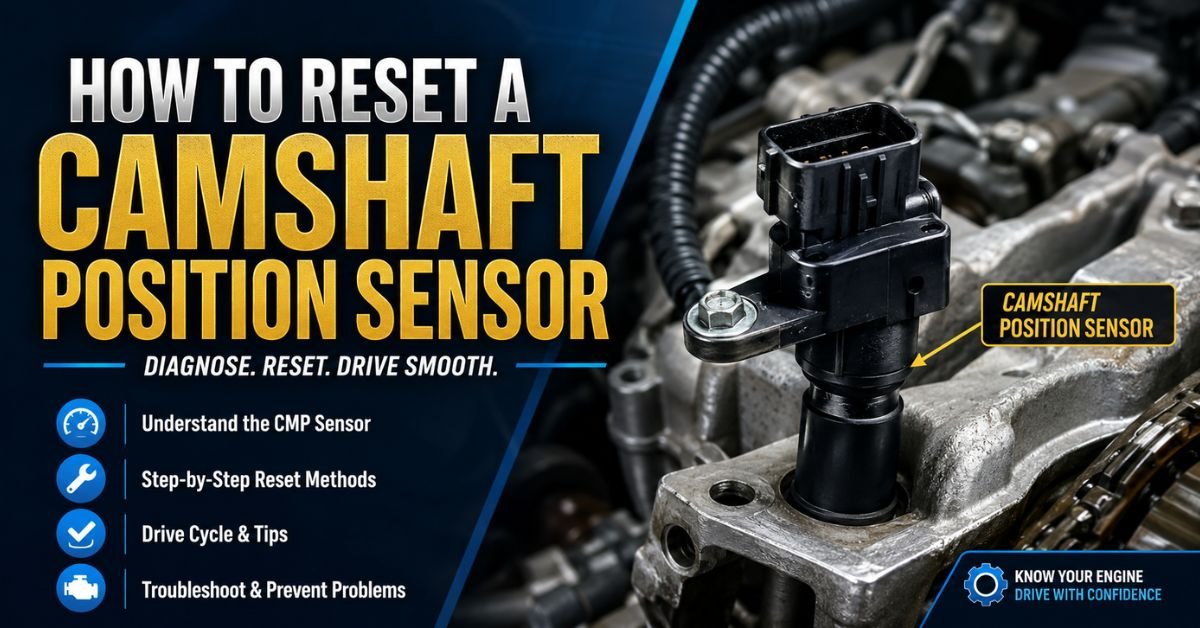
The camshaft position sensor (CMP sensor) is a crucial component of your vehicle’s engine management system. It monitors the position and speed of the camshaft and sends this information to the engine control module (ECM). This information is used by the ECM to regulate fuel injection and ignition timing, guaranteeing smooth and effective engine operation.
If your vehicle is experiencing rough idling, poor acceleration, difficulty starting, or the Check Engine Light is on, you may wonder whether resetting the camshaft position sensor will solve the problem. While there is no physical “reset button” on the sensor itself, you can reset the system by clearing the ECM’s stored fault codes or allowing the computer to relearn sensor values.
How to Reset a Camshaft Position Sensor: A Complete Step-by-Step Guide
In this guide, we’ll explain how to reset a camshaft position sensor safely and when a reset is actually necessary.
Can You Reset a Camshaft Position Sensor?
Yes, you can reset the system that monitors the camshaft position sensor, but you cannot manually reset the sensor itself. If the sensor is functioning correctly and the issue was temporary, clearing the error codes or resetting the ECM may restore normal operation.
However, if the sensor is damaged, dirty, or has faulty wiring, resetting it alone will not fix the underlying problem.
Signs That Your Camshaft Position Sensor Needs Attention
Before attempting a reset, look for these common symptoms:
- Check Engine Light is illuminated.
- Engine cranks but struggles to start.
- Rough idle or engine misfires.
- Poor fuel economy.
- Reduced engine performance.
- Engine stalling unexpectedly.
If these symptoms persist after a reset, the sensor or another engine component may need replacement or repair.
How to Reset a Camshaft Position Sensor
To safely reset the system, follow these instructions.
Method 1: Use an OBD-II Scan Tool (Recommended)
Using an OBD-II scanner is the safest and most effective method.
- Turn the ignition off.
- Locate the OBD-II diagnostic port, usually beneath the dashboard near the driver’s seat.
- Connect the scan tool.
- Turn the ignition to the “ON” position without starting the engine.
- Read the stored diagnostic trouble codes (DTCs).
- Select the option to clear or erase the fault codes.
- Turn the ignition off and disconnect the scanner.
- Start the engine and let it idle for several minutes.
If the issue has been resolved, the Check Engine Light should remain off.
Method 2: Disconnect the Battery
If you don’t have an OBD-II scanner, disconnecting the battery may reset the ECM.
- Turn off the engine.
- Disconnect the negative battery terminal.
- Wait 15 to 30 minutes.
- Press the brake pedal for about 20 seconds to discharge any remaining electrical power.
- Reconnect the battery terminal.
- Start the engine and allow it to idle for several minutes.
Keep in mind that disconnecting the battery may also erase radio presets, clock settings, and other stored vehicle preferences.
Drive Cycle Relearning
After resetting the ECM, many vehicles require a drive cycle so the computer can relearn engine operating conditions.
A typical drive cycle includes:
- Letting the engine idle for several minutes.
- Driving at city speeds.
- Driving at highway speeds.
- Allowing the engine to decelerate naturally.
- Restarting the vehicle after shutting it off.
Depending on the vehicle, the relearning process may take anywhere from 20 to 100 miles of driving.
When Resetting Won’t Fix the Problem
Resetting the camshaft position sensor will not repair:
- A failed or damaged sensor.
- Broken or corroded wiring.
- Loose electrical connectors.
- Timing chain or timing belt problems.
- A faulty crankshaft position sensor.
- Engine control module (ECM) issues.
If the Check Engine Light returns immediately after clearing the codes, further diagnosis is necessary.
Must Read: What Is Adaptation for a Crankshaft Position Sensor?
Should You Replace the Sensor Instead?
If your scan tool repeatedly displays camshaft position sensor fault codes (such as P0340 or similar) and the symptoms continue after resetting, replacing the sensor is often the best solution.
Fortunately, most camshaft position sensors are relatively inexpensive and can be replaced in less than an hour on many vehicles.
Tips to Prevent Future Sensor Problems
To keep your camshaft position sensor working properly:
- Follow your vehicle’s recommended maintenance schedule.
- Repair oil leaks promptly, as oil contamination can damage sensors.
- Inspect wiring and connectors during routine maintenance.
- Replace worn timing belts or timing chains at recommended intervals.
- Use quality replacement parts if a sensor needs replacement.
Frequently Asked Questions
Does disconnecting the battery reset the camshaft position sensor?
Disconnecting the battery resets the engine control module rather than the sensor itself. It clears temporary memory and may erase stored fault codes on some vehicles.
How long does it take for the sensor to relearn?
Most vehicles complete the relearning process after one or more normal driving cycles, typically within 20 to 100 miles.
Can a malfunctioning camshaft position sensor be used to drive?
While the vehicle may still run, driving with a faulty sensor can lead to poor performance, increased fuel consumption, engine stalling, and possible long-term engine damage. It’s best to repair the issue as soon as possible.
Will replacing the sensor automatically reset it?
In many vehicles, yes. After installing a new sensor, the ECM recognizes it automatically. However, some vehicles may require clearing diagnostic codes or performing a relearn procedure using a scan tool.
Final Thoughts
Resetting a camshaft position sensor typically means resetting the engine control module by clearing fault codes with an OBD-II scanner or disconnecting the battery. While this may solve temporary electronic glitches, it will not repair a faulty sensor or mechanical problem. If symptoms return after the reset, inspect the sensor, wiring, and timing components or seek professional diagnosis. Proper maintenance and timely repairs will help ensure reliable engine performance and prevent recurring camshaft position sensor issues.