
Seeing a spark when you plug something into an electrical outlet can be alarming. In some situations, a very small spark can be normal, but a large, bright, repeated, or accompanied-by-noise spark can indicate an electrical problem that should not be ignored. Understanding why an outlet sparks can help you determine when it may be harmless and when you should have it inspected by a qualified electrician.
Why Is My Outlet Sparking When I Plug Something In?
When plugging something in, is a tiny spark typical?
A brief, tiny spark can sometimes occur when you insert a plug into an outlet. Certain appliances draw electricity as soon as they are connected, and this can create a momentary electrical arc between the plug contacts and the outlet contacts.
For example, appliances with motors, transformers, capacitors, or electronic power supplies can briefly draw current when connected. A small spark that happens occasionally and disappears immediately does not necessarily mean the outlet is defective.
However, the size, frequency, and behavior of the spark matter. A noticeable flash, popping sound, burning smell, smoke, or repeated sparking is a warning sign.
Common Reasons an Outlet May Spark
1. The Appliance Draws a Large Amount of Current
Some appliances require more electricity when they first start. Devices such as refrigerators, vacuum cleaners, air conditioners, power tools, and other motor-driven equipment may create a small spark when plugged in.
If the spark is very brief and the outlet otherwise looks and functions normally, the appliance’s initial electrical demand may be responsible.
2. The Plug or Outlet Is Loose
A loose connection can increase the chance of arcing. If the plug does not fit firmly into the outlet and moves around easily, the electrical connection may not be reliable.
A loose outlet can become a safety concern because poor electrical contact can generate heat. If you notice that plugs frequently fall out, feel loose, or do not stay securely in place, stop using that outlet and have it inspected.
3. The Outlet Is Worn or Damaged
Electrical outlets can wear out over time. The internal contacts may become less effective at gripping the plug, which can contribute to electrical arcing.
Look for visible cracks, discoloration, melted plastic, scorch marks, or other physical damage. These are reasons to stop using the outlet and have it checked by a qualified electrician.
4. The Plug or Power Cord Is Damaged
Sometimes the outlet is not the source of the problem. A damaged appliance plug or power cord can cause sparking when connected.
Inspect the cord for cuts, exposed wires, fraying, melted areas, or damage around the plug. Do not continue using an appliance with a damaged electrical cord.
5. Moisture Is Present
Water and electricity are a dangerous combination. If an outlet or plug has been exposed to moisture, do not use it until the situation has been safely evaluated.
Outlets in kitchens, bathrooms, garages, outdoor areas, and other locations where moisture may be present require particular attention.
6. The Appliance or Circuit Has an Electrical Fault
A faulty appliance can cause unusual sparking when plugged in. Internal electrical problems may create excessive current or other abnormal conditions.
If the same appliance causes sparking at multiple outlets, the appliance itself may need to be inspected. If multiple appliances cause sparking at one particular outlet, the outlet or its wiring may be the problem.
Must Read: Are Autolite Spark Plugs Good?
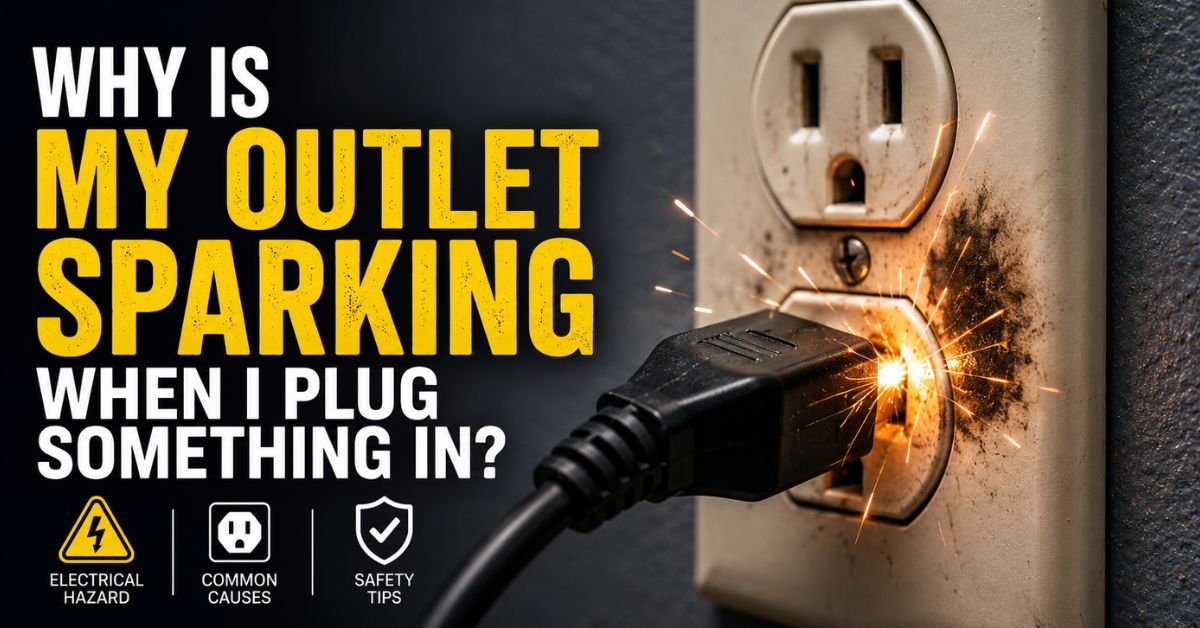
When Is Outlet Sparking Dangerous?
Not every tiny spark means there is an emergency, but certain symptoms should be treated seriously. Stop using the outlet if you notice:
- Large or bright sparks
- Repeated sparking every time something is plugged in
- Popping, buzzing, or crackling sounds
- A burning or electrical smell
- Smoke
- Scorch or burn marks
- Melted or discolored plastic
- An abnormally warm or hot outlet
- A circuit breaker that repeatedly trips
These signs can indicate an electrical fault, damaged wiring, overheating, or another potentially hazardous condition.
If an outlet sparks, what should you do?
If an outlet produces an unusual spark, the safest approach is to stop using it rather than repeatedly testing it with different devices.
If it is safe to do so, disconnect the appliance without touching damaged or exposed wiring. Do not attempt to repair an outlet yourself if you are not qualified to work on electrical systems.
If you see smoke, significant burning, or signs of fire, move away from the area and contact emergency services as appropriate. For a damaged or repeatedly sparking outlet without an immediate emergency, arrange for a qualified electrician to inspect it.
How Can You Prevent Outlet Sparking?
Regularly inspect plugs, cords, and outlets for visible damage. Avoid overloading outlets with multiple high-power appliances, and replace damaged electrical equipment rather than continuing to use it.
It is also important to use outlets and electrical protection appropriate for areas exposed to moisture. If an outlet frequently sparks or behaves differently from other outlets, have it professionally inspected instead of assuming the problem is normal.
Final Thoughts
So, why is your outlet sparking when you plug something in? A tiny, momentary spark can sometimes be caused by the normal electrical behavior of certain appliances. However, large, repeated, or noisy sparks can indicate a worn outlet, loose connection, damaged plug, faulty appliance, moisture, or another electrical problem.
When in doubt, don’t keep using a questionable outlet. Electrical problems can become more serious when ignored, so unusual sparking is best evaluated by a qualified electrician.