
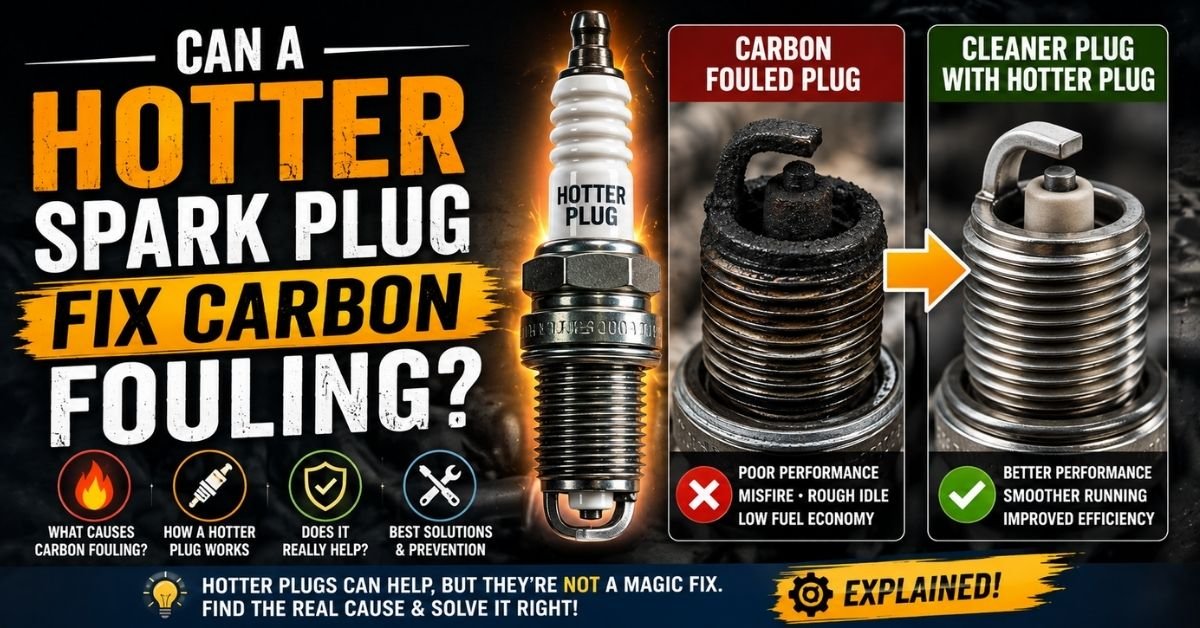
Carbon fouling is a common spark plug problem that can cause rough running, misfires, hard starting, and poor engine performance. When a spark plug becomes covered with black, dry carbon deposits, many drivers wonder whether installing a hotter spark plug can solve the problem. A hotter spark plug can sometimes help reduce carbon fouling, but it is not always the right solution. The underlying cause of the fouling should be identified before changing the spark plug heat range.
Can a Hotter Spark Plug Fix Carbon Fouling?
Understanding why carbon fouling happens and how spark plug heat range works can help you decide whether a hotter plug is appropriate for your engine.
What Is Carbon Fouling?
Carbon fouling occurs when carbon deposits build up on the spark plug’s firing end. The deposits are typically black and may have a dry, sooty appearance. Carbon fouling can interfere with the spark and make it more difficult for the plug to ignite the air-fuel mixture consistently.
Several conditions can contribute to carbon fouling, including an overly rich air-fuel mixture, excessive idling, frequent short trips, weak ignition, incorrect spark plug selection, and an engine that is not reaching its normal operating temperature.
In older engines, worn components or carburetor problems can also contribute to excessive carbon deposits.
What Does a Hotter Spark Plug Mean?
A spark plug’s heat range describes how quickly the plug transfers heat from its firing end to the cylinder head. A hotter spark plug retains more heat at the firing end, which can help burn off deposits during normal engine operation.
A colder plug transfers heat away more quickly, while a hotter plug retains heat longer. This does not mean that a hotter plug produces a stronger spark. Heat range and spark intensity are different characteristics.
Because a hotter plug stays warmer, it can sometimes help prevent carbon deposits from accumulating under conditions where the original plug is operating too cold.
Can a Hotter Spark Plug Fix Carbon Fouling?
It can help in some situations, but it should not be considered a universal fix.
If the engine is otherwise healthy and the existing spark plug is too cold for the operating conditions, moving to the correct hotter heat range may help keep the plug clean. The higher firing-end temperature can make it easier for deposits to burn away.
However, if carbon fouling is caused by a mechanical or fuel-system problem, installing a hotter spark plug may only hide the symptom temporarily.
For example, an engine running excessively rich may continue producing carbon deposits regardless of the spark plug heat range. Similarly, worn piston rings, poor ignition performance, incorrect fuel delivery, or other engine problems can cause repeated fouling.
Why You Shouldn’t Simply Install the Hottest Plug
Using a hotter spark plug than the manufacturer recommends can create problems. Spark plug heat range is selected to keep the plug within an appropriate operating temperature range.
If the plug becomes excessively hot, the risk of overheating the firing end increases. Under certain conditions, this can contribute to pre-ignition or other forms of abnormal combustion.
For that reason, you should not assume that a hotter plug is automatically better. The goal is to use the correct heat range, not simply the hottest spark plug available.
What Causes Carbon Fouling?
Before changing the spark plug, consider some of the most common causes of carbon fouling:
- Rich air-fuel mixture
- Excessive idling
- Frequent short-distance driving
- Incorrect spark plug heat range
- Weak ignition system
- Dirty air filter
- Faulty fuel injectors
- Carburetor problems
- Incorrect ignition timing
- Low engine operating temperature
- Poor engine condition
In a modern fuel-injected vehicle, the engine computer and sensors control the air-fuel mixture. A faulty sensor or fuel-system component can therefore contribute to an overly rich mixture.
In older carbureted engines, incorrect carburetor adjustment can be an important source of carbon fouling.
Must Read: How do you know if the timing belt is broken?
Should You Change to a Hotter Spark Plug?
If your engine manufacturer specifically recommends a hotter plug for your operating conditions, it can be a reasonable solution. However, you should avoid changing heat range simply because the plug looks black.
First, inspect the condition of the spark plug and consider what the deposits look like. It is also useful to check whether all of the spark plugs are fouling or whether only one cylinder is affected.
If one plug is significantly more fouled than the others, there may be a problem specific to that cylinder rather than an issue with the overall spark plug heat range.
A professional mechanic can also check ignition performance, fuel delivery, engine compression, and other systems if fouling continues.
Can Driving Conditions Cause Carbon Fouling?
Yes. Driving habits can have a major effect on spark plug cleanliness. Engines that spend a lot of time idling or are frequently driven for very short distances may not get hot enough for deposits to burn away effectively.
This is particularly important for vehicles that are used mainly for short trips. In some cases, correcting the driving pattern or allowing the engine to reach its normal operating temperature can help reduce fouling without changing the spark plug.
Final Thoughts
So, can a hotter spark plug fix carbon fouling? Sometimes, but only when the spark plug’s heat range is part of the problem. A hotter plug retains more heat at its firing end and may help burn away carbon deposits under certain operating conditions.
However, carbon fouling is often a symptom of another issue. A rich fuel mixture, excessive idling, weak ignition, poor engine condition, or incorrect operating temperature can all contribute to deposits.
The safest approach is to use the spark plug heat range recommended for the engine unless there is a specific reason to use a different range. If carbon fouling keeps returning, find and correct the underlying cause instead of simply installing a hotter plug.