
A timing belt is one of the most important components inside many car engines. It keeps the engine’s internal parts working together at the correct time. Although timing belts are designed to last for many miles, they can eventually wear out and break. So, what happens if a timing belt breaks?
What Happens If a Timing Belt Breaks?
In most cases, a broken timing belt causes the engine to stop running immediately. Depending on the type of engine, it can also cause serious and expensive internal engine damage. Understanding the warning signs, causes, and consequences of a broken timing belt can help you avoid a major repair bill.
What Does a Timing Belt Do?
The timing belt connects the engine’s crankshaft to the camshaft or camshafts. Its main job is to keep the movement of the pistons and valves synchronized.
The crankshaft moves the pistons up and down, while the camshaft controls when the engine’s valves open and close. The timing belt makes sure these components move in the correct sequence.
Because the timing must be precise, even a small problem with the belt can affect engine operation. If the belt breaks, the crankshaft and camshaft can no longer work together properly.
What Happens When a Timing Belt Breaks?
When a timing belt breaks while the engine is running, the engine will usually shut off suddenly. You may lose engine power and the vehicle may stop running.
One of the biggest concerns is what happens inside the engine after the belt breaks. The pistons may continue moving for a short time because of the engine’s momentum, while the camshaft stops or becomes out of synchronization.
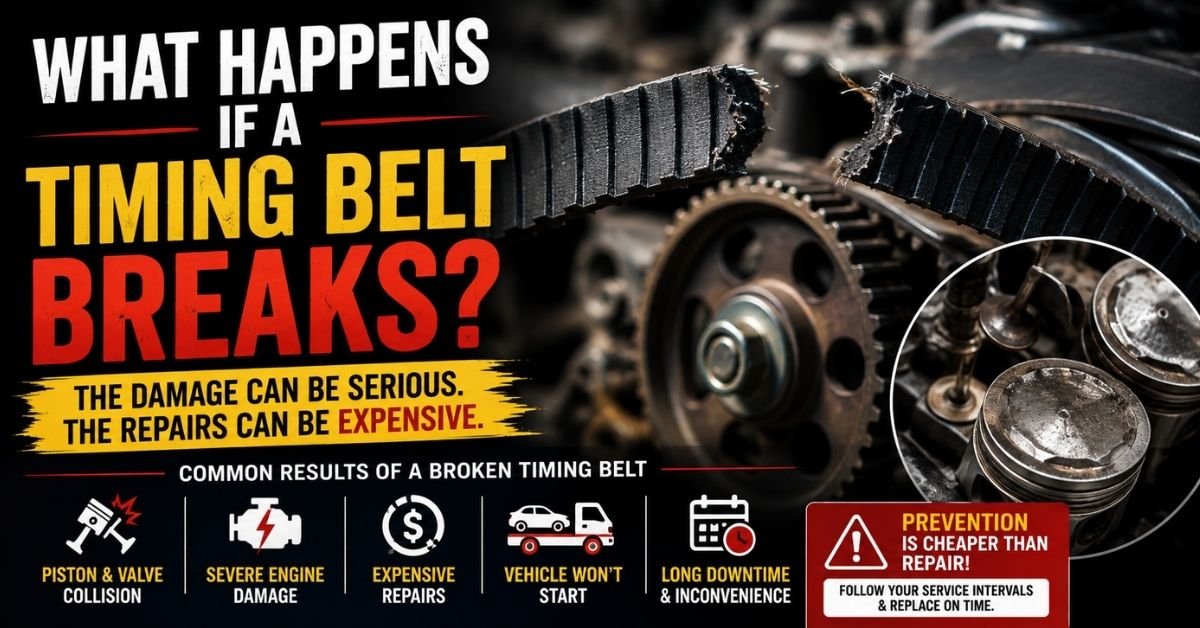
In some engines, the pistons and valves occupy overlapping areas inside the cylinders. These are commonly called interference engines. If the timing belt breaks, a moving piston can contact an open valve. This can bend valves and potentially damage other engine components.
Not every engine is designed this way. Some engines have enough clearance between the pistons and valves to avoid contact when the timing belt breaks. These are often referred to as non-interference engines. In those engines, a broken belt may stop the engine without causing major internal damage.
Can a Car Run With a Broken Timing Belt?
Generally, no. If the timing belt has completely broken, the engine will not continue running normally.
The engine may stop suddenly while you are driving, and it will typically not restart until the timing problem is repaired. If you suspect the timing belt has broken, repeatedly trying to start the engine may not be a good idea, particularly if the engine is an interference design.
Instead, the vehicle should be inspected by a qualified mechanic.
Signs That a Timing Belt May Be Failing
A timing belt can sometimes show warning signs before it fails, although it can also break without much warning. Possible symptoms include:
- Difficulty starting the engine
- Engine misfires
- Rough or uneven engine operation
- Unusual ticking or clicking noises
- Poor engine performance
- Reduced fuel economy
- Visible cracking or damage on an accessible belt
- An engine that suddenly stops running
It’s important to remember that these symptoms can also be caused by other engine problems. A proper inspection is needed to determine whether the timing belt is responsible.
Why Do Timing Belts Break?
Timing belts eventually wear out because they are exposed to heat, friction, and repeated movement. Age and mileage are major factors.
Other causes of timing belt failure can include:
- Normal wear and aging
- Cracks or deterioration in the belt material
- Oil contamination
- Coolant contamination
- A damaged or worn tensioner
- Failed idler pulleys
- A seized water pump on engines where the pump is driven by the timing belt
- Incorrect belt installation
This is why replacing the timing belt according to the vehicle manufacturer’s recommended maintenance schedule is important.
Must Read: Can a Hotter Spark Plug Fix Carbon Fouling?
How Much Damage Can a Broken Timing Belt Cause?
The cost of a broken timing belt can vary significantly depending on the vehicle and engine design.
If the engine is non-interference, replacing the belt and related components may be enough to get the vehicle running again. However, if an interference engine suffers valve-to-piston contact, the repair can become much more expensive.
A mechanic may need to remove the cylinder head to inspect and repair damaged valves. In severe cases, additional engine components may also require repair or replacement.
Because of this, replacing a timing belt as preventive maintenance is often much less expensive than repairing an engine after a belt failure.
If your timing belt breaks, what should you do?
If the timing belt breaks while you’re driving, safely move the vehicle out of traffic if possible and arrange for professional assistance. Don’t keep trying to start the engine.
A mechanic can inspect the timing system and determine whether the belt has failed and whether internal engine damage has occurred.
When replacing a timing belt, it is also common for technicians to inspect or replace related components such as the tensioner, idler pulleys, and, where appropriate, the water pump. Replacing related parts at the same time can help prevent another timing-system failure.
Final Thoughts
So, what happens if a timing belt breaks? The engine will usually stop running, and the vehicle may not restart. On some engines, particularly interference engines, a broken timing belt can result in serious internal damage to valves and other components.
The best way to avoid this situation is to follow the manufacturer’s recommended timing belt replacement interval and have the belt inspected when appropriate. If you notice unusual engine symptoms or your vehicle is approaching its recommended timing belt service interval, having it checked by a qualified mechanic can help prevent an unexpected breakdown and potentially expensive engine repairs.