
Hard water stains on your car can be a frustrating and stubborn issue to deal with. They occur when water with a high mineral content—mainly calcium and magnesium—evaporates from your car’s surface, leaving behind visible deposits. If left untreated, these stains can become permanent and even damage your vehicle’s paint. But don’t worry! There are several effective ways to remove hard water stains and restore your car’s shiny exterior.
Here’s a detailed guide on how to get rid of hard water stains on your car and keep it looking brand new.
How to Get Rid of Hard Water Stains on Your Car
What Causes Your Car to Get Hard Water Stains?
Hard water stains typically appear after your car has been washed or exposed to rain. When the water droplets dry on the surface of the car, they leave behind mineral deposits that can stick to the paint. These deposits often create streaks or spots, and over time, they can etch into the clear coat of your car if left untreated.
In addition to aesthetic issues, hard water stains can cause damage to the paintwork and may result in costly repairs if not dealt with promptly. That’s why it’s crucial to clean them off as soon as you spot them.
What You’ll Need
Prior to starting the cleaning procedure, collect the necessary supplies:
- Microfiber towels
- A bucket of warm water
- Car wash soap or dish soap
- Vinegar or lemon juice
- Baking soda
- Water softener (optional)
- Clay bar (optional)
- A good-quality car wax (for aftercare)
1. Wash Your Car Thoroughly
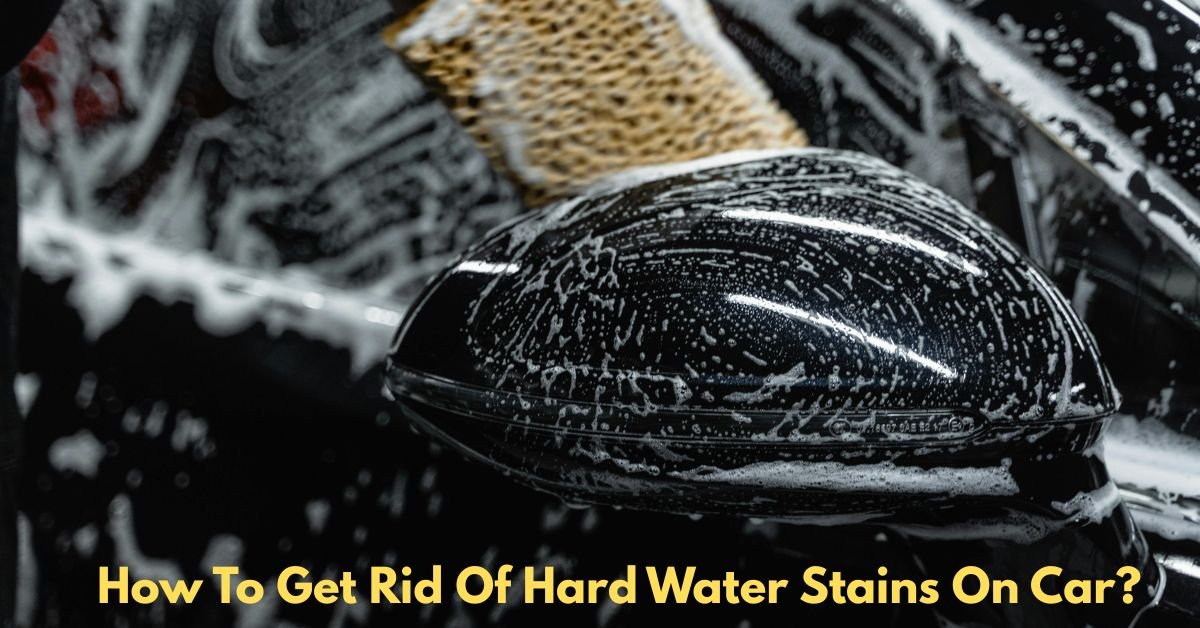
The first step in tackling hard water stains is to wash your car properly. Use a gentle car wash soap to clean your car’s exterior and remove dirt, debris, and grease. Make sure to rinse the car thoroughly with clean water to remove all soap residue. This step will ensure that you are working on a clean surface and will prevent you from rubbing dirt into the paint during the stain removal process.
Must Read: How To Bleed A Car Cooling System?
2. Use Vinegar or Lemon Juice
One of the most popular and effective methods for removing hard water stains is using vinegar or lemon juice. Both of these household items contain natural acids that can dissolve mineral deposits and help break down the stain.
Instructions:
- Mix a solution of equal parts white vinegar or lemon juice and water in a spray bottle.
- Spray the solution generously onto the hard water stains.
- Let it sit for a few minutes, but don’t allow it to dry completely.
- Using a microfiber towel, gently rub the affected area in a circular motion.
- Rinse the area with clean water and dry it with a clean microfiber towel.
If the stains are stubborn, you may need to repeat this process or leave the solution on the stains for a longer period of time.
3. Baking Soda Paste
If vinegar or lemon juice doesn’t completely remove the stains, you can try using a baking soda paste. Baking soda is mildly abrasive, which allows it to scrub away the mineral deposits without damaging the car’s paint.
Instructions:
- Mix a small amount of water with baking soda to form a thick paste.
- Directly apply the paste to the stains caused by hard water.
- Gently rub the paste into the stains using a microfiber cloth.
- After a few minutes, rinse the paste off with clean water and dry the area thoroughly.
Be sure not to use too much pressure while rubbing the paste to avoid scratching the paint.
4. Use a Clay Bar
If the stains are more persistent or have been sitting for a long time, using a clay bar may be the most effective solution. A clay bar is a special detailing tool that can remove contaminants from your car’s paint, including hard water stains. You can purchase a clay bar kit at most auto stores.
Instructions:
- Lubricate the car’s surface with the provided clay lubricant or soapy water.
- Gently rub the clay bar over the hard water stains in a back-and-forth motion.
- After a few passes, check the area to see if the stain has been removed.
- Rinse the car and dry it with a microfiber towel.
A clay bar is an excellent choice if the stains are stubborn, as it can lift contaminants that regular washing won’t.
5. Apply Car Wax or Sealant
Once the stains are gone, it’s important to protect the car’s paint from future water spots. Applying a coat of car wax or a paint sealant will create a protective barrier over the paintwork, making it easier to clean off future stains.
Instructions:
- Apply the car wax or sealant according to the product’s instructions.
- Use a microfiber towel to buff the wax into the paint, ensuring an even layer.
- Let it cure for the recommended time before buffing off the excess wax.
Preventing Hard Water Stains
The best way to keep your car free from hard water stains is to prevent them from forming in the first place. Here are some helpful tips:
- Dry Your Car After Washing: After washing your car, use a microfiber towel to dry it immediately. By doing this, mineral deposits won’t be left behind as water droplets evaporate.
- Use a Water Softener: Some car owners use a water softener attachment to their hose, which reduces the mineral content in the water, making it less likely to leave stains.
- Regular Detailing: Regularly washing and waxing your car helps maintain the protective layer on the paint and prevents mineral buildup.
Final Thoughts
Hard water stains on your car may seem like a tough problem to tackle, but with the right tools and techniques, you can get your car looking shiny and clean again. Whether you use vinegar, lemon juice, baking soda, or a clay bar, the key is to act quickly before the stains have a chance to damage your paint. Regular care and protection will also help keep your car’s finish looking great for years to come.
By following these steps, you’ll not only eliminate hard water stains but also help preserve the beauty and longevity of your vehicle’s exterior.