
The 4L60E transmission is one of the most common automatic transmissions ever used in General Motors vehicles. Found in many Chevrolet, GMC, Cadillac, and other GM trucks, SUVs, and cars, it has built a reputation for decent reliability when properly maintained. One of the most common questions owners ask is: how much fluid does a 4L60E transmission hold?
The answer isn’t always straightforward, because the fluid capacity depends on the situation. In this article, we’ll break down the exact fluid capacity for different service types, why the amount matters, and tips for checking and maintaining the correct fluid level.
How Much Fluid Does a 4L60E Transmission Hold?
Understanding the 4L60E Transmission
The 4L60E is an electronically controlled automatic transmission with four speeds. GM introduced it in the early 1990s as an upgrade to the older 700R4 transmission. While the basic design stayed similar, the “E” in 4L60E stands for electronic control, which allows smoother shifting and better fuel efficiency when paired with modern engine computers.
Like all automatic transmissions, the 4L60E relies heavily on transmission fluid. The fluid lubricates internal components, provides hydraulic pressure for shifting, and helps keep temperatures under control. Running too little or too much fluid can cause serious problems.
Total Fluid Capacity of a 4L60E Transmission
When completely dry, a 4L60E transmission typically holds between 10 and 12 quarts of automatic transmission fluid. This total capacity includes:
- Transmission pan
- Torque converter
- Valve body
- Cooler lines
- Transmission cooler
This amount applies when the transmission has been fully rebuilt or removed and completely drained. In everyday maintenance, however, you will rarely add the full 10–12 quarts.
Fluid Capacity for a Pan Drop and Filter Change
For routine service, such as dropping the transmission pan and replacing the filter, the fluid capacity is much lower. A standard pan drop usually requires 4 to 5 quarts of transmission fluid.
This is because a large portion of the fluid remains trapped inside the torque converter and cooler lines. Simply removing the pan does not drain the entire system.
Typical pan drop capacity:
- About 4 quarts (sometimes up to 5, depending on the pan depth)
If you’re doing a basic service at home, always start by adding 4 quarts, then fine-tune the level once the transmission is warm and running.
Fluid Capacity After a Transmission Flush
A transmission flush replaces much more fluid than a pan drop. When performed correctly using a flush machine, it can exchange nearly all the old fluid in the system.
For a 4L60E, a flush typically uses 10 to 12 quarts of fluid, matching the total system capacity. Keep in mind that not all flush machines work exactly the same, so the final amount may vary slightly.
While flushing can be beneficial, it’s generally recommended only for well-maintained transmissions. High-mileage units with neglected fluid changes may be better off with a simple pan drop and filter replacement.
Correct Type of Fluid for a 4L60E
Using the correct transmission fluid is just as important as using the correct amount. Most 4L60E transmissions originally required DEXRON III automatic transmission fluid. Since DEXRON III is no longer licensed, GM now recommends DEXRON VI as a backward-compatible replacement.
DEXRON VI offers:
- Better heat resistance
- Improved friction stability
- Longer service life
Always avoid mixing incompatible fluids, and never use universal fluid unless it clearly states compatibility with DEXRON VI.
Must Read: How Can I Find Out What Transmission I Have?
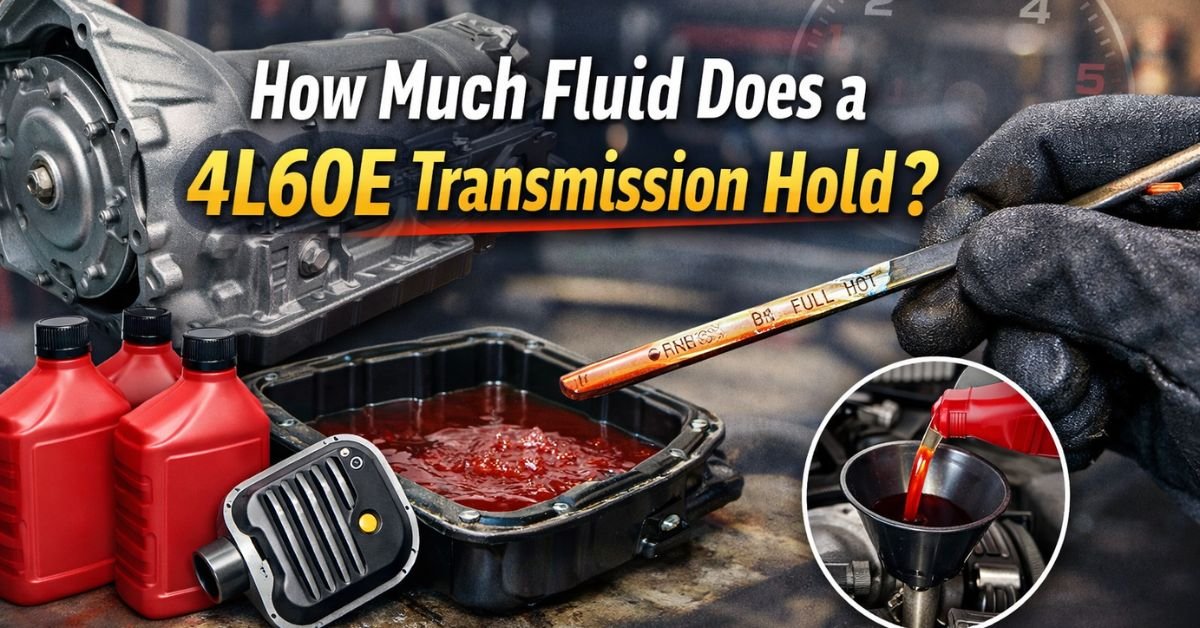
How to Check the Fluid Level Properly
Checking the fluid level on a 4L60E must be done correctly to avoid overfilling or underfilling.
Follow these steps:
- Park the vehicle on a level surface.
- Turn on the engine and let it warm up.
- Shift through all gears, then place it in Park.
- With the engine running, pull out the transmission dipstick.
- Wipe it clean, reinsert it, then check the level.
The fluid should be within the “Hot” range on the dipstick and should appear clean and red. A burnt smell or dark color indicates the fluid may need to be replaced.
What Happens If the Fluid Level Is Incorrect?
Running the wrong amount of fluid can lead to serious issues.
Low fluid level can cause:
- Slipping gears
- Delayed engagement
- Overheating
- Internal damage
Overfilled transmission can cause:
- Fluid foaming
- Erratic shifting
- Increased pressure and leaks
That’s why adding fluid gradually and checking the level properly is so important.
Final Thoughts
So, how much fluid does a 4L60E transmission hold? The short answer is 10–12 quarts total, but for most routine services, you’ll only need 4–5 quarts. The exact amount depends on whether you’re doing a simple pan drop, a full rebuild, or a transmission flush.
Maintaining the correct fluid level and using the proper fluid type can significantly extend the life of your 4L60E transmission. Regular service, careful checking, and avoiding shortcuts will help ensure smooth shifting and reliable performance for years to come.