
When it comes to vehicle safety, the braking system is one of the most critical components of any car. Brake pads play a major role in how effectively your vehicle stops. Many drivers assume that all brake pads are the same, but this is far from the truth. In reality, brake pads differ in materials, performance, durability, noise levels, and price. Understanding these differences can help you choose the right brake pads for your vehicle and driving style.
Are All Brake Pads the Same?
What Are Brake Pads?
Brake pads are a key part of a vehicle’s disc braking system. When you press the brake pedal, the brake pads press against the brake rotors (discs) to create friction. This friction slows down the wheels and eventually brings the car to a stop. Because they rely on friction, brake pads naturally wear down over time and need to be replaced periodically.
While their basic function is the same in every vehicle, the design and materials used in brake pads can vary significantly. This is why not all brake pads are identical.
Types of Brake Pads
Brake pads are generally classified into four main types based on the materials used in their construction.
1. Organic Brake Pads
Organic brake pads are made from materials such as rubber, glass, carbon, and resins. They are sometimes called Non-Asbestos Organic (NAO) brake pads.
These pads are usually quieter and produce less dust compared to some other types. They are also relatively affordable. However, organic brake pads wear out faster and may not perform as well under high heat or heavy braking conditions.
2. Semi-Metallic Brake Pads
Semi-metallic brake pads contain a mixture of metal fibers such as steel, copper, or iron combined with friction modifiers and resin.
These pads are known for their durability and strong braking performance. They can handle higher temperatures and are commonly used in many modern vehicles. However, they tend to produce more brake dust and can sometimes be noisier than other types.
3. Ceramic Brake Pads
Ceramic brake pads are made from ceramic fibers, non-ferrous filler materials, and bonding agents. These pads are considered premium brake pads because they offer several advantages.
They are quieter, produce less dust, and provide consistent braking performance in a wide range of temperatures. Ceramic pads also tend to last longer than many other types. The downside is that they are usually more expensive than organic or semi-metallic options.
4. Low-Metallic NAO Brake Pads
Low-metallic brake pads are similar to organic pads but contain small amounts of metal, usually copper or steel. These metals help improve braking performance and heat transfer.
While they offer better stopping power than pure organic pads, they may produce more noise and brake dust.
Must Read: Why Do My Brakes Squeak in Reverse?
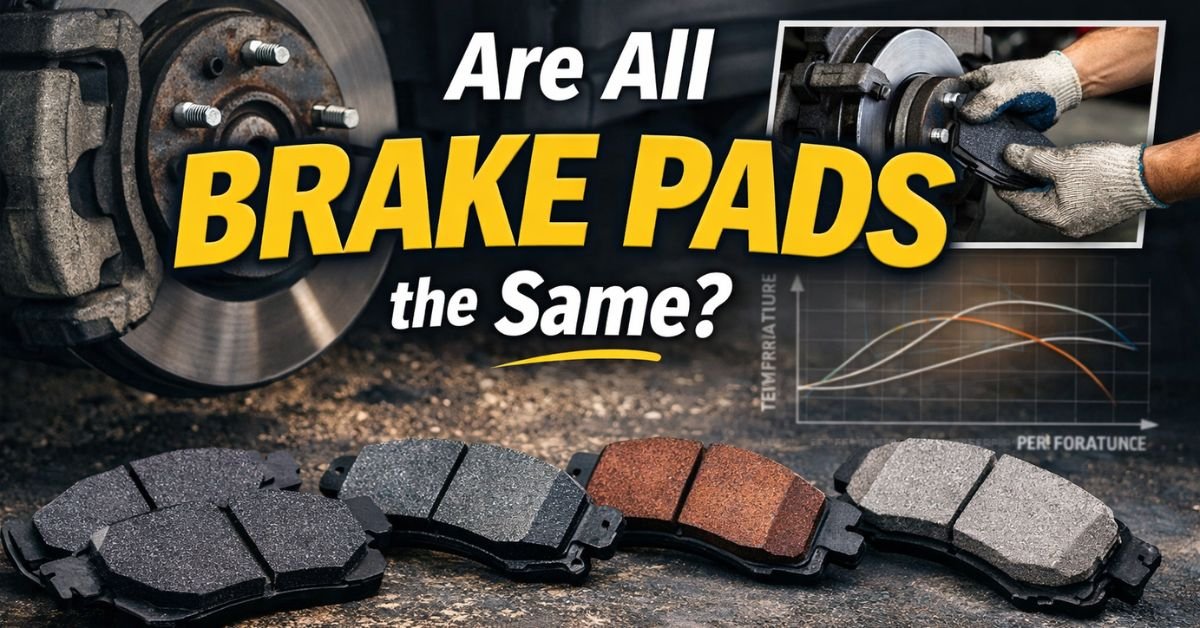
Key Differences Between Brake Pads
Even though all brake pads perform the same basic job, there are several important differences between them.
Material Composition:
Each type of brake pad uses different materials, which affect performance, heat resistance, and durability.
Performance:
Some brake pads are designed for everyday driving, while others are built for high-performance or heavy-duty vehicles.
Noise Levels:
Certain brake pads, particularly ceramic ones, are designed to operate more quietly.
Brake Dust:
Different materials produce varying amounts of dust that can accumulate on your wheels.
Longevity:
Some brake pads last longer than others depending on their construction and the driving conditions.
Are Brake Pads Universal?
Another common question is whether brake pads are universal and can fit any car. The answer is no. Brake pads are designed specifically for certain makes, models, and braking systems. Using the wrong type of brake pad can affect braking performance and may even damage other components such as the rotors.
That is why it is always important to check your vehicle manufacturer’s recommendations or consult a professional mechanic before purchasing replacement brake pads.
Choosing the Right Brake Pads
Selecting the right brake pads depends on several factors, including your driving habits, vehicle type, and budget.
If you mostly drive in the city with normal commuting conditions, organic or ceramic brake pads may be a good choice. If you drive in mountainous areas, tow heavy loads, or prefer aggressive driving, semi-metallic brake pads might provide better performance.
Additionally, drivers who want quieter braking and cleaner wheels often prefer ceramic brake pads, despite their higher cost.
Final Thoughts
So, are all brake pads the same? The simple answer is no. While all brake pads serve the same purpose of slowing down your vehicle, they differ in materials, performance, durability, and price. Choosing the right brake pads can improve your car’s safety, comfort, and overall driving experience.
By understanding the different types of brake pads available and how they work, you can make a more informed decision when it’s time to replace them. Investing in the right brake pads not only ensures better braking performance but also helps protect other components of your vehicle’s braking system.