
When drivers notice strange noises, vibrations, or clunking sensations while driving, they often fear the worst—transmission failure. Transmissions are complex and expensive components, so that concern is understandable. However, in many cases, the real problem may be something far simpler, such as a worn or damaged CV joint. This raises an important question: can a bad CV joint affect the transmission? The short answer is yes—indirectly. Let’s break down how CV joints work, what happens when they fail, and how they can impact your transmission over time.
Can a Bad CV Joint Affect the Transmission?
What Is a CV Joint?
A CV (Constant Velocity) joint is a crucial part of your vehicle’s drivetrain, especially in front-wheel-drive and all-wheel-drive cars. CV joints connect the transmission to the drive wheels, allowing power to be transferred smoothly while the wheels move up and down with the suspension and turn left or right during steering.
There are usually two CV joints per axle:
- Inner CV joint, connected to the transmission
- Outer CV joint, connected to the wheel hub
These joints are designed to maintain a constant rotational speed, even at sharp angles, ensuring smooth acceleration and power delivery.
Common Signs of a Bad CV Joint
Before understanding how a CV joint can affect the transmission, it helps to recognize the warning signs of a failing CV joint:
- Clicking or popping noises when turning
- Vibrations during acceleration
- Grease splattered near the wheel or under the car
- Clunking sounds when shifting from park to drive
- Shuddering or jerking while driving
Many of these symptoms are often mistaken for transmission problems, which is why CV joint issues are sometimes misdiagnosed.
How a Bad CV Joint Can Impact the Transmission
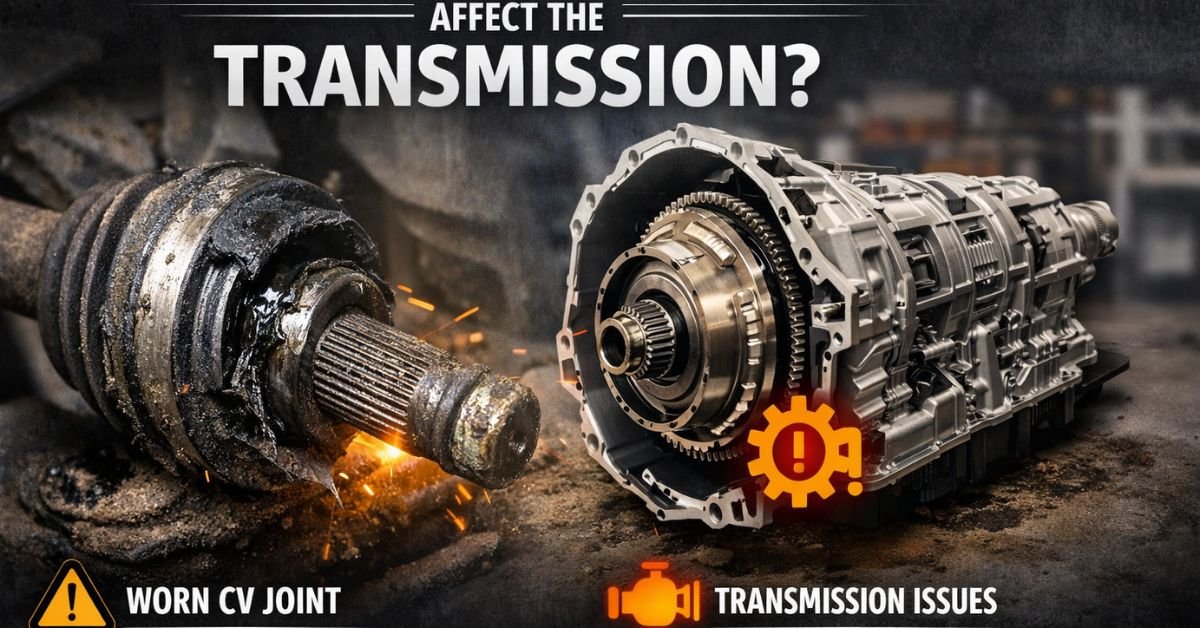
A bad CV joint does not directly damage the internal gears or clutches inside the transmission, but it can cause secondary problems that affect transmission performance and longevity.
1. Increased Stress on Transmission Components
When a CV joint wears out, it no longer transfers power smoothly. This creates uneven loads and vibrations that travel back through the axle into the transmission. Over time, these abnormal forces can stress transmission bearings, seals, and mounts, potentially accelerating wear.
2. Transmission Seal Damage and Fluid Leaks
The inner CV joint connects very close to the transmission output shaft. Excessive vibration or movement from a damaged CV joint can wear out transmission seals. Once a seal fails, transmission fluid may begin to leak. Low fluid levels can quickly lead to overheating, slipping, and serious internal damage.
3. Drivetrain Shudder Misinterpreted as Transmission Failure
A failing CV joint can cause shuddering or hesitation during acceleration—symptoms that feel very similar to a slipping or failing transmission. While this doesn’t mean the transmission is damaged, driving for long periods with these symptoms can lead to harsh engagement and increased internal stress.
4. Axle Failure Leading to Sudden Power Loss
If a CV joint fails completely, the axle can separate or stop transferring power to the wheels. In some vehicles, this can cause sudden loss of drive while the transmission is still spinning, which may shock internal components. Although rare, this scenario can contribute to transmission damage if ignored.
Must Read: Are Toyota CVT Transmissions Reliable?
Can Driving with a Bad CV Joint Destroy a Transmission?
In most cases, a bad CV joint will not instantly destroy a transmission. However, continued driving with a damaged CV joint increases the risk of:
- Transmission fluid leaks
- Overheating due to low fluid
- Premature wear of transmission mounts and bearings
Think of it as a chain reaction. The CV joint is part of the drivetrain system, and when one component fails, others must compensate. Over time, that added strain can turn a relatively inexpensive CV joint replacement into a costly transmission repair.
CV Joint vs Transmission: How to Tell the Difference
Knowing the difference between CV joint issues and transmission problems can save time and money:
- Clicking when turning → CV joint
- Vibration during acceleration → CV joint or axle
- Delayed shifting or slipping → transmission
- Grinding noises while driving straight → possible transmission
A professional inspection can confirm the cause before unnecessary transmission work is done.
Final Thoughts
So, can a bad CV joint affect the transmission? Yes—but indirectly. While a failing CV joint won’t usually damage the transmission right away, ignoring the problem can lead to fluid leaks, increased stress, and long-term drivetrain issues. The good news is that CV joint repairs are far less expensive than transmission repairs, making early diagnosis extremely important.
If you notice clicking noises, vibrations, or grease around your wheels, don’t ignore the warning signs. Fixing a CV joint early can protect your transmission, improve driving comfort, and save you from costly repairs down the road.