
Brake fluid is one of the most critical yet often overlooked fluids in any vehicle. If you own a 1995 GMC 1500, understanding how much brake fluid it needs—and how the system works—can help you maintain safe braking performance and avoid costly repairs. Whether you are topping off the fluid, bleeding the brakes, or doing a full brake system service, knowing the correct brake fluid capacity is essential.
In this guide, we’ll explain how much brake fluid a 1995 GMC 1500 requires, the correct type of brake fluid to use, signs of low brake fluid, and important maintenance tips to keep your truck braking safely.
How Much Brake Fluid Goes in a 1995 GMC 1500?
Brake Fluid Capacity for a 1995 GMC 1500
The 1995 GMC 1500 (including both 2WD and 4WD models) does not have a single “tank” for brake fluid like engine oil or coolant. Instead, brake fluid is stored in the master cylinder reservoir, and the total system capacity depends on whether you are topping off or completely flushing the system.
Approximate Brake Fluid Amount:
- Master cylinder reservoir capacity: About 12–16 ounces (350–475 ml)
- Complete brake system (dry fill or full flush): Approximately 1 to 1.5 quarts (0.95–1.4 liters)
In most normal situations, such as replacing brake pads or checking fluid levels, you will only need a small amount of brake fluid. A full quart is usually enough for bleeding all four brakes, while two quarts may be required if the system is completely dry or heavily contaminated.
Recommended Brake Fluid Type
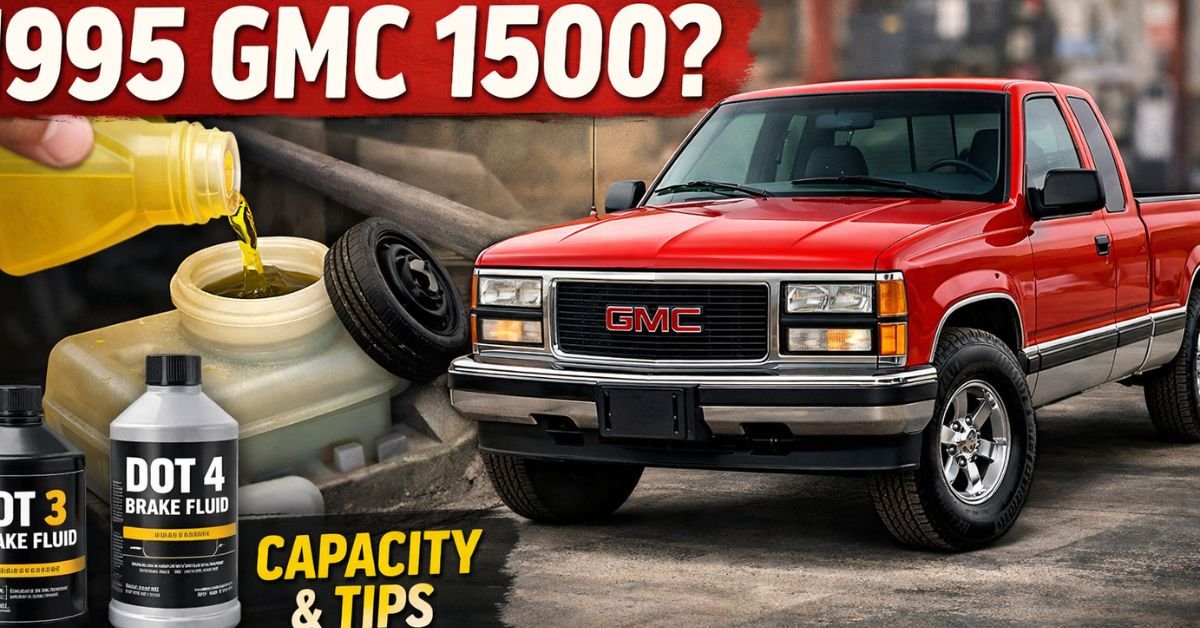
For the 1995 GMC 1500, DOT 3 brake fluid is the manufacturer-recommended choice.
Important Notes:
- DOT 3 is fully compatible with the factory brake system.
- DOT 4 can also be used, but it’s not required unless you are driving under extreme conditions (heavy towing, high heat).
- Do NOT use DOT 5 (silicone-based) brake fluid—it is not compatible and can damage seals.
Always use new, sealed brake fluid, as brake fluid absorbs moisture from the air, which reduces braking efficiency.
When Do You Need to Add or Replace Brake Fluid?
Brake fluid should not normally “disappear.” If the level is low, it usually means one of the following:
Common Reasons for Low Brake Fluid:
- Brake pad wear (fluid level drops as pads wear down)
- Small leaks in brake lines or hoses
- Worn master cylinder seals
- Brake caliper or wheel cylinder leaks
If you find yourself frequently adding brake fluid, it’s important to inspect the braking system for leaks.
How to Check Brake Fluid Level
Checking the brake fluid on a 1995 GMC 1500 is simple and takes only a few minutes:
- Park the truck on a level surface.
- Open the hood and locate the master cylinder (on the driver’s side firewall).
- Look at the fluid level through the reservoir.
- Make sure the fluid is situated between the “MAX” and “MIN” lines.
If it’s below the minimum line, add DOT 3 brake fluid slowly until it reaches the correct level. Do not overfill.
Must Read: Would Low Transmission Fluid Cause Slip?
Brake Fluid Bleeding and Replacement
If you’re bleeding the brakes after replacing calipers, wheel cylinders, or brake lines, expect to use more fluid.
Estimated Brake Fluid Use:
- Single brake bleed: 8–12 ounces
- All four wheels: 1 quart
- Complete system flush: 1–1.5 quarts
Bleeding removes air and moisture from the system, improving pedal feel and braking response.
Signs of Old or Contaminated Brake Fluid
Brake fluid should be clear to light amber in color. If it looks dark or dirty, it’s time for a replacement.
Warning Signs:
- Spongy or soft brake pedal
- Reduced braking performance
- Brake warning light
- Dark or cloudy brake fluid
Experts recommend replacing brake fluid every 2–3 years, even if there are no obvious problems.
Final Thoughts
For a 1995 GMC 1500, the brake fluid capacity depends on the job you’re doing. A simple top-off may only require a few ounces, while a full system flush typically needs 1 to 1.5 quarts of DOT 3 brake fluid. Using the correct type and amount of brake fluid helps ensure consistent braking performance and extends the life of your brake components.
Regular brake fluid checks are a small maintenance task that can make a big difference in safety. If you notice frequent fluid loss or braking issues, it’s best to have the system inspected by a professional.