
When you think about the heart of a vehicle, the engine usually comes to mind first. But right behind it—both literally and mechanically—is another essential component: the transmission. Without the transmission, all the engine’s power would be useless because nothing would transfer torque to the wheels. “How many moving parts are in a transmission?” is one of the most often asked inquiries by car owners. The simple answer is: a lot. But to truly understand why transmissions contain so many moving components, it helps to explore their internal structure, how they work, and why precision is so important.
How Many Moving Parts Are in a Transmission? A Complete Breakdown
Why Transmissions Have So Many Parts
Transmissions must do several jobs at once:
- Regulate the engine’s output speed
- Convert power into usable torque
- Provide multiple gear ratios
- Allow smooth acceleration
- Enable reverse
- Help the vehicle idle without stalling
To accomplish all this, both automatic and manual transmissions rely on dozens—and sometimes hundreds—of individual parts that work together in precise harmony. The exact number of moving parts varies depending on the type of transmission.
How Many Moving Parts Are in an Automatic Transmission?
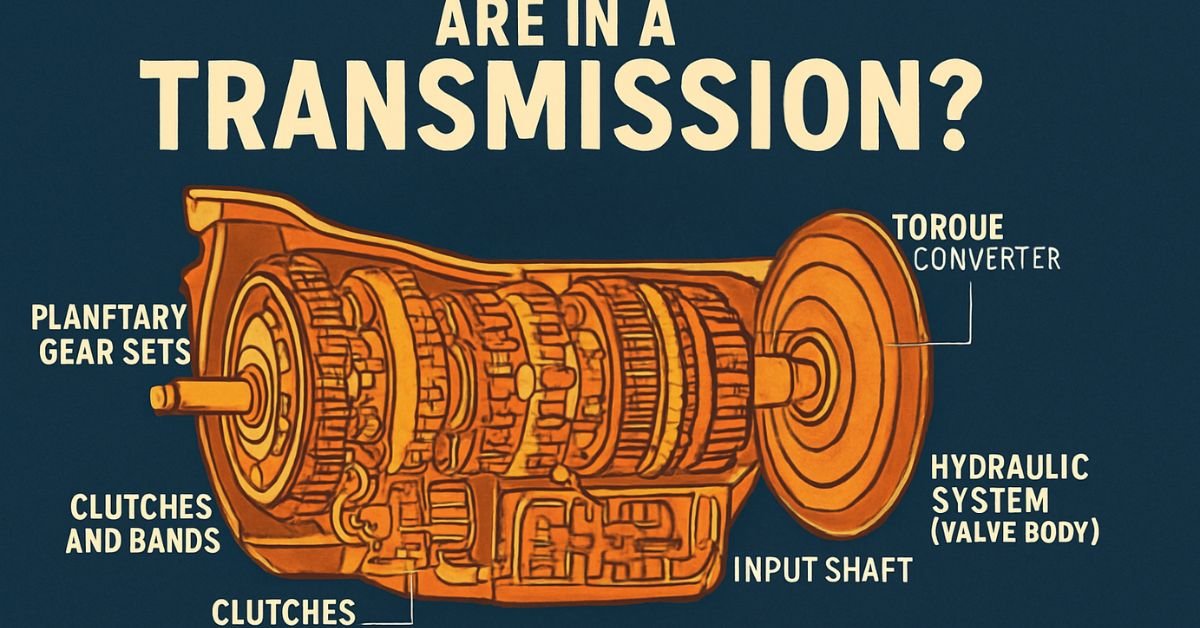
Automatic transmissions are extremely complex. Unlike manual transmissions, which rely on the driver to shift gears, an automatic uses an intricate combination of hydraulics, electronics, and mechanical components. On average, a modern automatic transmission contains over 500 moving parts, though the exact number varies depending on the model and configuration.
Here are some of the major moving components:
1. Planetary Gear Sets
These are the heart of most automatics. A single transmission may have two or three planetary sets working together. Each set includes:
- Sun gear
- Planet gears
- Planet carrier
- Ring gear
Each of these gears rotates independently, creating multiple gear ratios.
2. Clutches and Bands
Automatic transmissions use multi-plate clutches and bands that tighten or release to control the gear sets. Each clutch pack has several plates, springs, and friction discs—all of which are moving parts.
3. Torque Converter
Located between the engine and the transmission, a torque converter contains:
- Turbine
- Impeller
- Stator
- Clutch assembly
All these components rotate to transmit engine power smoothly.
4. Hydraulic System (Valve Body)
The valve body uses dozens of valves, check balls, solenoids, and passages to control fluid pressure. Many of these valves move constantly as fluid flows through.
5. Pump and Input Shaft
The transmission pump, usually gear-driven, is another moving part essential for hydraulic pressure. The input and output shafts also rotate continuously.
When all these are combined, an automatic transmission easily reaches the hundreds of moving parts range.
How Many Moving Parts Are in a Manual Transmission?
Manual transmissions are simpler but still contain many precision-engineered parts. A typical manual transmission contains around 100–150 moving parts.
Some key components include:
1. Gears
Manual gearboxes use sets of gears that mesh with each other. Each gear rotates at a different speed.
2. Synchronizers
These components match gear speeds before engagement, preventing grinding. Each synchronizer contains rings, hubs, and springs.
3. Shift Forks and Rails
When the driver shifts, these mechanical arms move gears into place.
4. Bearings
Manual transmissions rely on multiple bearings—roller, ball, and needle—to reduce friction. Every bearing inside the transmission is a moving part.
5. Shafts
The input shaft, main shaft, and countershaft all rotate constantly when the vehicle is moving.
While not as complex as an automatic, a manual transmission still contains many precisely engineered moving elements.
Why the Number of Moving Parts Matters
The complexity in transmissions is why they are expensive to repair or replace. More moving parts mean:
- More wear points
- Higher risk of failure
- Greater maintenance needs
- More precise fluid requirements
This is especially true for CVTs (continuously variable transmissions), which rely on pulleys and belts. CVTs may have fewer traditional gears but still contain many moving pieces inside the pulley and hydraulic systems.
Final Thoughts
So, how many moving parts are in a transmission?
- Automatic transmission: 500+ moving parts
- Manual transmission: 100–150 moving parts
- CVT transmission: Dozens of pulleys, belts, and hydraulic components
Although the exact number depends on the design, one thing is clear: transmissions are among the most complex parts of a vehicle. This complexity is why regular maintenance—especially fluid changes—is crucial to keeping your transmission healthy and extending its lifespan.