
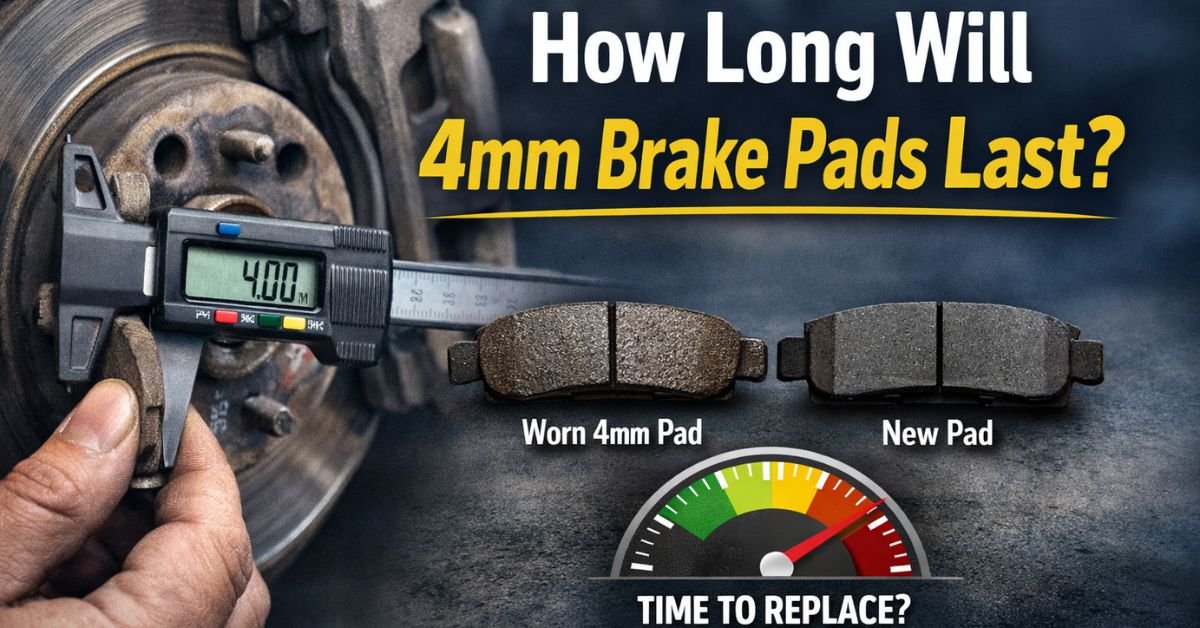
One of your car’s most crucial safety features is the brake pads. They allow you to slow down and stop by creating friction against the brake rotors. The pads deteriorate over time as a result of this friction. If you’ve recently checked your brakes and discovered that your brake pads are down to 4mm, you may be wondering: How long will they last?
In this article, we’ll explore what 4mm brake pads mean, how long you can expect them to last, what factors affect their lifespan, and when you should replace them.
How Long Will 4mm Brake Pads Last? A Complete Guide for Drivers
What Does 4mm Brake Pad Thickness Mean?
New brake pads typically start with a thickness of 10mm to 12mm or more, depending on the manufacturer. As you drive, this material slowly wears away. When your pads reach 4mm, they are considered partially worn and approaching the end of their service life.
Most automotive professionals recommend replacing brake pads when they reach 3mm or less. At 4mm, you’re close to that limit, meaning your pads still have some life left—but not much.
Think of 4mm as the “warning zone.” Your brakes still work, but replacement should be planned soon.
Average Lifespan of 4mm Brake Pads
On average, brake pads that are at 4mm thickness can last:
- 3,000 to 8,000 miles
- 4,800 to 13,000 kilometers
However, this is only a general estimate. Some drivers may get more life, while others may need replacement sooner.
If you drive gently and mostly on highways, your 4mm pads might last closer to 8,000 miles. If you drive in heavy traffic or brake aggressively, they may wear out in just a few thousand miles.
Factors That Affect How Long 4mm Brake Pads Last
The rate at which your brake pads deteriorate is influenced by several important factors.
1. Driving Style
Your driving habits play a major role in brake pad lifespan.
- Aggressive braking (hard stops, late braking) wears pads faster
- Smooth braking extends pad life
- Frequent stop-and-go driving increases wear
Drivers who anticipate traffic and brake gradually usually get more mileage from their pads.
2. City vs. Highway Driving
Where you drive also matters.
- City driving: More stops, more wear
- Highway driving: Fewer stops, less wear
If most of your driving is in traffic-heavy urban areas, your 4mm pads will wear out faster than someone who mainly drives on open roads.
3. Vehicle Weight and Load
Heavier vehicles place more stress on braking systems.
- SUVs, trucks, and loaded vehicles wear pads faster
- Light sedans and compact cars are easier on brakes
Carrying heavy cargo or towing can significantly shorten brake pad life.
4. Brake Pad Material
Not all brake pads are made the same.
- Organic pads: Quieter, softer, wear faster
- Semi-metallic pads: Durable, good performance, moderate wear
- Ceramic pads: Long-lasting, low dust, higher cost
If your pads are ceramic or semi-metallic, they may last longer at 4mm than organic pads.
5. Rotor Condition
Worn or damaged brake rotors can reduce pad life.
- Warped rotors cause uneven wear
- Rough rotors grind pads faster
- Poor-quality rotors increase friction
Keeping rotors in good condition helps extend brake pad life.
Warning Signs That Your 4mm Brake Pads Are Wearing Out
As your brake pads get thinner, you may notice certain symptoms:
- Squealing or squeaking sounds
- Grinding noise (serious warning sign)
- Reduced braking performance
- Vibration when braking
- Brake warning light (in some vehicles)
If you hear grinding, it means the pads may already be worn through, and metal is contacting metal. This can damage your rotors and lead to expensive repairs.
Must Read: Do You Need to Bleed Brakes After Changing Pads?
Is Using 4mm Brake Pads While Driving Safe?
Yes, it is generally safe to drive with 4mm brake pads—for a short time. However, they are close to the replacement point. Waiting too long increases the risk of:
- Reduced stopping power
- Brake failure in emergencies
- Rotor damage
- Higher repair costs
For safety and peace of mind, most experts recommend replacing pads before they drop below 3mm.
When Should You Replace 4mm Brake Pads?
You should plan to replace your brake pads when:
- They reach 3mm thickness
- You hear grinding noises
- Braking performance decreases
- Your mechanic recommends replacement
If your pads are currently at 4mm, it’s wise to schedule replacement within the next few months, depending on your driving habits.
How to Make Your Brake Pads Last Longer
If you want to extend the life of your brake pads, try these tips:
- Brake smoothly and early
- Avoid sudden stops
- Maintain safe following distances
- Reduce unnecessary vehicle weight
- Keep rotors in good condition
- Have regular brake inspections
Small changes in driving behavior can add thousands of miles to your brake pad life.
Final Thoughts
So, how long will 4mm brake pads last? In most cases, you can expect 3,000 to 8,000 miles, depending on your driving style, environment, and vehicle type. While 4mm pads still work, they are nearing the end of their useful life.
Replacing brake pads on time is one of the simplest ways to stay safe on the road and avoid costly repairs. If your pads are at 4mm, start planning for a replacement soon—your safety depends on it.