
When replacing worn brake pads, many car owners wonder if bleeding the brakes is necessary afterward. Brake maintenance is essential for safety, and understanding when to bleed your brakes can help you avoid problems like a soft pedal or reduced stopping power. In this article, we’ll explore whether bleeding is required after changing brake pads, when it becomes necessary, and how it affects your braking system.
Do You Need to Bleed Brakes After Changing Pads?
Understanding How Your Brake System Works
Before deciding whether bleeding is needed, it helps to understand how brakes operate. The majority of contemporary automobiles use hydraulic brakes. When you press the brake pedal, brake fluid travels through brake lines and hoses, applying pressure to the calipers. This pressure pushes the brake pads against the rotors, slowing the vehicle.
Brake fluid is designed to be incompressible, which means it transfers force efficiently. However, air can be compressed. If air enters the system, it reduces braking efficiency and makes the pedal feel spongy. That’s where brake bleeding comes in—it removes trapped air from the brake lines.
Do You Always Need to Bleed Brakes After Changing Pads?
In most cases, you do not need to bleed your brakes after changing pads—as long as the brake system remains sealed during the process.
If you simply remove the old pads, compress the caliper piston, and install new ones without opening any brake lines or bleeder valves, no air enters the system. Since no air is introduced, bleeding is unnecessary.
For routine pad replacement, bleeding is usually optional rather than required.
When Brake Bleeding Is Necessary
While pad replacement alone doesn’t always require bleeding, there are situations where it becomes important.
1. If You Opened the Brake System
If you disconnected a brake line, loosened a hose, or opened a bleeder valve, air likely entered the system. In this case, bleeding is mandatory to restore proper brake pressure.
2. If the Brake Pedal Feels Spongy
After installing new pads, if the brake pedal feels soft, mushy, or goes too close to the floor, air may be present. Bleeding helps remove this air and improves pedal firmness.
3. If Brake Fluid Was Low or Contaminated
Air may enter the system due to low brake fluid levels. Also, old or contaminated fluid absorbs moisture over time, reducing braking performance. If you notice dark or dirty fluid, bleeding and flushing are recommended.
4. If You Replaced Calipers or Hoses
Any time you change calipers, wheel cylinders, or brake hoses, bleeding is required. These repairs involve opening the hydraulic system, which introduces air.
Why Some Mechanics Recommend Bleeding Anyway
Even when it isn’t strictly necessary, some mechanics suggest bleeding after pad replacement as preventive maintenance. There are several reasons for this:
- It refreshes old brake fluid
- It improves pedal feel
- It removes small air bubbles
- It enhances braking response
Brake fluid degrades over time, so bleeding every 2–3 years is good practice. If your fluid hasn’t been changed in a long time, replacing pads is a good opportunity to service the system.
Must Read: Are Wagner Brake Pads Good?
What Happens If You Skip Bleeding When It’s Needed?
If your brakes contain air and you don’t bleed them, you may experience:
- Longer stopping distances
- Reduced braking power
- Inconsistent pedal response
- Increased accident risk
These issues compromise safety and should never be ignored. If your brakes don’t feel right after pad replacement, bleeding should be done immediately.
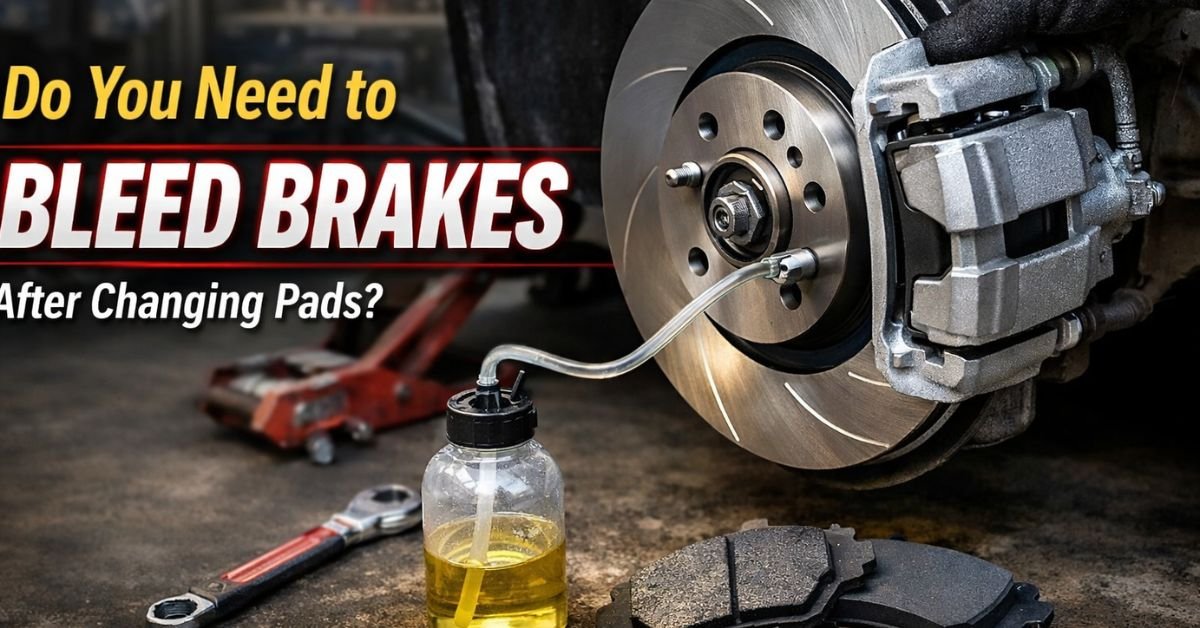
Basic Overview of the Brake Bleeding Process
While procedures vary by vehicle, the general process includes:
- Filling the master cylinder with fresh brake fluid
- Attaching a clear tube to the bleeder valve
- Pumping the brake pedal
- Opening and closing the bleeder valve
- Repeating until no air bubbles appear
This process is usually done one wheel at a time, starting from the wheel farthest from the master cylinder.
If you’re unfamiliar with the procedure, it’s best to let a professional handle it.
Should You Bleed Your Brakes After Changing Pads?
Here’s a simple guideline:
| Situation | Bleeding Required? |
|---|---|
| Pad replacement only | ❌ Usually No |
| Opened brake line | ✅ Yes |
| Soft pedal | ✅ Yes |
| Old brake fluid | ✅ Recommended |
| New calipers/hoses | ✅ Yes |
Final Thoughts
So, do you need to bleed brakes after changing pads? In most routine pad replacement jobs, the answer is no—as long as the hydraulic system remains sealed and the pedal feels firm afterward. However, bleeding becomes essential if air enters the system, fluid is old, or braking performance feels abnormal.
For best results, always check brake fluid levels after installing new pads and test the pedal before driving. If anything feels unusual, bleeding the brakes is a simple step that can restore safety and confidence on the road.