
When your transmission begins to overheat, it’s one of the most serious warning signs your vehicle can give you. Heat is the number one enemy of any automatic transmission, and failing to address it quickly can lead to burnt fluid, slipping gears, internal damage, and even total transmission failure. The good news is that an overheating transmission can often be fixed if you catch the symptoms early and take the right steps. In this detailed guide, we’ll walk you through why transmissions overheat, how to fix the problem, and prevent overheating from happening again.
How to Fix an Overheating Transmission: A Complete Guide
Why Does a Transmission Overheat?
Before you can fix an overheating transmission, it helps to understand the most common causes:
1. Low Transmission Fluid
Transmission fluid lubricates, cools, and provides hydraulic pressure. When it’s low, your transmission will run hotter than normal and eventually overheat.
2. Old or Burnt Transmission Fluid
Over time, fluid breaks down, loses lubricating properties, and becomes dark or burnt. This causes higher friction and heat buildup.
3. Heavy Loads or Towing
Pulling trailers, hauling heavy cargo, or driving in extremely hot climates puts extra stress on the transmission, causing temperatures to rise.
4. Clogged or Failing Transmission Cooler
The transmission cooler dissipates heat from the fluid. A clogged line or faulty cooler restricts the flow and leads to overheating.
5. Internal Wear or Failing Components
Worn clutches, a failing torque converter, or blocked valves in the valve body can all cause extra friction and heat.
Symptoms of an Overheating Transmission
Recognizing the signs early can save you thousands in repairs:
- Burning smell
- Dark or burnt transmission fluid
- Delayed or slipping gear shifts
- Warning light or “Transmission Hot” message
- Rough shifting or loss of power
If you notice any of these symptoms, pull over safely and allow the vehicle to cool before continuing.
How to Fix an Overheating Transmission
Here are the steps you can take to diagnose and fix an overheating transmission:
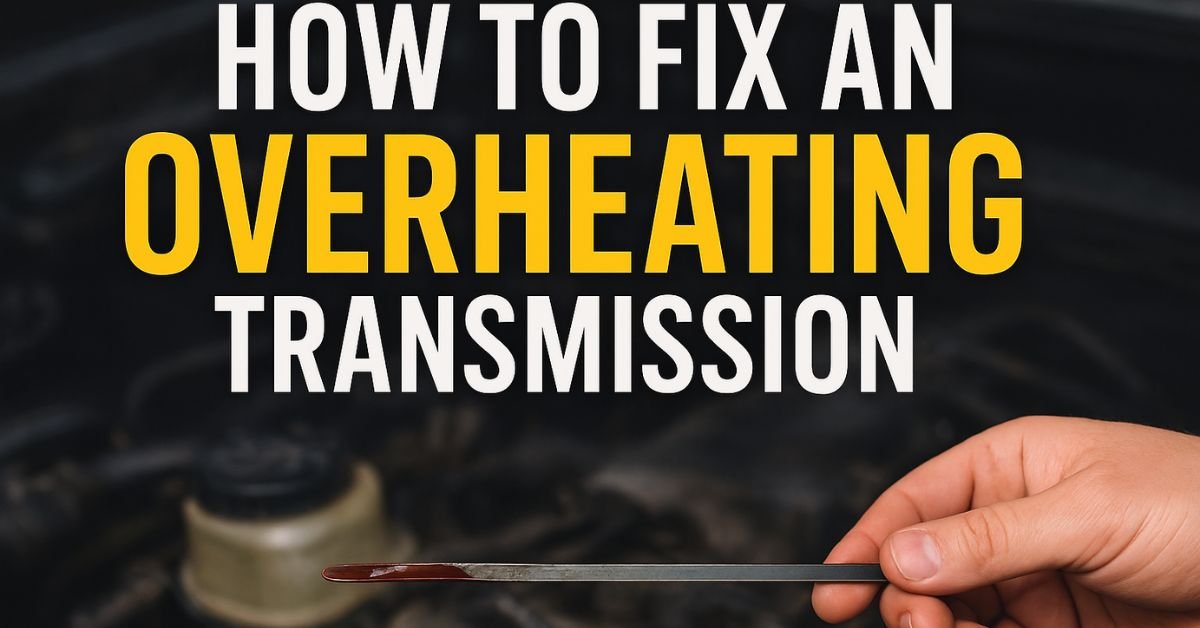
1. Check the Transmission Fluid Level
This is the first and easiest step.
- Park the vehicle on level ground.
- Start the engine (for most vehicles).
- Pull out the transmission dipstick.
- Check if the fluid is within the recommended range.
If it’s low, top it off with the correct fluid type recommended by your manufacturer.
2. Inspect the Fluid Condition
Healthy transmission fluid should be red or pink and smell clean. If you notice:
- Dark brown or black color
- Burnt smell
- Metal shavings
…you likely need a complete transmission fluid change or flush.
Old or burnt fluid is one of the most common causes of overheating.
3. Replace or Flush the Transmission Fluid
If your fluid is degraded, flushing or replacing it can improve cooling dramatically. Be sure to:
- Use the exact ATF specified for your vehicle
- Change the transmission filter if applicable
- Consider a full flush only if the system is in good condition; older transmissions may be better with a drain-and-fill
4. Check the Transmission Cooler
The cooler could be clogged or failing. Symptoms include:
- Hot fluid leaving the lines
- Minimal cooling effect
- Leaking fluid near the radiator or auxiliary cooler
If clogged, the cooler or lines may need to be flushed or replaced. For towing vehicles, adding an auxiliary transmission cooler can reduce temperatures significantly.
5. Inspect for Blocked Airflow
Debris in front of the radiator or transmission cooler can also cause overheating. Clean out:
- Dirt
- Bugs
- Mud
- Leaves
Anything blocking airflow reduces cooling performance.
6. Reduce Load and Driving Stress
If overheating occurs while towing or in hot weather:
- Pull over and let the vehicle cool down
- Downshift to reduce strain
- Avoid aggressive acceleration
- Use tow/haul mode if equipped
7. Check for Internal Transmission Problems
If overheating continues after fluid service, you may have internal issues such as:
- Failing torque converter
- Worn clutch packs
- Valve body malfunction
These require diagnosis by a professional transmission technician.
How to Prevent Your Transmission from Overheating
Preventing the problem is much easier than repairing it. Here’s what you can do:
- Change transmission fluid every 30,000–60,000 miles depending on your vehicle
- Install an auxiliary transmission cooler if you tow or drive in hot climates
- Maintain proper fluid levels
- Avoid riding the brakes on downhill drives
- Don’t overload the vehicle
A well-maintained transmission can last over 150,000 miles or even longer.
Final Thoughts
An overheating transmission is a serious issue, but it’s often fixable if caught early. By checking your fluid levels, maintaining your cooling system, and addressing mechanical issues promptly, you can prolong the life of your transmission and avoid costly repairs. Whether you’re driving in hot weather, towing heavy loads, or simply commuting daily, proper maintenance is the key to keeping your transmission cool and running smoothly.