
Reading a transmission dipstick is one of the most important yet misunderstood vehicle maintenance tasks. Many drivers regularly check engine oil but overlook transmission fluid, even though it plays a critical role in how smoothly and reliably a vehicle operates. Knowing how to read a transmission dipstick correctly can help you prevent costly repairs, spot problems early, and keep your vehicle running at its best.
In this guide, we’ll explain what a transmission dipstick is, why it matters, and exactly how to read it step by step.
How Do You Read a Transmission Dipstick? A Step-by-Step Guide for Beginners
What Is a Transmission Dipstick?
A transmission dipstick is a long metal or plastic rod used to check the level and condition of automatic transmission fluid (ATF). It is usually located in the engine bay and marked with a brightly colored handle, often red or yellow, to make it easier to find.
Unlike engine oil dipsticks, transmission dipsticks are designed to measure fluid under specific conditions, such as when the engine is running and the fluid is warm. This difference is important and often causes confusion for vehicle owners.
Why Checking Transmission Fluid Is Important
Transmission fluid performs several essential functions:
- Lubricates moving internal components
- Helps transfer power through hydraulic pressure
- Cools the transmission
- Cleans and protects metal surfaces
If the fluid level is too low, the transmission may slip, hesitate, or overheat. If it’s too high, the fluid can foam, leading to poor shifting and internal damage. Reading the dipstick properly ensures the fluid level is within the safe operating range.
When Should You Check the Transmission Dipstick?
Most manufacturers recommend checking automatic transmission fluid when:
- The engine is warm
- The vehicle is parked on level ground
- The engine is running (for many vehicles)
However, some vehicles may have different requirements, so it’s always a good idea to check your owner’s manual first. Checking at the wrong time can lead to an inaccurate reading.
Step-by-Step: How to Read a Transmission Dipstick
Step 1: Warm Up the Vehicle
Allow the engine to achieve its typical operating temperature after starting it. This usually takes 10 to 15 minutes of driving. Warm fluid expands, and the dipstick markings are calibrated for this condition.
Step 2: Park on Level Ground
Apply the parking brake after parking the car on a level surface. This ensures the fluid settles evenly inside the transmission.
Step 3: Cycle Through the Gears
With your foot on the brake, slowly shift through all the gears—Park, Reverse, Neutral, Drive, and back to Park. This helps circulate fluid through the transmission passages.
Step 4: Locate the Dipstick
Open the hood and find the transmission dipstick. It is usually labeled or color-coded. Take care not to mistake it for the engine oil dipstick.
Step 5: Remove and Clean the Dipstick
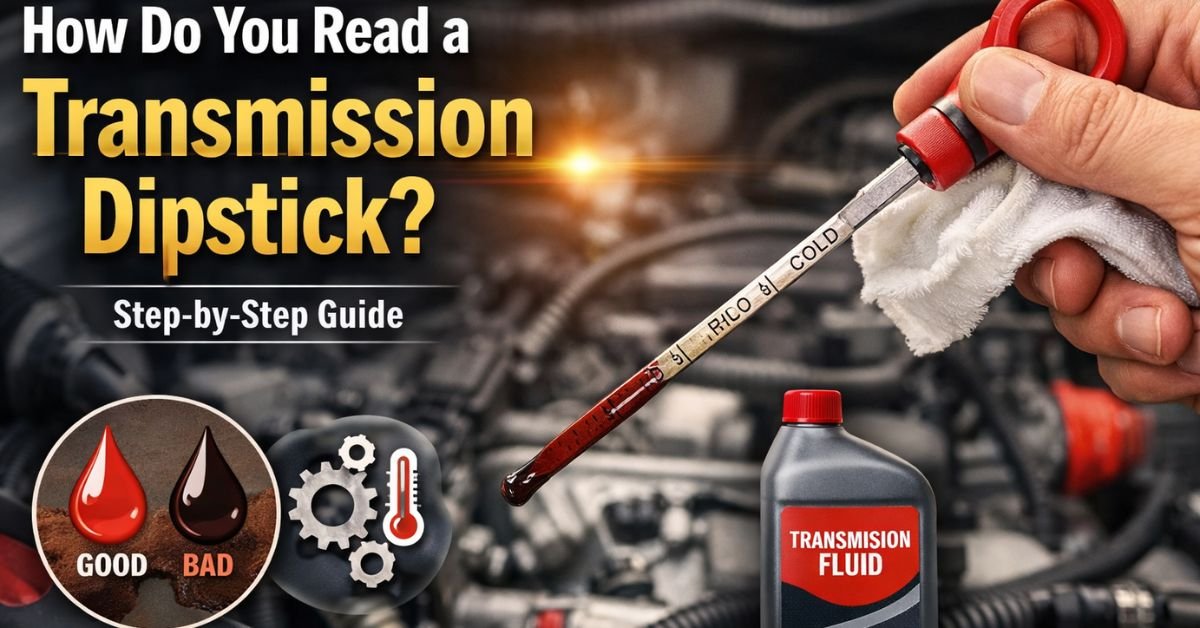
Remove the dipstick and use a paper towel or lint-free cloth to clean it. This removes old fluid residue that could affect the reading.
Step 6: Reinsert and Remove Again
Re-insert the dipstick completely into its tube, then remove it once more. This second pull is the accurate reading.
Step 7: Read the Fluid Level
Look at the markings on the dipstick. Most have indicators such as:
- “HOT” and “COLD”
- “FULL” and “ADD”
- Crosshatched or shaded areas
The fluid level need to be within the suggested range. If it’s below the minimum mark, the transmission may need fluid. If it’s above the maximum, excess fluid may need to be removed.
How to Check the Condition of Transmission Fluid
Reading the dipstick isn’t just about fluid level; it’s also about fluid condition.
Color
Healthy transmission fluid is usually bright red or light pink. Dark brown or black fluid can indicate overheating or contamination.
Smell
Transmission fluid should have a mild, slightly sweet smell. A strong burnt odor may signal internal transmission problems.
Texture
Apply a tiny bit of liquid between your fingertips. It should feel smooth, not gritty or thick.
Common Mistakes to Avoid
- Checking with the engine off (unless specified by the manufacturer)
- Reading the dipstick cold when it requires a hot reading
- Overfilling the transmission
- Using the wrong type of transmission fluid
These mistakes can lead to inaccurate readings or even damage the transmission.
Vehicles Without Transmission Dipsticks
Many modern vehicles no longer have a traditional transmission dipstick. These sealed systems require special tools and procedures to check fluid levels and are usually serviced by professionals. If your vehicle doesn’t have a dipstick, consult your owner’s manual or a qualified mechanic.
Final Thoughts
Learning how to read a transmission dipstick is a simple yet powerful skill for any vehicle owner. It allows you to monitor fluid level and condition, spot early warning signs, and protect one of the most expensive components in your vehicle. By following the correct steps and checking your transmission fluid regularly, you can extend transmission life, improve performance, and avoid unnecessary repairs.
Regular maintenance starts with understanding your vehicle—and reading the transmission dipstick is a great place to begin.