
Brake squealing at low speeds is one of the most common and frustrating problems vehicle owners experience. That high-pitched noise when slowing down in traffic, parking, or approaching a stop sign can be embarrassing and concerning. While brake squeal does not always indicate a serious safety issue, it should never be ignored because it may signal wear, contamination, or improper brake components.
In this guide, we’ll explain why brakes squeal at low speeds and how you can effectively stop the noise.
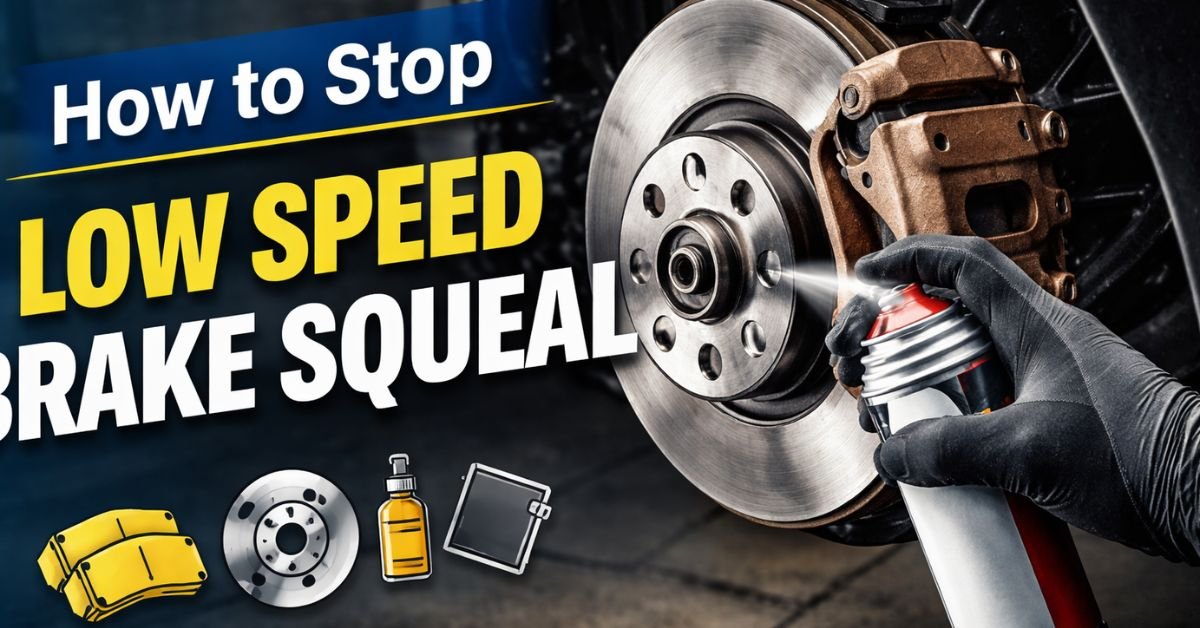
How to Stop Low Speed Brake Squeal: Causes and Effective Solutions
What Causes Low Speed Brake Squeal?
Brake squeal usually happens due to vibration between brake components. When the brake pads press against the rotor, friction is created to slow the vehicle. If vibrations occur during this process, they produce the squealing sound you hear.
Here are the most common causes:
1. Worn Brake Pads
Brake pads naturally wear down over time. Many modern brake pads include wear indicators that intentionally create a squealing noise when the pads become thin. This sound acts as a warning that replacement is needed.
If ignored, worn pads can damage brake rotors and increase repair costs.
2. Dust and Debris Build-Up
Brake dust, dirt, or small road debris trapped between the rotor and brake pad can cause noise, especially at low speeds. This issue often appears after driving on dusty roads or through construction areas.
Cleaning the braking system usually solves this problem.
3. Lack of Lubrication
Brake components such as caliper slides and backing plates require proper lubrication. Without lubrication, metal parts rub against each other and create vibration, leading to squealing sounds.
Using high-temperature brake lubricant on contact points helps eliminate noise.
4. Glazed Brake Pads or Rotors
Excessive heat from frequent braking or aggressive driving can harden the surface of brake pads or rotors. This condition, known as glazing, reduces friction efficiency and produces squealing during slow braking.
Light sanding or replacing affected components may be required.
5. Low-Quality Brake Pads
Some aftermarket brake pads contain harder materials that last longer but generate more noise. Semi-metallic pads, for example, are durable but often louder compared to ceramic brake pads.
Upgrading to premium or ceramic brake pads can significantly reduce squeal.
How to Stop Low Speed Brake Squeal
Below are proven solutions to eliminate brake noise:
✅ Inspect and Replace Brake Pads
Check pad thickness regularly. If brake pads are worn below the recommended level, replace them immediately. Installing high-quality pads often solves squealing issues instantly.
✅ Clean the Brake System
Remove wheels and clean brake components using brake cleaner spray. This removes dust, grease, and debris that may cause vibration.
Avoid using water or compressed air alone, as brake dust may remain trapped.
✅ Apply Brake Lubricant
Apply brake grease to:
- Caliper slide pins
- Pad backing plates
- Contact points between pads and calipers
Never apply lubricant to the rotor or pad friction surface.
Must Read: How Often Should You Have Your Brakes Checked?
✅ Resurface or Replace Rotors
If rotors are uneven, warped, or glazed, resurfacing or replacement may be necessary. Smooth rotor surfaces help brake pads engage quietly and evenly.
✅ Install Anti-Squeal Shims
Anti-squeal shims or damping clips reduce vibration between brake pads and calipers. Many modern brake kits already include these components.
✅ Proper Brake Bedding
After installing new brake pads, proper bedding (break-in procedure) is essential. Gradual braking from moderate speeds allows pads to transfer material evenly onto the rotor surface, preventing noise and improving performance.
When Should You See a Mechanic?
You should have your brakes inspected immediately if you notice:
- Grinding noises
- Steering vibration while braking
- Reduced braking performance
- Brake warning light activation
These symptoms may indicate more serious brake system problems.
Preventing Brake Squeal in the Future
Preventive maintenance is the best way to avoid brake noise:
- Inspect brakes every 10,000–15,000 km
- Use quality brake components
- Avoid aggressive braking habits
- Keep brake systems clean
- Perform professional brake servicing regularly
Conclusion
Low speed brake squeal is usually caused by vibration, worn components, or contamination within the braking system. Fortunately, most cases can be resolved through proper cleaning, lubrication, or replacing brake pads with higher-quality options.
Ignoring brake noise may lead to costly repairs or reduced braking efficiency. By addressing the issue early and maintaining your brake system properly, you can enjoy quieter, safer, and smoother driving.