
Your vehicle’s braking system is one of the most important safety components on the road. While many drivers regularly check engine oil or tire pressure, brake fluid is often ignored until a serious problem occurs. Knowing how to tell if brake fluid is low can help you prevent brake failure, costly repairs, and dangerous driving situations.
Brake fluid plays a critical role in transferring force from your brake pedal to the braking components at each wheel. When fluid levels drop, your braking performance can quickly become unsafe. Fortunately, your vehicle usually gives several warning signs before the situation becomes critical.
How to Tell If Brake Fluid Is Low: Warning Signs Every Driver Should Know
Why Is Brake Fluid Important and What Is It?
Brake fluid is a hydraulic liquid that allows your braking system to function properly. When you press the brake pedal, the fluid moves through brake lines to activate the brake calipers or wheel cylinders, slowing or stopping the vehicle.
Unlike fuel or engine oil, brake fluid does not get “used up” during normal operation. So if the level becomes low, it usually indicates a problem such as worn brake components or a leak somewhere in the system.
Common Signs Your Brake Fluid Is Low
1. Brake Warning Light Turns On
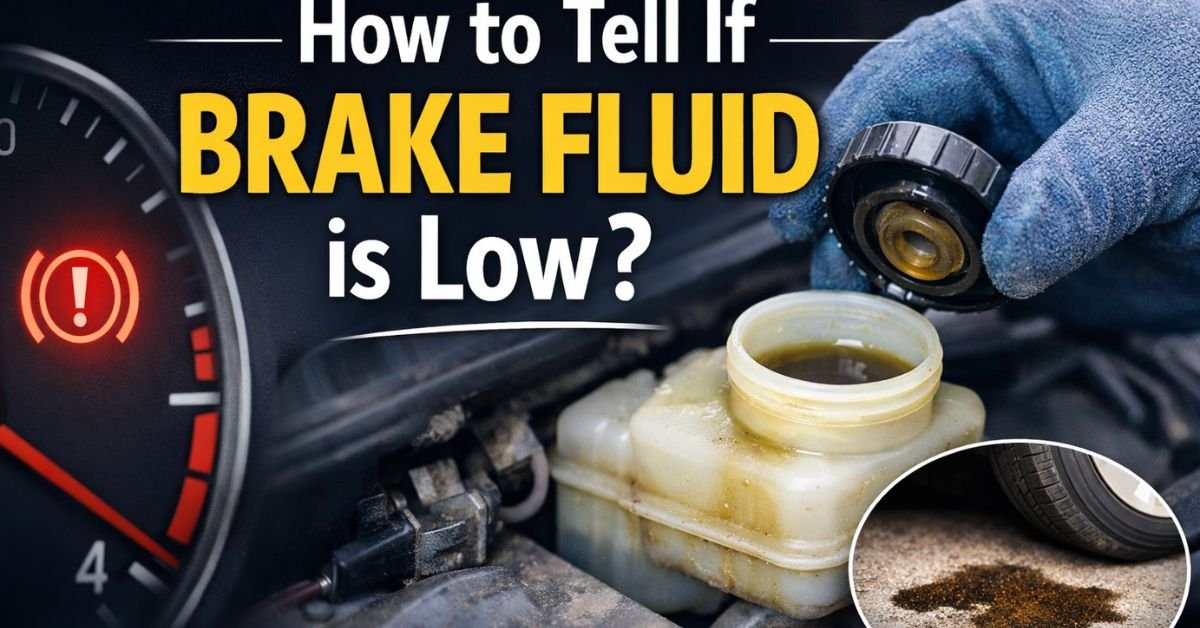
One of the easiest ways to know your brake fluid may be low is when the brake warning light appears on your dashboard. This light can indicate several brake-related issues, but low fluid is one of the most common causes.
If this warning light comes on, you should check your brake fluid reservoir immediately instead of continuing to drive normally.
2. Soft or Spongy Brake Pedal
A soft or spongy brake pedal often means there isn’t enough hydraulic pressure in the system. Low brake fluid allows air to enter brake lines, reducing braking efficiency.
You may notice:
- The pedal goes closer to the floor
- Increased stopping distance
- Reduced braking response
This symptom should never be ignored because braking ability may suddenly worsen.
3. Longer Stopping Distance
If your vehicle takes longer than usual to stop, low brake fluid could be the reason. Without proper hydraulic pressure, brakes cannot apply enough force to slow the wheels efficiently.
Drivers often notice this issue during sudden braking or in heavy traffic situations.
4. Unusual Brake Noises
Although brake noise usually relates to worn brake pads, low brake fluid can also contribute to grinding or squealing sounds. This happens because insufficient fluid may prevent brake components from operating smoothly.
If noise appears together with weak braking, checking the fluid level should be your first step.
5. Visible Fluid Leak
Brake fluid leaks are a serious warning sign. If you see a clear to light brown liquid under your vehicle near the wheels or engine area, your braking system may be leaking.
Brake fluid feels slightly oily but is not as thick as engine oil. Any suspected leak should be inspected immediately by a professional mechanic.
How to Check Brake Fluid Level
Checking brake fluid is simple and takes only a few minutes:
- Park your vehicle on a flat surface.
- After turning off the engine, let it cool.
- Locate the brake fluid reservoir by opening the hood; it is often located on the driver’s side, next to the firewall.
- Check the markings labeled MIN and MAX on the reservoir.
- Ensure the fluid level sits closer to the MAX line.
Most modern vehicles have transparent reservoirs, so you can check the level without opening the cap.
Must Read: How to Stop Low Speed Brake Squeal?
Why Brake Fluid Becomes Low
Low brake fluid usually happens because of:
- Worn brake pads
- Brake line leaks
- Damaged calipers or wheel cylinders
- Master cylinder problems
- Poor maintenance practices
As brake pads wear down, more fluid is required inside the system, which naturally lowers the reservoir level over time.
Is Driving While Using Low Brake Fluid Safe?
Driving with low brake fluid is dangerous and strongly discouraged. Reduced braking performance increases accident risk, especially during emergency stops.
If you suspect low brake fluid:
- Avoid long trips
- Drive slowly if necessary
- Inspect or refill fluid immediately
- Visit a mechanic for inspection
Complete brake failure could result from ignoring the problem.
How Often Should Brake Fluid Be Checked?
Experts recommend checking brake fluid during routine maintenance or at least every oil change. Many manufacturers suggest replacing brake fluid every 2–3 years because it absorbs moisture over time, which reduces braking efficiency.
Regular inspections help ensure safe driving and extend the life of your braking system.
Final Thoughts
Understanding how to tell if brake fluid is low is essential for every driver. Warning lights, soft brake pedals, longer stopping distances, and visible leaks are all signs that should never be ignored. A quick inspection today can prevent expensive repairs and protect you and others on the road.
Proper brake maintenance isn’t just about vehicle performance — it’s about safety. Make brake fluid checks part of your regular vehicle care routine to keep your braking system working reliably at all times.