
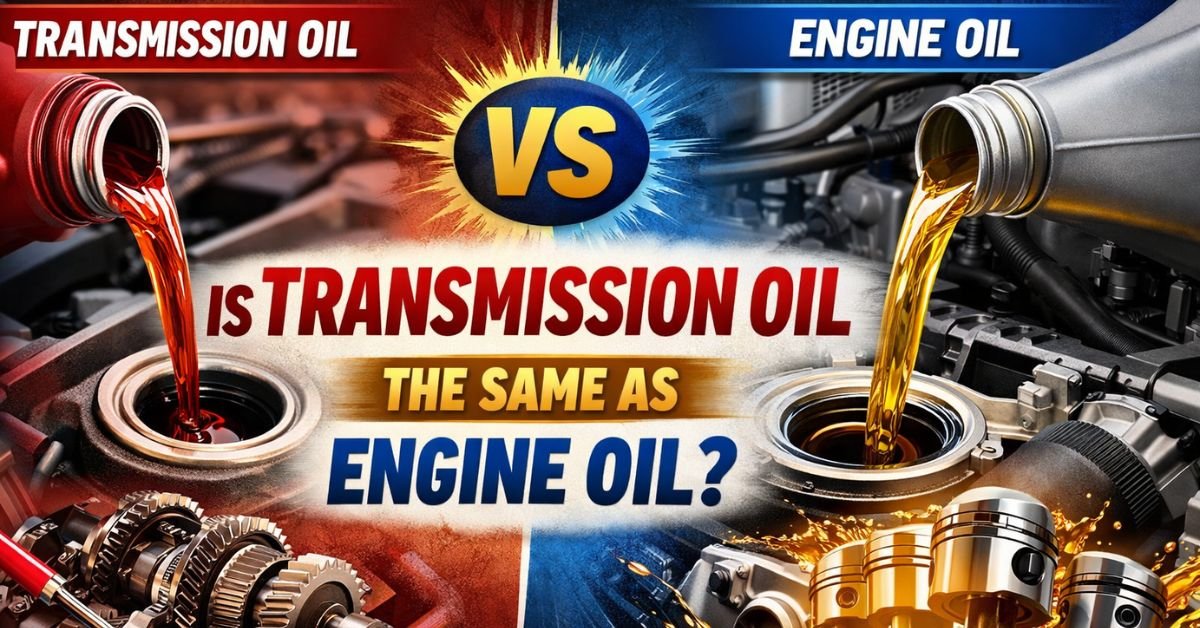
If you’re new to car maintenance, it’s a very common and understandable question: is transmission oil the same as engine oil? Both are essential fluids in a vehicle, both are oils, and both help keep major components running smoothly. However, despite these similarities, transmission oil and engine oil are not the same and are not interchangeable.
Using the wrong oil in the wrong place can lead to serious mechanical problems and costly repairs. In this article, we’ll clearly explain the differences between transmission oil and engine oil, how they work, why they are designed differently, and what happens if you accidentally mix them up.
Is Transmission Oil the Same as Engine Oil?
What Is Engine Oil?
The purpose of engine oil is to protect and lubricate the interior parts of the engine. Inside an engine, thousands of metal parts move at very high speeds and temperatures. Without proper lubrication, friction would quickly damage these parts.
Main functions of engine oil include:
- Lubricating moving engine components
- Reducing friction and wear
- Cleaning sludge, dirt, and carbon deposits
- Cooling engine parts by carrying heat away
- Protecting against corrosion and rust
Engine oil works in an environment with extreme heat, combustion gases, and fuel contamination. Because of this, it contains special additives like detergents, dispersants, anti-wear agents, and viscosity modifiers.
What Is Transmission Oil?
Transmission oil, often called transmission fluid, is specifically designed for the transmission system, which transfers power from the engine to the wheels. Depending on your vehicle, you may have a manual transmission fluid (MTF) or automatic transmission fluid (ATF).
Main functions of transmission oil include:
- Lubricating gears, bearings, and shafts
- Providing hydraulic pressure (especially in automatic transmissions)
- Enabling smooth gear shifting
- Cooling transmission components
- Protecting seals and internal parts
Unlike engine oil, transmission oil must also handle hydraulic functions, especially in automatic transmissions where it acts almost like a power-transfer medium.
Key Differences Between Engine Oil and Transmission Oil
Although both are oils, they are formulated very differently. Here’s how they compare:
1. Purpose
- Engine oil focuses on lubrication, cleaning, and heat control.
- Transmission oil focuses on lubrication, hydraulic pressure, and gear engagement.
2. Viscosity
- Engine oil viscosity changes with temperature and is labeled like 5W-30 or 10W-40.
- Transmission oil typically has a more stable viscosity to maintain consistent shifting and hydraulic pressure.
3. Additives
- Engine oil contains detergents to clean combustion byproducts.
- Transmission oil contains friction modifiers to control clutch engagement and smooth shifting.
4. Operating Environment
- Engine oil works in extremely hot, dirty conditions.
- Transmission oil works in a controlled, sealed environment with precise tolerances.
5. Color and Smell
- New engine oil is amber or light brown.
- New transmission fluid is usually red, pink, or light blue (depending on type).
- Burnt transmission fluid has a strong, unpleasant smell.
Must Read: Is the 4L85E a Good Transmission?
Can You Use Engine Oil Instead of Transmission Oil?
No, absolutely not.
Using engine oil in a transmission can cause:
- Poor or delayed shifting
- Slipping gears
- Overheating
- Damage to seals and clutches
- Complete transmission failure
Similarly, using transmission oil in the engine can lead to:
- Insufficient lubrication
- Increased engine wear
- Sludge buildup
- Reduced engine life
Each fluid is engineered for a specific job, and substituting one for the other is a serious mistake.
Why Are They Not Interchangeable?
Modern vehicles are designed with very tight tolerances. Automatic transmissions, in particular, rely on precise fluid pressure to operate valves, clutches, and torque converters. Engine oil simply does not provide the correct friction characteristics or hydraulic behavior required.
Manual transmissions also require fluids with specific properties to protect gears and synchronizers, which engine oil may not provide.
How Often Should Each Oil Be Changed?
- Engine oil is typically changed every 3,000 to 10,000 miles, depending on oil type and manufacturer recommendations.
- Transmission oil usually lasts longer, often between 30,000 to 100,000 miles, depending on driving conditions and transmission type.
Always check your vehicle owner’s manual for the correct intervals and fluid specifications.
Final Verdict: Is Transmission Oil the Same as Engine Oil?
No, engine oil and transmission oil are not interchangeable.
They are designed for different systems, operate under different conditions, and serve different purposes. Using the correct oil for each system is critical for vehicle performance, longevity, and reliability.
If you’re ever unsure about which fluid your vehicle needs, consult your owner’s manual or speak with a qualified mechanic. Proper fluid maintenance can save you thousands of dollars in repairs and keep your car running smoothly for years.