
The camshaft position sensor (CMP sensor) is one of the most important electronic components in a modern vehicle’s engine management system. Although it’s small and often overlooked, this sensor plays a critical role in ensuring your engine runs efficiently, starts smoothly, and delivers optimal fuel economy. If the camshaft position sensor fails, your vehicle may experience performance issues, poor fuel efficiency, or even refuse to start.
What Does a Camshaft Position Sensor Do?
In this article, we’ll explain what a camshaft position sensor does, how it works, common symptoms of a failing sensor, and why replacing it promptly is essential.
What Is a Camshaft Position Sensor?
A camshaft position sensor is an electronic device that monitors the position and rotational speed of the engine’s camshaft. It continuously sends this information to the vehicle’s Engine Control Unit (ECU) or Powertrain Control Module (PCM).
The ECU uses this data along with information from the crankshaft position sensor to determine the precise timing for fuel injection and ignition. This synchronization ensures that the engine performs efficiently under various driving conditions.
Without accurate camshaft position data, the engine computer cannot properly control combustion, leading to reduced performance and increased emissions.
What Does a Camshaft Position Sensor Do?
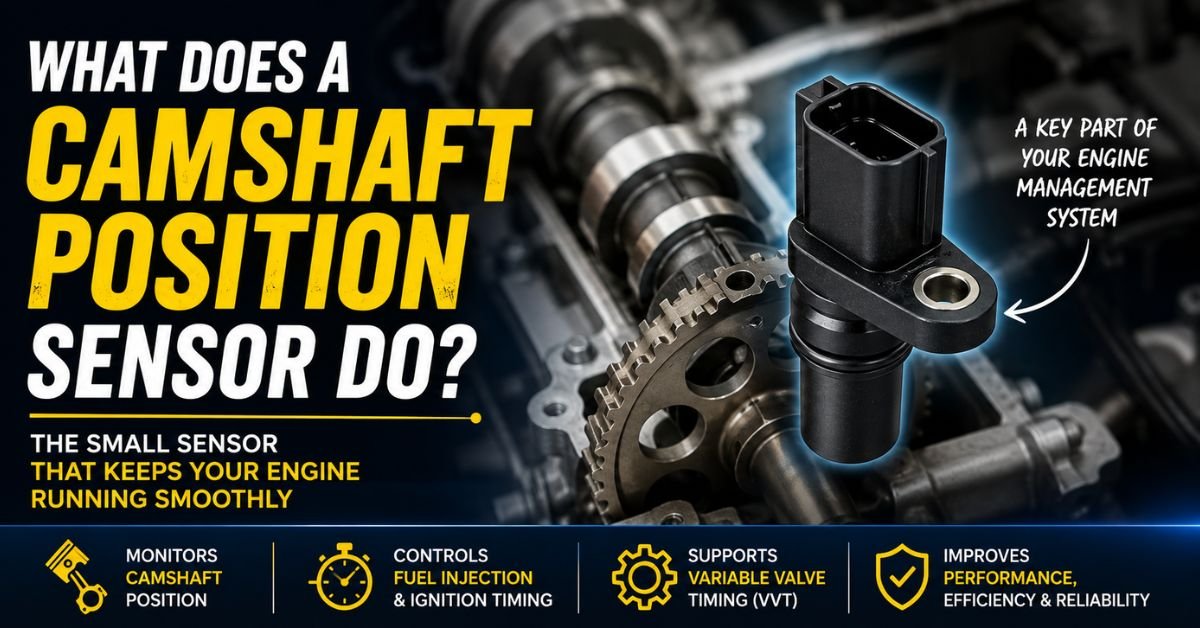
The primary job of the camshaft position sensor is to monitor the rotation of the camshaft and communicate its exact position to the engine computer. This information is used for several important engine functions.
1. Controls Fuel Injection Timing
The ECU relies on the camshaft position sensor to determine when each fuel injector should open. Proper fuel injection timing improves combustion efficiency, increases fuel economy, and reduces harmful emissions.
2. Regulates Ignition Timing
The sensor helps the ECU determine the correct moment to fire the spark plugs. Accurate ignition timing ensures maximum engine power while preventing knocking or misfires.
3. Supports Variable Valve Timing (VVT)
Many modern vehicles are equipped with Variable Valve Timing systems. The camshaft position sensor provides real-time information that allows the ECU to adjust valve timing based on engine speed and load, improving both performance and fuel efficiency.
4. Helps Engine Start Properly
During startup, the ECU uses information from the camshaft position sensor to identify which cylinder is ready for combustion. This allows the engine to start quickly and smoothly.
How Does a Camshaft Position Sensor Work?
The camshaft position sensor detects the movement of a reluctor wheel or trigger wheel attached to the camshaft. As the wheel rotates, it generates electrical signals that are sent to the ECU.
There are generally two common types of camshaft position sensors:
- Hall Effect Sensors – Produce digital signals using magnetic fields.
- Magnetic (Inductive) Sensors – Generate alternating current signals as metal teeth pass the sensor.
The ECU constantly compares camshaft and crankshaft signals to ensure both shafts remain synchronized. If the timing becomes inaccurate, the ECU may trigger a warning light or place the engine in a reduced-power mode.
Symptoms of a Bad Camshaft Position Sensor
A failing camshaft position sensor can produce several noticeable symptoms.
Check Engine Light
The most common sign is an illuminated Check Engine Light. Diagnostic trouble codes such as P0340 or P0341 often indicate problems with the camshaft position sensor or its circuit.
Engine Misfires
Incorrect camshaft timing data can cause spark plugs to fire at the wrong time, leading to engine misfires and rough operation.
Hard Starting or No Start
Without accurate camshaft position information, the ECU may struggle to identify the correct firing sequence, making the engine difficult to start or preventing it from starting altogether.
Rough Idling
The engine may idle unevenly or vibrate excessively due to improper ignition and fuel injection timing.
Reduced Fuel Economy
A malfunctioning sensor can cause inefficient combustion, forcing the engine to consume more fuel than necessary.
Poor Acceleration
Drivers may notice sluggish acceleration, hesitation, or reduced engine power during normal driving.
Must Read: How to Reset a Camshaft Position Sensor?
Why Do Camshaft Position Sensors Fail?
Failure of the camshaft position sensor can be caused by a number of circumstances, including:
- Normal wear over time
- Heat damage from the engine
- Oil contamination
- Wiring or connector problems
- Corrosion
- Physical damage from engine vibration
Routine inspections can help identify these issues before they cause major engine problems.
With a malfunctioning camshaft position sensor, is it still possible to drive?
While some vehicles may continue running with a faulty camshaft position sensor, it is not recommended. Driving with a failing sensor can lead to poor engine performance, increased fuel consumption, engine stalling, and possible damage to other components.
If your Check Engine Light comes on and your vehicle shows symptoms associated with a bad camshaft position sensor, it’s best to have the system diagnosed and repaired as soon as possible.
How Much Does It Cost to Replace a Camshaft Position Sensor?
Replacement costs vary depending on the vehicle make and model. Generally:
- Sensor Cost: $30–$150
- Labor Cost: $50–$150
- Total Replacement Cost: Approximately $80–$300
Luxury or imported vehicles may have higher replacement costs.
Conclusion
The camshaft position sensor is a vital component that helps your engine operate smoothly by providing accurate camshaft position data to the engine computer. It controls fuel injection, ignition timing, variable valve timing, and engine startup. When this sensor begins to fail, you may experience hard starting, rough idling, poor acceleration, reduced fuel economy, or an illuminated Check Engine Light.
Replacing a faulty camshaft position sensor promptly can restore engine performance, improve fuel efficiency, and prevent more expensive repairs down the road. Regular vehicle maintenance and timely diagnostics are the best ways to keep your engine running reliably for years to come.