
If you’ve ever researched engine performance or searched for the cause of a check engine light, you may have come across the term camshaft phaser. While it sounds like a complicated engine component, it plays a crucial role in improving your vehicle’s power, fuel efficiency, and emissions.
Modern vehicles rely on advanced engine technologies to deliver better performance without sacrificing fuel economy. One of these technologies is the Variable Valve Timing (VVT) system, and the camshaft phaser is one of its most important components.
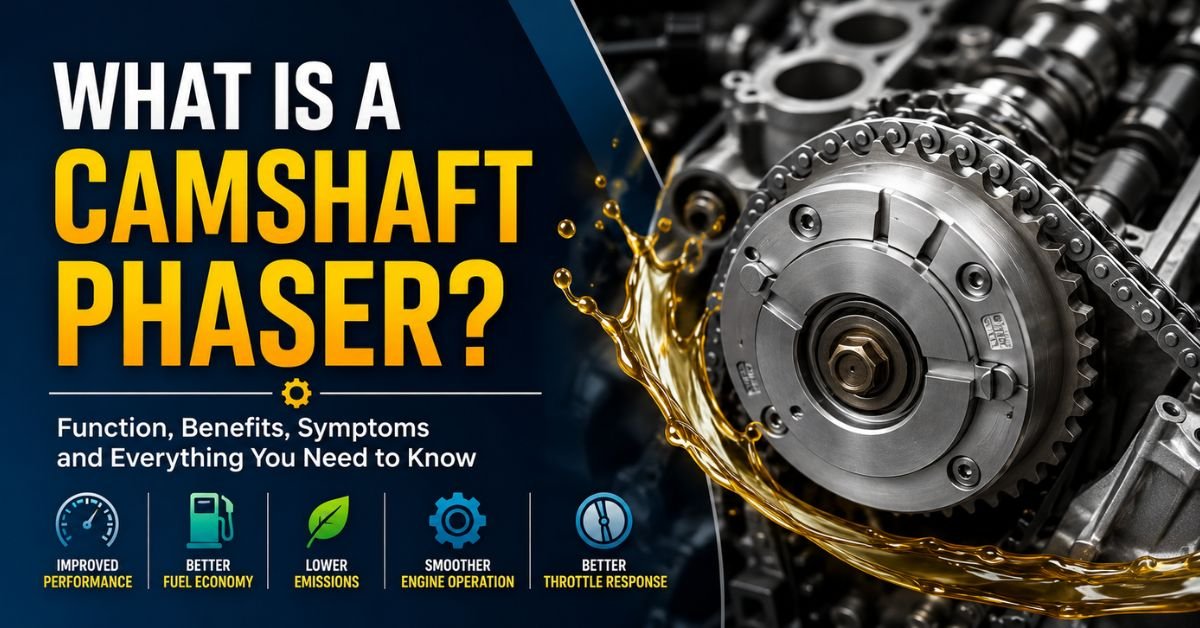
What Is a Camshaft Phaser? A Complete Guide
In this guide, you’ll learn what a camshaft phaser is, how it works, common symptoms of a failing camshaft phaser, causes of failure, and whether it should be repaired or replaced.
What Is a Camshaft Phaser?
A camshaft phaser is a mechanical device attached to the end of the engine’s camshaft. Its primary function is to adjust the timing of the camshaft in relation to the crankshaft while the engine is running.
By advancing or retarding the camshaft timing, the camshaft phaser allows the engine to open and close its intake and exhaust valves at the most efficient moments. This adjustment improves engine performance across different driving conditions.
The camshaft phaser works as part of the Variable Valve Timing (VVT) system, which is found in many modern gasoline engines from manufacturers such as Ford, Toyota, Honda, Chevrolet, Hyundai, BMW, and others.
How Does a Camshaft Phaser Work?
A camshaft phaser uses engine oil pressure controlled by an electronically operated oil control valve (also called a VVT solenoid). The vehicle’s Engine Control Unit (ECU) continuously monitors engine speed, throttle position, oil temperature, and load.
Based on these inputs, the ECU sends commands to the oil control valve, directing oil pressure into different chambers inside the camshaft phaser.
This hydraulic pressure rotates the camshaft slightly forward or backward, changing the valve timing without requiring any mechanical adjustments by the driver.
For example:
- At idle, valve timing remains stable for smooth engine operation.
- During acceleration, valve timing advances to increase power.
- At highway speeds, timing adjusts for better fuel economy.
- Under heavy loads, timing changes to maximize engine efficiency.
The entire process happens automatically in milliseconds.
Benefits of a Camshaft Phaser
A properly functioning camshaft phaser provides several important benefits:
1. Improved Engine Performance
Adjusting valve timing allows the engine to produce more horsepower and torque throughout different RPM ranges.
2. Better Fuel Economy
Optimized valve timing helps the engine burn fuel more efficiently, reducing fuel consumption.
3. Lower Emissions
More efficient combustion reduces harmful exhaust emissions and helps vehicles meet environmental regulations.
4. Smoother Engine Operation
The engine runs more quietly and smoothly, especially during idle and low-speed driving.
5. Better Throttle Response
Drivers notice quicker acceleration because the engine adjusts valve timing based on demand.
Symptoms of a Bad Camshaft Phaser
Like any mechanical component, a camshaft phaser can wear out over time. Some of the most common warning signs include:
Rattling Noise During Startup
One of the earliest symptoms is a rattling or knocking noise for a few seconds after starting the engine.
Check Engine Light
The ECU may detect incorrect camshaft timing and trigger the check engine light.
Rough Idle
A failing camshaft phaser may cause unstable engine idle or engine vibration.
Poor Fuel Economy
Incorrect valve timing reduces combustion efficiency, increasing fuel consumption.
Loss of Engine Power
Drivers may notice sluggish acceleration and reduced engine performance.
Engine Misfires
Incorrect valve timing can cause cylinders to misfire, especially during acceleration.
Common Causes of Camshaft Phaser Failure
Several factors can cause camshaft phasers to fail, including:
- Dirty or contaminated engine oil
- Low engine oil pressure
- Worn internal locking pins
- Sludge buildup inside the VVT system
- Faulty VVT solenoid
- Poor maintenance habits
- High engine mileage
Because the phaser depends heavily on clean oil, skipping oil changes is one of the leading causes of failure.
Can You Drive with a Bad Camshaft Phaser?
Although many vehicles remain drivable with a failing camshaft phaser, it’s generally not recommended to ignore the problem.
Driving for an extended period may lead to:
- Reduced engine performance
- Increased fuel consumption
- Additional wear on timing components
- Engine misfires
- More expensive repairs later
If you notice rattling noises or receive a camshaft timing diagnostic code, it’s best to have the vehicle inspected promptly.
Must Read: What Does a Camshaft Position Sensor Do?
How Is a Camshaft Phaser Replaced?
Replacing a camshaft phaser is a labor-intensive repair because the technician must access the engine’s timing components.
The repair typically involves:
- Disconnecting the battery.
- Removing engine covers and accessory components.
- Removing the valve cover.
- Accessing the timing chain.
- Locking the engine timing.
- Removing the old camshaft phaser.
- Installing the new phaser.
- Reassembling the timing components.
- Refilling engine oil if necessary.
- Clearing diagnostic trouble codes and testing the engine.
Because incorrect timing installation can seriously damage an engine, this repair is usually recommended for experienced mechanics.
How Much Does Camshaft Phaser Replacement Cost?
The replacement cost depends on the vehicle make, model, and labor rates.
Typical estimates include:
- Parts: $100–$500
- Labor: $300–$1,000
- Total Repair Cost: Approximately $400–$1,500
Luxury vehicles or engines with multiple camshaft phasers may cost even more.
How to Prevent Camshaft Phaser Problems
Proper maintenance greatly extends the life of your camshaft phaser.
Here are a few preventive tips:
- Change engine oil at the recommended intervals.
- Use the manufacturer-recommended oil viscosity.
- Replace the oil filter regularly.
- Address oil pressure problems immediately.
- Repair VVT-related warning codes early.
- Avoid extended driving with contaminated engine oil.
Following these maintenance practices helps keep the Variable Valve Timing system operating efficiently.
Final Thoughts
A camshaft phaser is a key component of a modern engine’s Variable Valve Timing system. By adjusting camshaft timing while the engine runs, it improves power, fuel efficiency, throttle response, and emissions.
Although camshaft phasers are designed to last many years, poor oil maintenance and normal wear can eventually cause failure. Common symptoms include startup rattling, rough idle, loss of power, poor fuel economy, and a check engine light.
Routine oil changes and timely repairs are the best ways to extend the life of the camshaft phaser and keep your engine running at peak performance. If you notice signs of failure, addressing the issue early can help prevent more costly engine repairs in the future.