
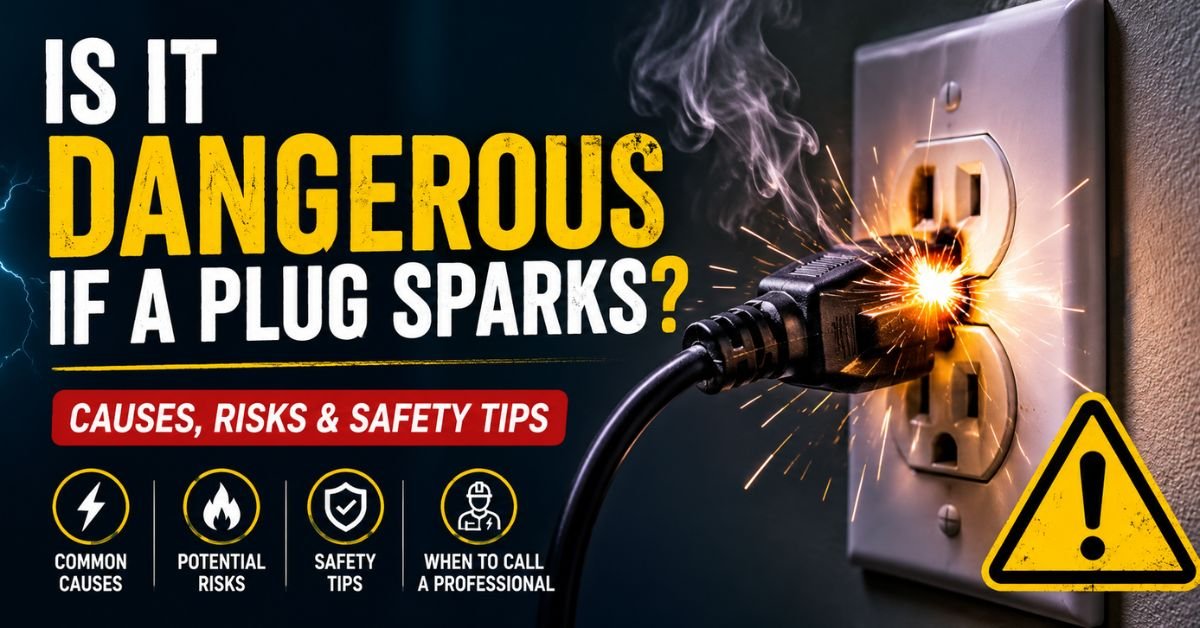
Seeing a spark when you plug an electrical device into an outlet can be surprising, and sometimes it may even be alarming. But is it dangerous if a plug sparks? The answer depends on how large the spark is, when it happens, and whether there are other signs of an electrical problem.
Is It Dangerous If a Plug Sparks?
A very small, brief spark can sometimes be normal when plugging in certain electrical devices. However, repeated, large, bright, or unusual sparks should not be ignored because they can indicate a damaged outlet, faulty plug, loose wiring, or an electrical overload.
Understanding why plugs spark and knowing when to take action can help protect your home, appliances, and family from electrical hazards.
Why Does a Plug Spark?
A small spark can occur because of the way electricity flows when a device is connected to a power source. Some appliances contain components such as capacitors or motors that can briefly draw more current when they start.
When you insert the plug into an energized outlet, electricity may jump across a tiny gap between the plug contacts and the outlet contacts before the connection is fully established. This can create a small, quick spark.
For example, devices with motors, compressors, or power supplies may be more likely to produce a small spark when they are plugged in.
A brief blue or yellow flash that happens only occasionally may not necessarily mean there is a serious problem. However, the situation becomes more concerning when the spark is large, happens frequently, or is accompanied by heat, burning smells, smoke, buzzing, or discoloration.
When Is a Plug Spark Dangerous?
Not every spark means an emergency, but certain types of sparks can indicate a potentially dangerous electrical problem.
A spark should be taken seriously if you notice any of the following:
1. Large or Bright Sparks
A large spark that is clearly visible or produces a loud snapping sound can indicate a problem with the electrical connection. It may be caused by damaged contacts, a faulty plug, or another electrical issue.
2. Burning Smell
If you smell burning plastic, rubber, or an unusual electrical odor after plugging something in, stop using the outlet and appliance. A burning smell can indicate overheating or damaged electrical components.
3. Smoke
Smoke coming from an outlet or plug is a serious warning sign. Turn off the power if it is safe to do so and avoid using the outlet until it has been inspected by a qualified electrician.
4. Scorch Marks or Discoloration
Black, brown, or melted areas around an outlet or plug can indicate overheating or arcing. Do not continue using a visibly damaged outlet.
5. Repeated Sparking
If the same outlet sparks every time you plug something in, there may be a problem with the outlet, wiring, or electrical connection. Repeated arcing can generate heat and potentially create a fire hazard.
What Causes a Plug to Spark?
Several issues can cause electrical plugs to spark. One common reason is a loose outlet connection. When the plug does not make proper contact with the outlet, electricity may arc across small gaps.
A damaged plug can also cause sparking. Cracked insulation, bent prongs, loose connections, or exposed wires can make a plug unsafe.
Another possibility is an appliance that has developed an internal electrical fault. Motors, compressors, and other components can sometimes produce a larger-than-normal electrical surge when they start.
Electrical overload can also contribute to problems. Connecting too many high-power devices to the same circuit may cause overheating, breaker trips, or other electrical issues.
What Should You Do If a Plug Sparks?
If you see a small, brief spark when plugging in an appliance and there are no other warning signs, you may not need to panic. However, you should still pay attention to whether it happens repeatedly.
If the spark is large, accompanied by smoke or a burning smell, or the plug or outlet becomes hot, stop using it.
If possible and safe, disconnect the appliance and switch off the relevant circuit breaker. Do not touch damaged electrical components with wet hands, and never attempt to repair exposed wiring yourself.
For a damaged outlet, repeated sparking, burning marks, or suspected wiring problems, contact a qualified electrician.
Must Read: What Causes a Camshaft Sensor to Go Bad?
How Can You Prevent Plug Sparking?
There are several simple steps you can take to reduce electrical risks:
- Inspect plugs and power cords regularly for damage.
- Avoid using outlets that are loose or damaged.
- Avoid overloading extension cords or electrical sockets.
- Keep electrical connections away from water and moisture.
- Replace damaged plugs and cords instead of continuing to use them.
- Verify that the plugs are completely put into the outlets.
- Avoid forcing a plug into an outlet.
- Use properly rated electrical equipment.
- Have persistent electrical problems checked by a qualified electrician.
It is also a good idea to avoid repeatedly plugging and unplugging a device if you notice unusual sparking. Investigate the cause rather than assuming the spark is harmless.
Can a Sparking Plug Cause a Fire?
Yes, electrical arcing can potentially produce enough heat to damage surrounding materials and, under certain conditions, start a fire. This is why repeated or significant sparking should never be ignored.
The risk is particularly concerning when an outlet is loose, damaged, overheated, or connected to faulty wiring. A small spark does not automatically mean a fire is about to occur, but unusual electrical activity deserves attention.
Final Thoughts
So, is it dangerous if a plug sparks? Sometimes it can be, but a small, brief spark does not always indicate a serious problem. Certain appliances can naturally produce a tiny spark when they are connected to an energized outlet.
The important thing is to recognize the warning signs. Large sparks, repeated sparking, buzzing, burning smells, smoke, heat, melted plastic, or scorch marks are signs that the outlet or appliance should not continue to be used.
When you are unsure about the cause, it is safer to stop using the equipment and have the electrical system inspected by a qualified professional. Electrical problems can become serious quickly, so taking unusual sparks seriously can help prevent equipment damage, electric shock, and potentially dangerous fires.