
A camshaft position sensor is a small but important component in a modern vehicle’s engine management system. It monitors the position and speed of the camshaft and sends this information to the engine control module (ECM or ECU). The computer uses this information to coordinate fuel injection, ignition timing, and, on many engines, variable valve timing (VVT).
What Causes a Camshaft Sensor to Go Bad?
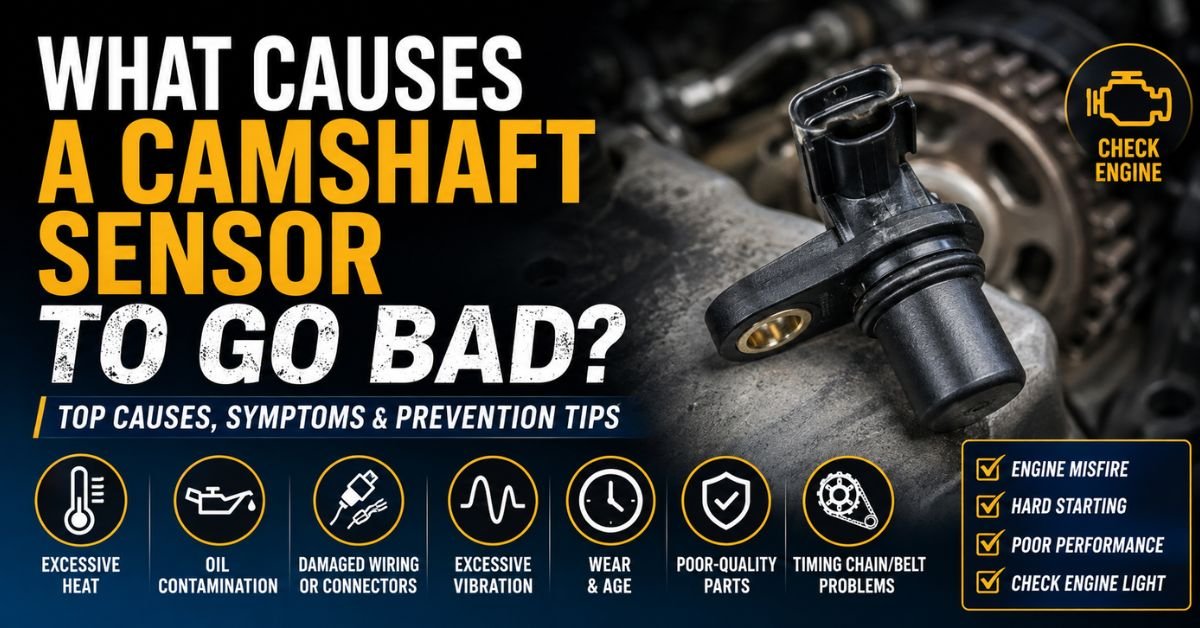
When the camshaft sensor begins to fail, the engine may develop starting problems, rough running, poor acceleration, reduced fuel economy, or an illuminated check engine light. But what causes a camshaft sensor to go bad? Several factors can contribute to sensor failure, including excessive heat, oil contamination, electrical problems, vibration, physical damage, and normal wear over time.
1. Excessive Engine Heat
One of the most common reasons a camshaft position sensor can fail is excessive heat. The sensor is usually installed directly on or near the engine, where it is exposed to high temperatures every time the vehicle operates.
Repeated heating and cooling cycles can gradually damage the sensor’s internal electronic components, seals, and connections. Over time, this may cause the sensor to produce a weak, inconsistent, or completely missing signal.
A sensor that works when the engine is cold but fails after the engine reaches operating temperature may be experiencing heat-related internal failure. Heat can also make nearby wiring brittle, increasing the possibility of an electrical problem.
2. Oil Contamination
Engine oil contamination is another common cause of camshaft sensor problems. Depending on the vehicle’s design, the sensor may be positioned close to valve cover gaskets, camshaft seals, or other areas where oil leaks can occur.
If oil reaches the sensor or electrical connector, it can interfere with the electrical signal. Oil inside a connector can also contribute to corrosion and poor electrical contact.
For this reason, simply replacing the sensor may not permanently solve the problem if an engine oil leak is still present. The underlying leak should also be identified and repaired.
3. Damaged Wiring or Electrical Connectors
Sometimes the sensor itself isn’t bad at all. The problem may be somewhere in the wiring or connector.
Camshaft sensor wiring is exposed to engine heat, vibration, moisture, and movement. Wires can become brittle, rubbed through, disconnected, or damaged. Electrical connectors can also develop corrosion, loose terminals, or poor connections.
A damaged signal wire can prevent the ECU from receiving the correct camshaft position information. This can produce diagnostic trouble codes such as P0340, although the exact code depends on the vehicle and the specific circuit involved.
4. Normal Wear and Age
Like many electronic components, camshaft position sensors can eventually fail simply because of age and continuous use.
The sensor operates thousands of times while the engine is running and is constantly exposed to heat, vibration, and electrical cycling. Over many years and miles, internal components can deteriorate.
An older vehicle with an original camshaft sensor may therefore experience sensor failure without one obvious external cause.
5. Excessive Vibration
Engine vibration can also contribute to sensor failure. Although camshaft sensors are designed to withstand normal engine vibration, continuous exposure can eventually affect internal electrical connections or the sensor’s mounting.
Vibration can also damage or loosen the wiring connector. If the sensor is not securely mounted, its relationship with the camshaft’s triggering or reluctor component may be affected, potentially causing an unreliable signal.
6. Physical Damage or Incorrect Installation
A camshaft sensor can be damaged during installation or repair work. Dropping the sensor, forcing it into position, tightening it incorrectly, or damaging its connector can cause problems.
Foreign material or debris around the mounting area can also prevent the sensor from sitting correctly.
When installing a replacement sensor, it is important to follow the vehicle manufacturer’s installation procedure and make sure the sensor and connector are properly secured.
7. Poor-Quality Aftermarket Sensors
Replacement parts’ quality can have a big impact. Some inexpensive aftermarket camshaft sensors may not produce a signal that matches the vehicle manufacturer’s specifications.
In some vehicles, an incorrectly calibrated or poor-quality replacement sensor can cause recurring fault codes or drivability problems even though the sensor is technically new.
For this reason, using an OEM or high-quality replacement sensor can be worthwhile, particularly when a vehicle has previously experienced repeated sensor failures.
8. Timing Chain or Belt Problems
A camshaft sensor fault does not always mean the sensor itself has failed. Mechanical timing problems can create similar symptoms.
A stretched timing chain, damaged timing component, or skipped timing belt tooth can cause the camshaft and crankshaft to become out of synchronization. The ECU can detect that the camshaft position does not match what it expects and may set a camshaft-related diagnostic code.
This is why replacing a sensor without proper diagnosis can sometimes fail to fix the original problem.
Must Read: What Is Camshaft Angle in Bootmod3?
9. Low or Dirty Engine Oil
Engine oil is crucial in regulating camshaft timing on engines with variable valve timing. Low or severely contaminated oil can interfere with VVT operation and cause camshaft timing to differ from the expected position.
This can sometimes trigger camshaft-related fault codes even when the position sensor itself is functioning correctly.
Maintaining the correct oil level and following the manufacturer’s recommended oil-change intervals can therefore help prevent VVT and camshaft-related problems.
Symptoms of a Bad Camshaft Position Sensor
A failing camshaft sensor can produce several noticeable symptoms, including:
- Check engine light
- Hard starting or extended cranking
- Engine stalling
- Rough idle
- Poor acceleration
- Reduced fuel economy
- Engine misfires
- Reduced engine performance
- Intermittent starting problems
The exact symptoms depend on the vehicle and how the engine management system responds to a missing or incorrect camshaft signal.
How to Diagnose a Bad Camshaft Sensor
If you suspect a bad camshaft sensor, don’t immediately replace it. Start by scanning the vehicle for diagnostic trouble codes and checking the sensor’s wiring and connector.
Look for damaged wires, corrosion, oil contamination, loose connections, or physical damage. Depending on the vehicle, the sensor can also be tested using a multimeter or oscilloscope to verify its power supply, ground, and signal.
It is also important to check related components such as the timing chain or belt and VVT system if the diagnostic code indicates a camshaft timing or correlation problem.
How to Prevent Camshaft Sensor Failure
Although sensor failure cannot always be prevented, regular maintenance can reduce the risk. Maintain the proper quantity of engine oil, adhere to suggested oil-change intervals, fix oil leaks right away, and check wiring during regular maintenance.
Using quality replacement parts and making sure the sensor is installed correctly can also help improve reliability.
Final Thoughts
So, what causes a camshaft sensor to go bad? The most common causes include excessive heat, oil contamination, damaged wiring, electrical connector problems, vibration, age, physical damage, and poor-quality replacement parts. Sometimes the timing chain, VVT system, or another engine-management issue is the true cause of the issue rather than the sensor itself.
Proper diagnosis is therefore important before replacing the sensor. Checking the sensor, wiring, connectors, engine oil, and mechanical timing can help identify the real cause and prevent the same problem from returning.