
The spark plug gap plays an important role in how efficiently your engine ignites the air-fuel mixture. If the gap is too wide for your vehicle’s ignition system, you may experience misfires, hard starting, poor acceleration, or reduced fuel economy. Fortunately, if you have a conventional spark plug with a serviceable ground electrode, you can carefully close the gap using the correct spark plug gap tool.
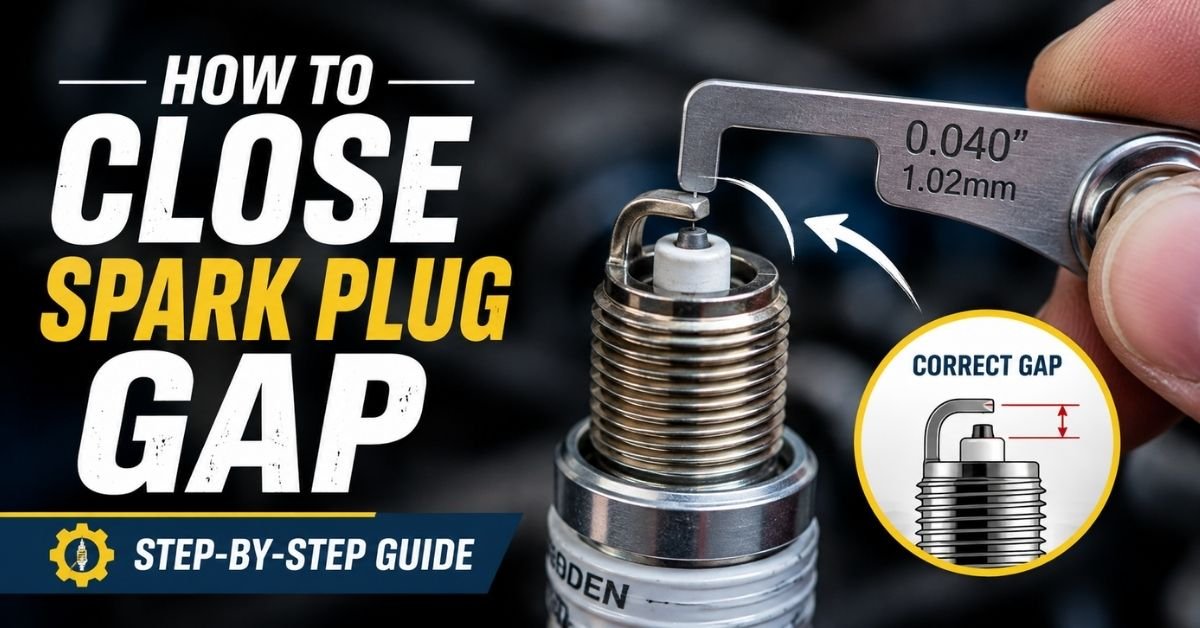
How to Close Spark Plug Gap: A Step-by-Step Guide
But it is important to make adjustments carefully. Closing a spark plug gap too much can also cause ignition problems and may damage the spark plug. In this guide, we’ll explain how to close spark plug gap safely, what tools you need, and what mistakes to avoid.
What Is Spark Plug Gap?
Spark plug gap is the distance between the center electrode and the ground electrode at the end of the spark plug. When the ignition system sends high voltage to the spark plug, an electrical spark jumps across this gap.
The correct gap varies depending on the engine, spark plug design, and manufacturer’s specifications. Some vehicles require a relatively small gap, while others use a larger gap. Always check your vehicle owner’s manual or the spark plug manufacturer’s specifications before making an adjustment.
Why Would You Need to Close a Spark Plug Gap?
A spark plug gap may need to be reduced if it is larger than the specified measurement for your engine. This can happen if a plug was incorrectly adjusted, accidentally bent during handling, or has a gap that does not match the required specification.
A gap that is too wide can require more voltage from the ignition system to produce a spark. Under certain conditions, especially under heavy engine load, this can contribute to spark misfires.
However, you should not automatically reduce the gap simply because a smaller gap seems better. The correct gap is the one specified for your particular application.
Tools You May Need
Closing a spark plug gap generally requires only a few simple tools:
- Spark plug gap gauge
- Spark plug gap adjustment tool
- Spark plug socket and ratchet if the plug is already installed
- Manufacturer’s recommended gap specification
A dedicated spark plug gap tool is preferable because it allows you to make small, controlled adjustments.
How to Close Spark Plug Gap
1. Check the Recommended Gap
Before adjusting the spark plug, find the correct gap specification for your vehicle and spark plug. You can usually find this information in the owner’s manual, service information, or the spark plug manufacturer’s application data.
For example, if the specified gap is 0.040 inches and your plug measures 0.050 inches, the gap needs to be reduced.
2. Measure the Existing Gap
Place the appropriate part of your spark plug gap gauge between the center electrode and ground electrode. Check the measurement carefully.
Do not estimate the gap by looking at it. Even a small difference can matter when you’re trying to match a manufacturer’s specification.
3. Position the Spark Plug Gap Tool
If the gap is too wide, use the adjustment feature on your spark plug tool to gently move the ground electrode toward the center electrode.
The goal is to make a small adjustment rather than bending the electrode aggressively.
4. Close the Gap Gradually
Apply gentle pressure to the ground electrode. Make a small adjustment and then measure the gap again.
If the gap is still too wide, make another small adjustment. Continue checking the measurement until it matches the recommended specification.
Avoid hitting the spark plug against a hard surface to close the gap. This can damage the electrode or insulator and may cause problems later.
5. Recheck the Gap
Once the gap appears correct, measure it again with your gap gauge.
The gauge should confirm that the distance matches the required specification. If you accidentally close the gap too far, don’t force the electrode back and forth repeatedly. Make adjustments carefully to avoid unnecessary stress on the metal.
6. Inspect the Spark Plug
Before installing the plug, inspect it for cracks, damaged threads, a damaged ceramic insulator, or a bent electrode.
If the spark plug has been damaged during adjustment, replacing it is usually safer than trying to repair it.
Must Read: How to Gap Iridium Spark Plugs?
Can You Close the Gap on Iridium Spark Plugs?
Extra care is required with fine-wire iridium spark plugs. Their electrodes are designed differently from traditional spark plugs, and the center electrode can be much thinner.
You should not use a conventional tool in a way that puts pressure on the fine center electrode. If the manufacturer’s instructions state that the plug should not be adjusted, follow those instructions.
Some spark plugs are supplied pre-gapped and should be installed without adjustment. Always check the manufacturer’s recommendations before attempting to change the gap.
What Takes Place When the Spark Plug Gap Is Too Small?
A gap that is too small can also cause problems. A smaller gap generally requires less voltage to produce a spark, but it can produce a shorter spark. Depending on the engine, an incorrect gap may contribute to incomplete combustion, reduced performance, or other ignition-related issues.
That’s why the goal is not simply to make the gap smaller. The goal is to achieve the correct gap specified for the vehicle.
Common Mistakes to Avoid
When closing a spark plug gap, avoid these common mistakes:
- Guessing the correct gap instead of checking specifications
- Bending the electrode too aggressively
- Hitting the spark plug against a hard object
- Applying pressure to a fine-wire center electrode
- Repeatedly bending the electrode back and forth
- Installing a visibly damaged spark plug
- Assuming every spark plug should have the same gap
Final Thoughts
Learning how to close spark plug gap is relatively simple when you use the right tool and make adjustments gradually. Start by checking the manufacturer’s recommended specification, measure the existing gap, and carefully move the ground electrode toward the center electrode if the gap is too wide.
The most important thing is accuracy. A spark plug should not be adjusted based on what looks right. Use a proper gap gauge and follow the specifications for your particular engine and spark plug.
For fine-wire or iridium spark plugs, take extra care because their electrodes can be more delicate. If the manufacturer recommends not adjusting the gap, it is best to follow that guidance and use the plug as supplied.