
Iridium spark plugs are known for their durability, strong ignition performance, and long service life. However, even high-quality iridium spark plugs need to have the correct spark plug gap for an engine to run properly. If the gap is too wide or too narrow, it can cause problems such as misfires, rough idling, poor acceleration, reduced fuel economy, or difficulty starting the engine.
How to Gap Iridium Spark Plugs: A Complete Guide
So, how do you gap iridium spark plugs without damaging them? The process requires extra care because iridium spark plugs have a very fine center electrode that can be damaged if you use the wrong tool or apply too much pressure.
What Is Spark Plug Gap?
The spark plug gap is the distance between the center electrode and the ground electrode at the end of the spark plug. When the ignition system sends high voltage through the spark plug, an electrical spark jumps across this gap and ignites the air-fuel mixture inside the engine.
Every engine is designed to operate with a specific spark plug gap. The correct measurement can vary depending on the vehicle, engine, spark plug design, and manufacturer specifications.
Before adjusting an iridium spark plug, always check the vehicle owner’s manual or the spark plug manufacturer’s specifications for the recommended gap.
Do Iridium Spark Plugs Need to Be Gapped?
Many modern iridium spark plugs come pre-gapped from the manufacturer. In some cases, the factory gap is already correct for the intended application, so no adjustment is necessary.
However, it is still a good idea to check the gap before installation. Spark plugs can occasionally be affected during shipping, handling, or installation.
The important point is that you should not automatically change the factory gap. If the manufacturer’s specification says the plug should remain at its supplied gap, install it as specified.
Tools You Need
To check or adjust an iridium spark plug, you may need:
- A spark plug gap gauge
- The correct replacement iridium spark plug
- Your vehicle’s recommended gap specification
- A spark plug socket for installation
A wire-style gap gauge or another gauge designed for spark plugs can be useful for checking the distance accurately.
Avoid using tools that are designed to forcefully bend the electrode. Iridium spark plugs have delicate electrodes, and excessive pressure can damage the plug.
How to Check the Gap on an Iridium Spark Plug
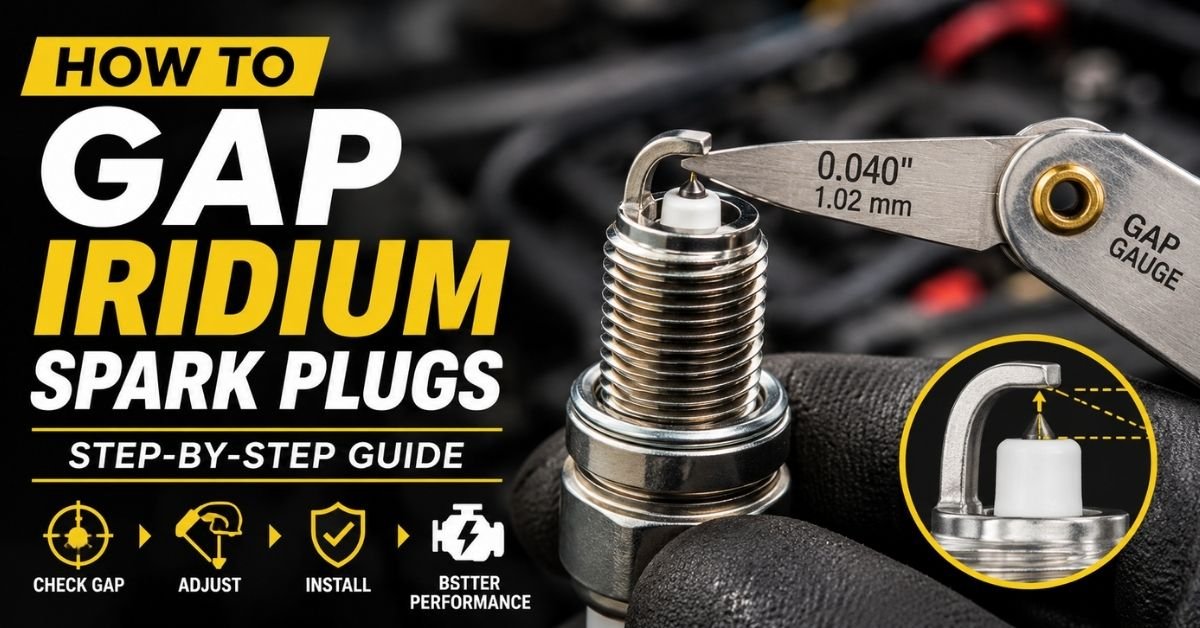
Start by holding the spark plug carefully and locating the ground electrode. The ground electrode is the small metal piece that extends over the center electrode.
Place the appropriate section of the gap gauge between the center and ground electrodes. Do not force the gauge into the gap. You are checking the distance rather than using the gauge as a lever.
Compare the measured gap with the specification for your particular engine.
If the gap is already correct, there is usually no reason to adjust it.
How to Gap an Iridium Spark Plug
If the manufacturer specifies that the gap should be adjusted, make the adjustment carefully.
For a gap that is too narrow, use a suitable spark plug gap tool to make a very small adjustment to the ground electrode. Make gradual changes rather than trying to reach the final measurement in one movement.
After each adjustment, measure the gap again.
If the gap is too wide, use the proper adjustment tool to gently move the ground electrode closer to the center electrode. Never press directly against the fine iridium center electrode.
The goal is to adjust the ground electrode, not the center electrode.
Once the measurement matches the manufacturer’s specification, stop adjusting the plug.
Why You Should Be Careful With Iridium Spark Plugs
Iridium spark plugs use a very small center electrode. One of the advantages of this design is that the fine electrode requires less voltage to produce a strong spark and can provide excellent ignition performance.
The downside is that the electrode can be more vulnerable to improper handling.
Using excessive force or the wrong gap-adjustment method can damage the electrode or change the geometry of the spark plug. A damaged spark plug may not perform correctly even if the measured gap appears to be correct.
For this reason, some manufacturers recommend not adjusting the gap on certain iridium spark plugs at all. Always follow the instructions supplied with the specific spark plug.
Must Read: Should You Put Anti-Seize on Spark Plugs?
What Happens If the Gap Is Too Wide?
A spark plug gap that is too wide can require more voltage from the ignition system. Depending on the vehicle, this may contribute to ignition problems or engine misfires.
You may notice symptoms such as:
- Engine misfires
- Rough running
- Hesitation during acceleration
- Poor starting
- Reduced fuel economy
- An illuminated check-engine light
The exact symptoms depend on the vehicle and the severity of the problem.
What Takes Place When the Gap Is Too Small?
A gap that is too small can also affect combustion. The spark may not provide the desired ignition characteristics for the engine.
Possible symptoms can include rough engine operation, reduced performance, or poor fuel economy.
This is why the correct gap is important. Bigger is not necessarily better, and smaller is not necessarily better. The correct measurement is the one specified for your particular engine and spark plug.
Should You Gap New Iridium Spark Plugs?
If your new iridium spark plugs are pre-gapped, check their gap against the manufacturer’s specification before installation. If the measurement is correct, leave it alone.
If the gap is different from the required specification, check the spark plug manufacturer’s instructions before making an adjustment. Some iridium plugs are specifically designed to be installed without changing the factory setting.
If you accidentally damage the fine electrode while trying to adjust the plug, replacing the spark plug is generally safer than attempting to repair a damaged electrode.
Final Thoughts
Learning how to gap iridium spark plugs is relatively simple, but it requires more care than working with some traditional spark plugs. Always start by finding the correct gap specification for your vehicle and spark plug. Check the factory gap with a suitable gauge, and only make adjustments when the manufacturer’s instructions allow it.
When an adjustment is necessary, make small changes to the ground electrode and avoid putting pressure on the fine iridium center electrode. Taking a few extra minutes to measure the gap correctly can help ensure reliable ignition and proper engine performance.
If you are unsure whether a particular iridium spark plug should be adjusted, the safest approach is to follow the spark plug manufacturer’s installation instructions or consult a qualified technician.