
If you own a classic 1965 Volkswagen Beetle with the 1200cc engine, maintaining the correct spark plug gap is an important part of keeping the engine running smoothly. Spark plugs may look simple, but the distance between the center electrode and ground electrode directly affects how well the ignition system can create a spark. If the gap is too wide or too narrow, the engine may experience hard starting, rough idling, misfires, or reduced performance.
What Is the Spark Plug Gap on a 1965 VW Bug 1200?
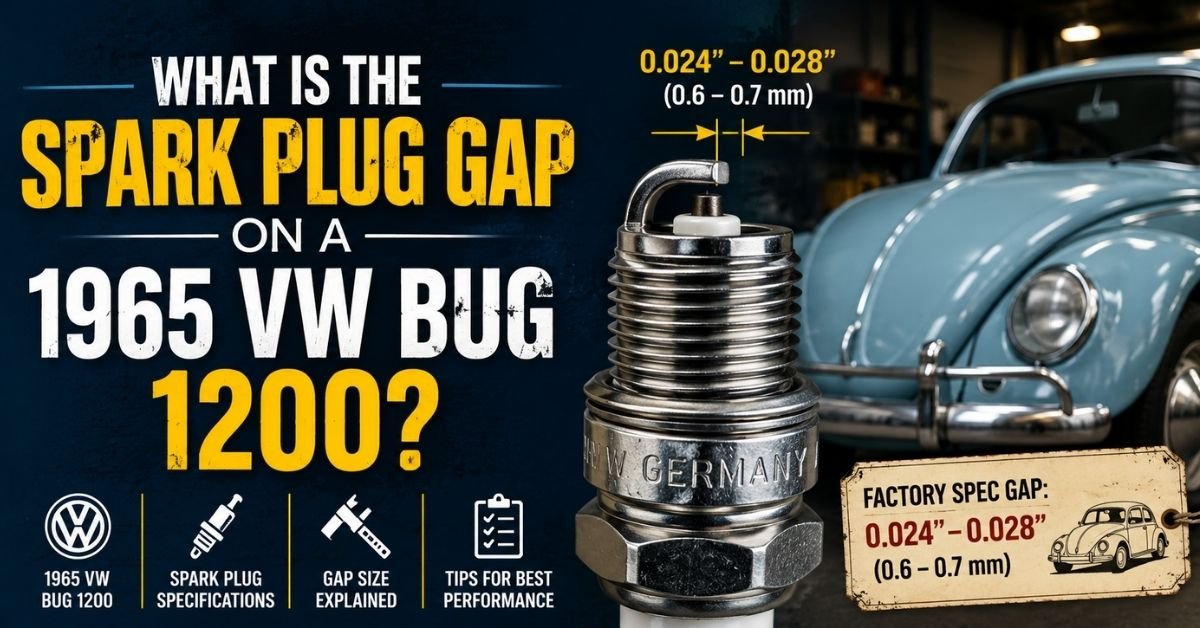
For a 1965 VW Bug 1200, the commonly specified spark plug gap is 0.024–0.028 inches (0.6–0.7 mm), depending on the specific spark plug and ignition-system specification. When servicing a classic Volkswagen, it is best to confirm the specification for the exact spark plug and distributor/ignition setup installed on the car.
Why Spark Plug Gap Matters
The spark plug gap is the small space where the ignition spark jumps from the center electrode to the ground electrode. The ignition system must produce enough voltage to jump this gap and ignite the air-fuel mixture inside the combustion chamber.
A correctly adjusted gap helps provide a reliable spark. If the gap is significantly outside the recommended range, ignition performance can suffer.
A gap that is too wide requires more voltage to produce a spark. On an older ignition system, this can contribute to difficult starting or intermittent misfires.
A gap that is too narrow can produce a weaker or less effective spark and may affect combustion.
This is particularly important on a classic VW because the ignition system is much older and simpler than the computer-controlled systems found on modern vehicles.
What Spark Plugs Does a 1965 VW Bug 1200 Use?
The exact spark plug depends on the engine and equipment installed in the vehicle. A 1965 Beetle may have an original-style 1200cc engine, but classic Volkswagens are often modified or fitted with replacement engines and ignition components over the years.
Because of that, don’t select a plug solely based on the model year. Check the engine identification, existing spark plug number, and manufacturer’s specifications before purchasing replacement plugs.
If the car has been converted to an electronic ignition system, the recommended gap may also differ from the original specification. Always follow the instructions for the ignition system and spark plug being used.
How to Check the Spark Plug Gap
Checking the gap is a straightforward maintenance job. You will need a spark plug gap gauge or feeler gauge.
First, remove the spark plug carefully using the appropriate spark plug socket. Avoid forcing the plug if it is difficult to remove, since damaged threads in the cylinder head can create a much bigger repair.
Examine the electrodes after removing the plug. Look for excessive wear, cracking, heavy deposits, or other signs of damage.
Place the appropriate gauge between the center and ground electrodes. For the commonly specified 0.024–0.028-inch range, check that the gauge fits correctly.
If the gap needs adjustment, carefully bend the ground electrode using a proper spark plug gap tool. Do not pry against the center electrode because doing so can damage the plug.
After adjustment, check the gap again to make sure it is accurate.
Must Read: How to Close Spark Plug Gap?
Should You Gap New Spark Plugs?
Yes. Even when spark plugs are sold as pre-gapped, it is a good idea to verify the gap before installation.
Spark plugs can be handled during manufacturing, packaging, and transportation, and the gap may not be exactly what your particular engine requires. Checking the gap takes only a moment and can prevent an ignition problem later.
However, avoid repeatedly bending the ground electrode back and forth. Excessive adjustment can damage the electrode or insulator.
Signs of an Incorrect Spark Plug Gap
An incorrect gap isn’t always the only cause of an engine problem, but several symptoms can point toward an ignition issue.
You may notice:
- Difficult starting
- Rough or unstable idle
- Engine misfires
- Hesitation during acceleration
- Reduced engine performance
- Poor fuel economy
- Weak or inconsistent ignition
If your 1965 VW Bug is experiencing these symptoms, don’t automatically assume the spark plug gap is responsible. The ignition points, condenser, distributor cap, rotor, plug wires, ignition coil, timing, fuel system, and engine condition can also affect performance.
Don’t Forget Ignition Timing
Spark plug gap is only one part of the ignition system. Proper ignition timing is also important on a vintage Volkswagen.
After replacing or servicing spark plugs, it can be worthwhile to inspect the ignition system as a whole. Check the condition of the plug wires and distributor components, and make sure the ignition timing matches the specification for your particular engine and distributor.
A properly maintained ignition system helps the 1200cc engine start more easily and run consistently.
Final Thoughts
So, what is the spark plug gap on a 1965 VW Bug 1200? A commonly specified range is 0.024–0.028 inches (0.6–0.7 mm). However, because classic Beetles can have different engines, spark plugs, distributors, and ignition conversions, always verify the specification for the exact components installed on your vehicle.
Checking and adjusting the spark plug gap is a small maintenance task, but it can make a noticeable difference in ignition reliability. If you’re restoring a 1965 VW Bug or simply trying to keep one running properly, using the correct spark plug and setting its gap accurately is a good place to start.