
A timing belt is one of the most important components inside many gasoline and diesel engines. It keeps the engine’s camshaft and crankshaft rotating in the correct relationship so the valves open and close at the right time. Because the timing belt is usually hidden behind protective covers, it can be difficult to know when it is becoming worn or damaged.
How Do You Know If a Timing Belt Is Bad?
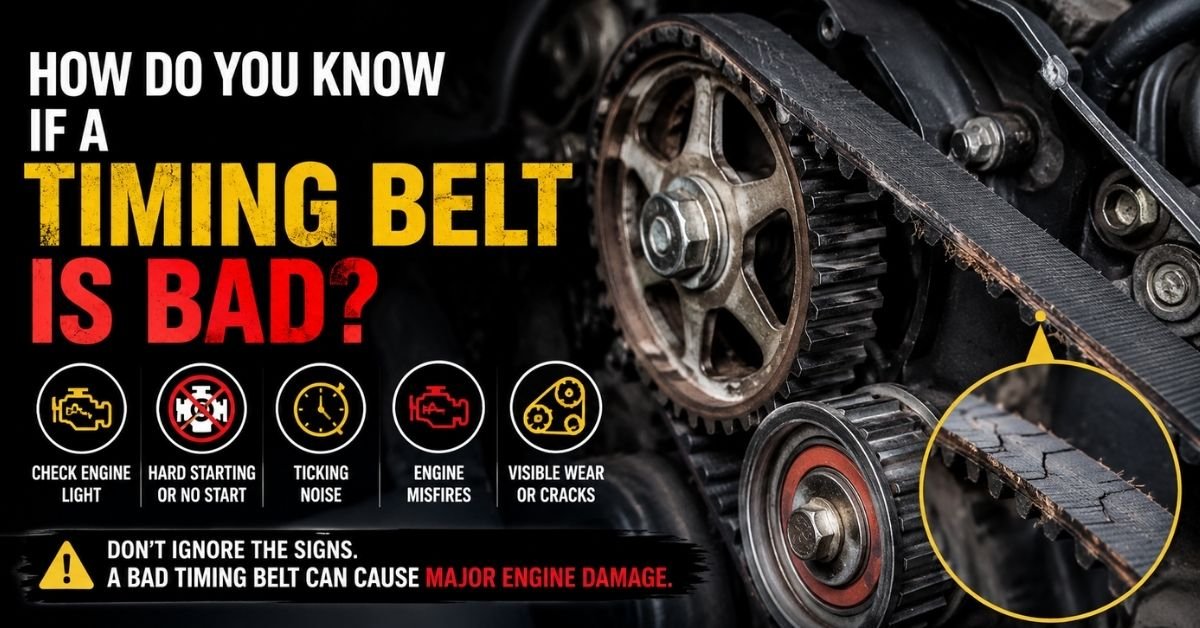
So, how do you know if a timing belt is bad? Common warning signs include engine misfires, difficulty starting, unusual ticking or rattling noises, poor engine performance, visible belt damage, and oil contamination. In some cases, however, a timing belt can fail without giving you much warning. This is why following the manufacturer’s recommended replacement interval is extremely important.
What Does a Timing Belt Do?
The timing belt connects the crankshaft to the camshaft and synchronizes their movement. As the crankshaft turns, the timing belt makes sure the camshaft turns at the correct speed and position. This allows the engine’s valves to open and close at the proper time in relation to the pistons.
A timing belt is made from reinforced rubber and other materials designed to withstand heat, friction, and constant movement. Over time, however, the material can deteriorate. Age, mileage, oil contamination, heat, and improper tension can all contribute to timing belt wear.
Signs of a Bad Timing Belt
1. Difficulty Starting the Engine
One of the most noticeable signs of a serious timing belt problem is difficulty starting the engine. If the belt has stretched significantly or the timing has jumped, the camshaft and crankshaft may no longer be synchronized correctly.
If the timing belt breaks completely, the engine may crank but fail to start because the valves are no longer being operated correctly.
2. Engine Misfires
An engine misfire can occur when the timing belt becomes worn or jumps a tooth on one of its pulleys. Incorrect valve timing can prevent the combustion process from happening at the right moment.
A misfire can have many possible causes, including faulty spark plugs, ignition components, fuel problems, or sensor issues. Therefore, a misfire alone does not prove that the timing belt is bad. However, it should be investigated if the vehicle also has other timing-related symptoms.
3. Ticking or Unusual Engine Noises
A worn or improperly tensioned timing belt can sometimes produce unusual sounds from the timing belt area. You may hear ticking, slapping, rattling, or other noises.
Keep in mind that noises can also come from the timing belt tensioner, idler pulleys, water pump, or other engine components. A mechanic should inspect the area to determine the actual cause.
4. Poor Engine Performance
If the timing belt has stretched or the engine timing has changed, the engine may not run as smoothly or efficiently as it normally does. You might notice reduced acceleration, rough idling, poor fuel economy, or a lack of power.
When the camshaft timing is incorrect, the engine cannot efficiently control the opening and closing of its valves. Even a small change in timing can affect how the engine performs.
5. Oil Leaks Near the Timing Cover
Oil contamination is another potential warning sign. Oil leaking from seals near the timing belt can eventually reach the belt and cause deterioration.
If you notice oil around the timing cover area, it is worth having the leak inspected. Simply replacing the timing belt without fixing the oil leak may result in another premature belt failure.
6. Visible Cracks or Damage
On engines where the timing belt can be safely inspected, a technician may look for signs of deterioration. These can include cracks, frayed edges, missing sections, excessive wear, or damaged teeth.
However, visual inspection does not always tell the whole story. A timing belt can look reasonably good on the outside while still being unsuitable for continued use. For this reason, replacement intervals should be followed even if the belt does not appear badly damaged.
How Long Does a Timing Belt Last?
Timing belt replacement intervals vary considerably between vehicles. Depending on the manufacturer and engine, a timing belt may need replacement based on a specific mileage, number of years, or whichever comes first.
Some vehicles may have recommended intervals around 60,000 to 100,000 miles, while others can have different schedules. Always check the owner’s manual or manufacturer’s service information for the correct interval for your particular engine.
If you recently purchased a used vehicle and there is no reliable record showing when the timing belt was replaced, it can be worthwhile to have the belt and related components inspected.
Must Read: What Is the Spark Plug Gap on a 1965 VW Bug 1200?
What Happens If a Timing Belt Breaks?
A broken timing belt prevents the camshaft from turning with the crankshaft. The engine may suddenly stop running and may not restart.
The amount of damage depends on the engine design. In some engines, a broken belt may result in relatively limited damage. In interference engines, however, the pistons and valves can occupy overlapping areas of the cylinder at different points in the engine cycle. If synchronization is lost, internal engine damage can occur.
Because repairs after a timing belt failure can be expensive, replacing the belt according to the recommended maintenance schedule is generally much less costly than waiting for it to break.
Should You Replace the Tensioner and Water Pump?
When replacing a timing belt, many manufacturers and repair professionals recommend inspecting or replacing related components such as the tensioner, idler pulleys, and, where applicable, the water pump.
These components operate together with the timing belt. A worn tensioner or seized pulley can damage a new belt, while a failing water pump can sometimes cause timing belt problems on engines where the pump is driven by the belt.
The exact replacement procedure depends on the vehicle, so always follow the manufacturer’s service recommendations.
Final Thoughts
So, how do you know if a timing belt is bad? Warning signs can include difficulty starting, engine misfires, unusual noises, poor performance, oil contamination, and visible belt deterioration. However, a timing belt can also fail without obvious symptoms.
The best way to prevent unexpected timing belt failure is to follow the manufacturer’s recommended replacement schedule. If you are unsure when the belt was last replaced, or your vehicle is showing possible timing-related symptoms, have the engine inspected by a qualified technician.
A timing belt is relatively inexpensive compared with the potential cost of major engine repairs. Replacing it on schedule can help keep the engine running reliably and reduce the risk of an unexpected breakdown.