
A timing belt is one of the most important components inside many gasoline and diesel engines. It keeps the camshaft and crankshaft synchronized so the engine valves open and close at the correct time. When a timing belt breaks, the engine can stop running immediately, and in some engines, it can cause serious internal damage.
How Can a Broken Timing Belt Be Identified?
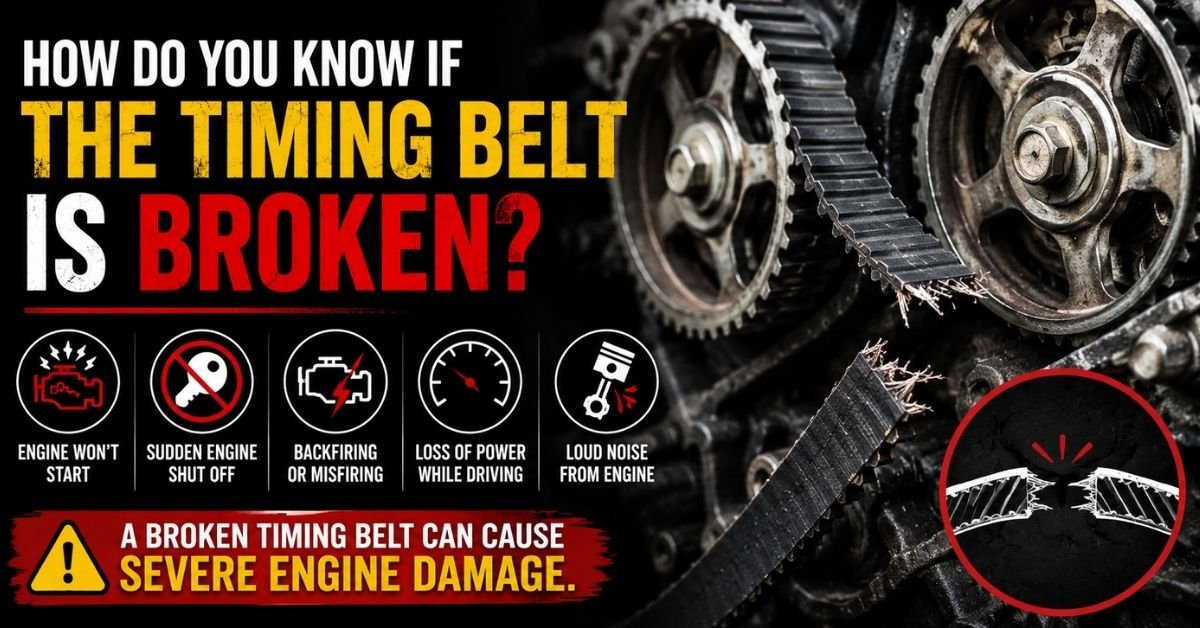
Knowing the signs of a broken timing belt can help you diagnose the problem quickly and avoid unnecessary repairs. So, how do you know if the timing belt is broken? There are several common symptoms to watch for, including an engine that suddenly stops, unusual cranking sounds, and an engine that will not start.
The Engine Suddenly Stops Running
One of the most obvious signs of a broken timing belt is an engine that suddenly shuts off while driving. If the belt breaks, the camshaft may stop turning even though the crankshaft continues to rotate. This causes the engine to lose its correct valve timing.
The vehicle may feel as though the engine has simply switched off. In many cases, the dashboard and electrical systems will remain powered, but the engine will not continue running.
A sudden stall does not automatically mean the timing belt has broken. Problems with the fuel system, ignition system, crankshaft sensor, or electrical system can produce similar symptoms. However, a timing belt failure should be considered when an engine suddenly stops and then refuses to restart.
The Engine Cranks But Does Not Start
Another common symptom is an engine that cranks normally but does not start. When you turn the key or press the start button, you may hear the starter motor turning the engine over, but the engine will not fire.
A broken timing belt prevents the camshaft from operating correctly. Without proper camshaft movement, the valves cannot open and close at the right time, so the engine cannot complete its normal combustion cycle.
If your vehicle uses a timing belt, this is an important possibility to investigate when the engine cranks but will not start.
The Engine May Sound Different While Cranking
A broken timing belt can sometimes change the sound of the engine while you are trying to start it. Normally, an engine has a rhythmic cranking sound because the cylinders create resistance as the crankshaft rotates.
If the timing belt breaks, the camshaft may stop turning. Depending on the engine design, the starter may turn the engine more easily and quickly than usual.
This unusual cranking sound can be a useful clue, but it should not be used as the only diagnostic test. Different engine designs can produce different sounds, and a weak battery or starter problem can also change cranking behavior.
Checking Whether the Camshaft Is Turning
One way a technician can confirm a broken timing belt is by checking whether the camshaft is rotating while the engine is being cranked.
On some engines, this can be observed by removing an appropriate inspection cover. If the crankshaft turns but the camshaft does not, the timing belt may have broken or failed somewhere in the timing system.
However, accessing the timing belt or camshaft can require removing covers and other components. It is important to follow the manufacturer’s service procedure rather than removing parts unnecessarily.
A Diagnostic Scan May Provide Clues
A diagnostic scan tool can sometimes help identify a timing-related problem. Modern engines use sensors to monitor crankshaft and camshaft positions. If the engine computer detects that these signals are not synchronized, it may store a diagnostic trouble code.
Codes related to crankshaft and camshaft correlation can point toward a possible timing problem. However, these codes do not automatically prove that the timing belt is broken. A faulty sensor, damaged wiring, or incorrect mechanical timing can cause similar codes.
A proper diagnosis should consider the entire timing system rather than relying on one trouble code.
Must Read: How Do You Know If a Timing Belt Is Bad?
What Happens If You Keep Trying to Start the Engine?
If you suspect that a timing belt has broken, repeatedly trying to start the engine is generally not a good idea. Some engines are designed so that the pistons and valves can occupy the same space at different points in the combustion cycle. These are commonly called interference engines.
If the timing belt breaks on an interference engine, the loss of synchronization can allow pistons and valves to contact each other. This can result in expensive engine repairs.
For this reason, if your engine suddenly stops and you have strong reason to suspect a broken timing belt, it is better to have the vehicle properly diagnosed rather than repeatedly attempting to start it.
How Long Do Timing Belts Last?
Timing belt replacement intervals vary significantly between engines. Some manufacturers specify replacement based on mileage, time, or both. The recommended interval can often be found in the owner’s manual or maintenance schedule.
Even if the vehicle does not show any warning signs, an aging timing belt can eventually fail. The belt is made from reinforced rubber and can deteriorate with age, heat, mileage, and operating conditions.
Replacing the belt according to the manufacturer’s recommended schedule is one of the best ways to reduce the risk of unexpected failure.
Conclusion
So, how do you know if the timing belt is broken? Common clues include an engine that suddenly stops running, a vehicle that cranks but will not start, unusual cranking sounds, and evidence that the camshaft is no longer turning when the engine is cranked. Diagnostic trouble codes related to camshaft and crankshaft synchronization can also provide useful information.
However, these symptoms can have other causes, so a broken timing belt should be confirmed through proper diagnosis. If the timing belt has failed, especially on an interference engine, continuing to crank the engine can potentially make the damage worse.
If you suspect a timing belt failure, have the vehicle inspected as soon as possible. Checking the manufacturer’s maintenance schedule and replacing the timing belt at the recommended interval can also help prevent an unexpected breakdown and potentially costly engine damage.