
If you’ve ever left your car parked for an extended period—whether during a vacation, busy schedule, or simply because you don’t drive often—you may wonder: how long can a car sit before the battery dies? The answer depends on several factors, including the type of battery, the condition of the vehicle, and external conditions. Let’s dissect it in a straightforward and useful manner.
How much time can an automobile sit before the battery runs out?
Average Time a Car Battery Can Last Without Driving
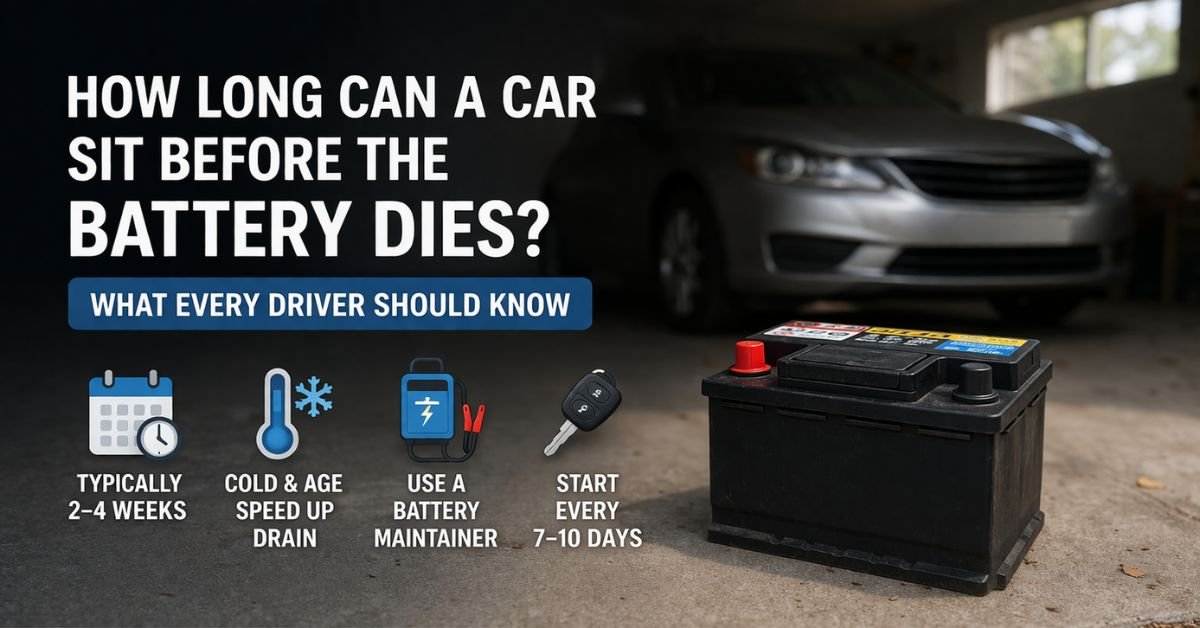
In general, a healthy car battery can last about 2 to 4 weeks without the engine being started. After this period, there’s a good chance the battery may become too weak to start the car.
However, this is only a rough estimate. Some vehicles may start after sitting for a month, while others may struggle after just two weeks.
Why Does a Battery Drain When the Car Is Off?
Even when your car is turned off, the battery is still being used. Modern vehicles have many electronic systems that continue to draw power, such as:
- Alarm systems
- Clock and onboard computer
- Keyless entry systems
- Infotainment memory
These small power draws are known as parasitic drains. Over time, they slowly reduce the battery’s charge.
Factors That Affect Battery Life While Sitting
1. Battery Age and Condition
An older battery will lose charge much faster than a new one. Most car batteries last between 3 to 5 years, and as they age, their ability to hold a charge decreases.
2. Weather Conditions
Temperature plays a major role:
- Cold weather slows down chemical reactions inside the battery, making it harder to start the car.
- Hot weather can cause the battery to discharge faster and degrade more quickly.
3. Vehicle Type
Modern cars with advanced electronics tend to drain the battery faster than older vehicles. Luxury cars and vehicles with lots of tech features often consume more power even when turned off.
4. Battery Type
Different batteries behave differently:
- Lead-acid batteries (most common) discharge faster when idle
- AGM (Absorbent Glass Mat) batteries hold charge longer and are more resistant to drain
5. External Electrical Issues
Faulty wiring or a malfunctioning component can cause excessive battery drain, even when the car is off.
Signs Your Battery Is About to Die
If your car has been sitting for a while, watch for these warning signs:
- Slow engine crank when starting
- Dim headlights
- Clicking sound when turning the key
- Electrical systems behaving erratically
These signs usually mean your battery is low or close to dead.
Must Read: How to Remove OEM Battery Vent Tube in Audi?
How to Prevent Your Car Battery from Dying
If you plan to leave your car unused for a while, there are several ways to keep the battery healthy:
1. Start the Car Regularly
Starting your car once every 7–10 days and letting it run for 10–15 minutes can help recharge the battery.
2. Use a Battery Maintainer
A battery maintainer (also called a trickle charger) keeps the battery at an optimal charge level without overcharging it. This is one of the best solutions for long-term storage.
3. Disconnect the Battery
If you won’t be using your car for several weeks or months, disconnecting the battery can prevent parasitic drain.
4. Keep the Battery Clean
Corrosion on battery terminals can reduce efficiency. Cleaning the terminals helps maintain a good connection.
5. Store the Car in a Garage
Parking in a garage protects the battery from extreme temperatures, helping it retain charge longer.
What Happens If the Battery Fully Dies?
If your battery completely dies, the car won’t start. In most cases, you can fix this by:
- Jump-starting the battery
- Charging it with a battery charger
However, if the battery has been dead for too long, it may no longer hold a charge and will need replacement.
Final Thoughts
So, how long can a car sit before the battery dies? In most cases, 2 to 4 weeks is the typical range for a healthy battery. However, factors like weather, battery age, and vehicle electronics can significantly shorten or extend this time.
If you know your car will sit unused, taking simple precautions—like starting it regularly or using a battery maintainer—can save you from the inconvenience of a dead battery.
By understanding how your battery works and what affects it, you can keep your car ready to go whenever you need it.