
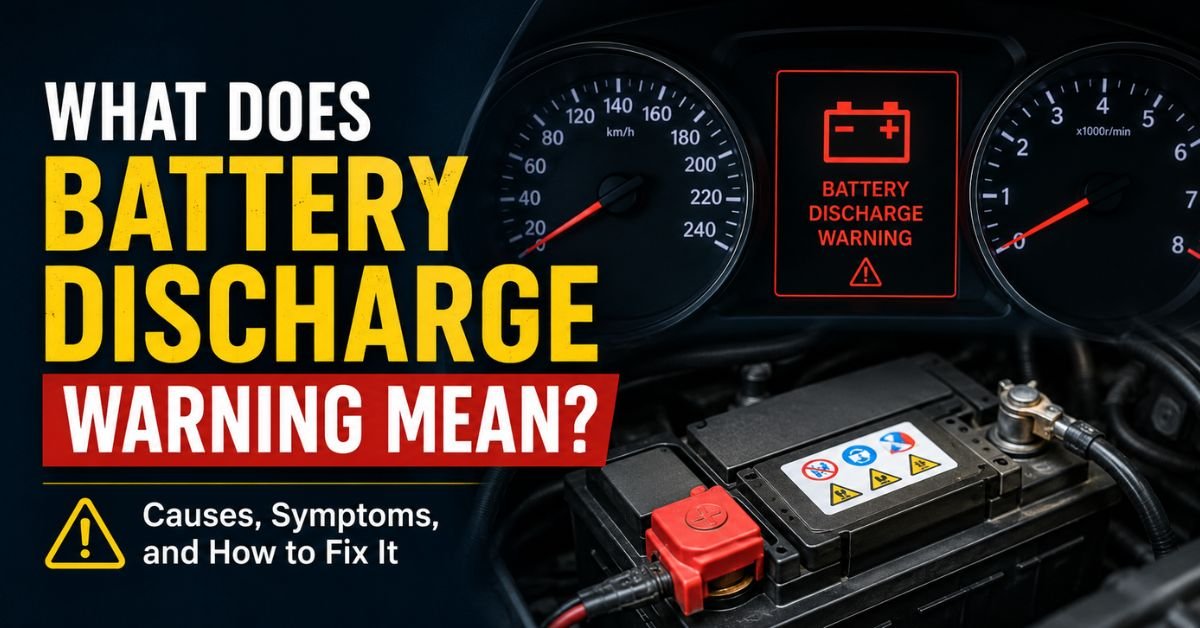
If you have ever seen a “Battery Discharge Warning” message appear on your vehicle’s dashboard or infotainment screen, it can be confusing and even a little alarming. Many drivers immediately think the battery is completely dead or that the car will stop working. In reality, this warning is often an early sign that your car’s electrical system is under stress and the battery may not be charging properly.
Understanding what this warning means can help you avoid unexpected breakdowns and expensive repairs. In this article, we will explain what a battery discharge warning is, what causes it, common symptoms, and how to fix the issue before it becomes serious.
What Does Battery Discharge Warning Mean?
What Is a Battery Discharge Warning?
A battery discharge warning is a message displayed by your car when the battery is losing power faster than it is being recharged. Modern vehicles rely heavily on electrical systems to power features such as headlights, infotainment screens, air conditioning, sensors, and engine control modules.
When the battery voltage drops below a safe level, the car’s computer triggers a warning to alert the driver. The warning may appear as:
- “Battery Discharge Warning”
- “Battery Saver Active”
- “Low Battery”
- “Battery Charging System Warning”
This warning does not always mean the battery itself is bad. Sometimes the charging system or electrical accessories are the real problem.
Common Causes of a Battery Discharge Warning
There are several reasons why your vehicle may display this warning message.
1. Weak or Old Battery
The average lifespan of an automobile battery is three to five years. As the battery ages, it loses its ability to hold a charge efficiently. An old battery may struggle to power the vehicle, especially during cold weather or short trips.
Signs of an aging battery include:
- Slow engine cranking
- Dim headlights
- Difficulty starting the vehicle
- Corrosion around battery terminals
If your battery is near the end of its lifespan, replacement may solve the issue.
2. Faulty Alternator
While the engine is operating, the alternator is in charge of charging the battery. The battery will progressively lose power if the alternator fails since it isn’t getting enough charge.
Symptoms of a bad alternator include:
- Flickering lights
- Electrical malfunctions
- Burning smell
- Battery warning light on the dashboard
A failing alternator is one of the most common causes of a battery discharge warning.
3. Excessive Electrical Usage
Using too many electrical accessories while the engine is off can quickly drain the battery. Leaving headlights, interior lights, or the radio on for an extended period may trigger the warning.
Modern vehicles also consume battery power even when parked because systems like alarms and keyless entry remain active.
4. Loose or Corroded Battery Connections
Battery terminals must have a clean and secure connection. Corrosion or loose cables can interrupt electrical flow and prevent proper charging.
You may notice:
- Intermittent starting problems
- Dashboard warning lights
- Sudden power loss
Cleaning the terminals and tightening the connections can sometimes resolve the problem.
5. Short Trips and Infrequent Driving
Short drives may not give the alternator enough time to fully recharge the battery. If you frequently drive only a few minutes at a time, the battery may slowly discharge over time.
This is especially common in winter months when batteries already work harder due to cold temperatures.
What Happens If You Ignore the Warning?
Ignoring a battery discharge warning can eventually leave you stranded with a dead battery. Since modern vehicles depend heavily on electronics, low battery voltage can also cause:
- Engine starting failure
- Loss of power steering assistance
- Malfunctioning sensors
- Infotainment system shutdowns
- Transmission or engine performance issues
In severe cases, the vehicle may stop running entirely if the charging system fails completely.
Must Read: How to Replace the Battery in a Ford Key Fob?
How to Fix a Battery Discharge Warning
The best way to fix the issue depends on the underlying cause. Here are some basic troubleshooting steps.
Check the Battery
Inspect the battery for corrosion, leaks, or swollen sides. If the battery is more than a few years old, consider having it tested at an auto parts store or repair shop.
Inspect Battery Cables
Verify that the battery terminals are corrosion-free and tight. Cleaning the terminals with a battery cleaning brush can improve the connection.
Test the Alternator
If the battery tests good but the warning continues, the alternator may not be charging properly. A mechanic can test the charging system using specialized equipment.
Reduce Electrical Load
Turn off unnecessary accessories when the engine is not running. Avoid leaving lights or electronics on for long periods.
Drive Longer Distances Occasionally
Taking the car on a longer drive allows the alternator enough time to recharge the battery fully.
Is a Battery Discharge Warning Still Valid for Driving?
In some cases, yes, but it is risky. If the warning is caused by a weak battery, the car may continue operating temporarily. However, if the alternator is failing, the battery will eventually run out of power and the vehicle could shut down unexpectedly.
It is best to diagnose the problem as soon as possible instead of continuing to drive for extended periods.
Final Thoughts
A battery discharge warning is an important alert that should never be ignored. It usually means your car battery is losing charge faster than it can recover. The issue may be caused by an aging battery, a faulty alternator, poor electrical connections, or excessive power usage.
By addressing the warning early, you can prevent breakdowns and avoid more costly repairs later. Regular battery maintenance and charging system checks are the best ways to keep your vehicle reliable and running smoothly.