
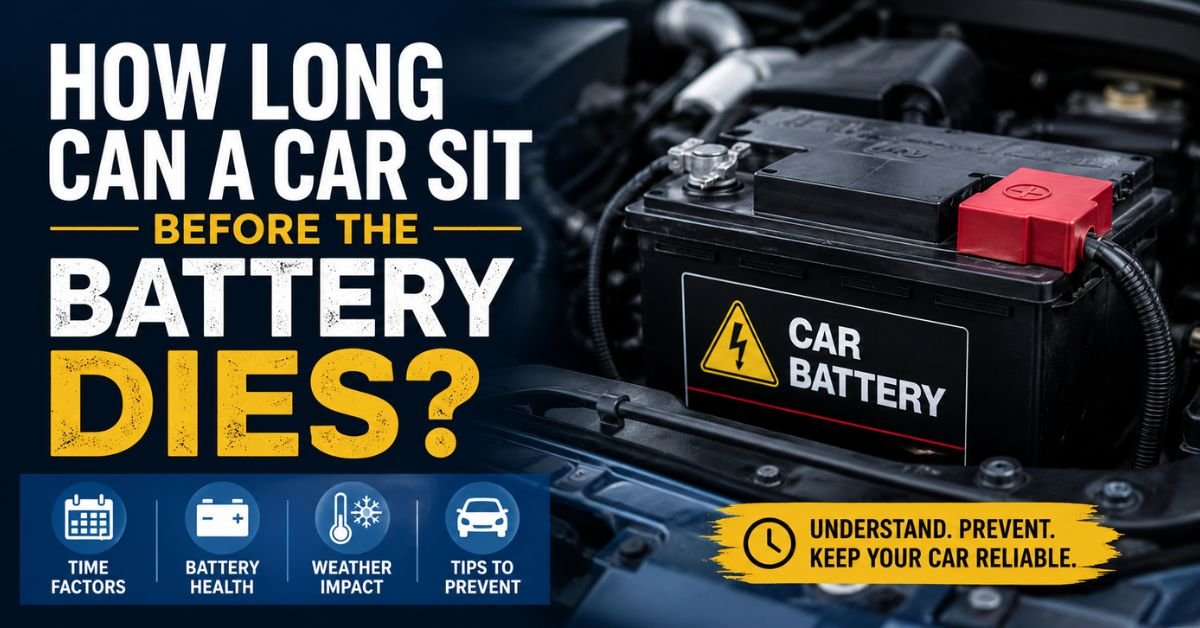
Many drivers have experienced the frustration of turning the key or pressing the start button only to discover a dead battery. If you leave your vehicle parked for too long, the battery can slowly lose its charge even when the car is not being used. So, how long can a car sit before the battery dies? The answer depends on several factors, including the age of the battery, weather conditions, and the type of vehicle you drive.
In most cases, a healthy car battery can sit unused for about two to four weeks before losing enough charge to prevent the engine from starting. However, some cars may last longer, while others can die in just a few days if there is an electrical drain or the battery is already weak.
How much time can an automobile sit before the battery runs out?
Why Car Batteries Lose Charge While Sitting
Even when your car is turned off, the battery still powers certain systems. Modern vehicles continue running small electronic components such as:
- Clock and radio memory
- Alarm systems
- Keyless entry systems
- GPS tracking devices
- Computer modules
These systems create what is called a parasitic drain, which slowly consumes battery power over time. While the drain is usually small, it can eventually discharge the battery if the vehicle remains unused for too long.
Average Time a Car Battery Lasts Without Driving
The approximate amount of time an automobile can be left running before its battery runs out is as follows:
- New battery in good condition: 2–4 weeks
- Older battery (3–5 years old): 1–2 weeks
- Cold weather conditions: As little as a few days
- Vehicles with advanced electronics: Around 1–2 weeks
- Hybrid or luxury vehicles: Often shorter due to more electronic systems
If the battery is already weak or damaged, the car may fail to start after sitting for only a few days.
Factors That Affect Battery Life While Sitting
1. Battery Age
Older batteries lose their ability to hold a charge effectively. Most car batteries last between 3 and 5 years. As they age, they discharge faster when the vehicle is parked.
2. Weather Conditions
Extreme temperatures have a major impact on battery performance.
- Cold weather slows chemical reactions inside the battery and reduces cranking power.
- Hot weather can evaporate battery fluid and damage internal components.
Cars parked outdoors in freezing or extremely hot temperatures are more likely to develop battery problems.
3. Vehicle Electronics
Modern cars use more electronics than older vehicles. Features like remote start, security systems, and infotainment units continue drawing power after the engine is turned off.
Luxury vehicles and hybrids often have higher standby power consumption, which can shorten battery life while parked.
4. Battery Condition
A battery with corrosion, low charge, or internal damage will die faster than a healthy battery. Loose terminals can also affect charging performance.
5. Frequency of Driving
Short trips may not give the alternator enough time to fully recharge the battery. If you only drive occasionally or for a few minutes at a time, the battery may gradually weaken.
Signs Your Battery Is Dying After Sitting
If your car has been parked for a while, watch for these warning signs:
- Slow engine cranking
- Clicking sound when starting
- Dim headlights
- Electrical systems not working properly
- Dashboard battery warning light
These symptoms usually indicate the battery voltage is too low.
Must Read: How Does the Lexus RX400h Hybrid Battery Charge?
How to Prevent a Car Battery From Dying
Fortunately, there are several ways to keep your battery healthy during long periods of inactivity.
Drive the Car Regularly
Starting and driving your vehicle for at least 15–30 minutes once a week helps recharge the battery.
Use a Battery Maintainer
A battery maintainer or trickle charger keeps the battery fully charged while the car is parked. This is especially useful for seasonal vehicles or cars stored during winter.
Disconnect the Battery
If you plan to leave the vehicle unused for several weeks, disconnecting the negative battery terminal can reduce parasitic drain. However, this may reset electronic settings in the car.
Store the Car in a Garage
Keeping the vehicle in a temperature-controlled garage protects the battery from extreme heat and cold.
Check Battery Health
Regular battery testing can identify weak batteries before they fail completely. Most auto parts stores offer free battery testing services.
Can a Dead Battery Be Recharged?
Yes, in many cases a dead battery can be recharged using jumper cables or a battery charger. However, if the battery repeatedly dies or cannot hold a charge, replacement may be necessary.
A fully discharged battery that remains dead for an extended period may suffer permanent damage. Sulfation can occur inside the battery, reducing its lifespan and performance.
Final Thoughts
So, how long can a car sit before the battery dies? For most vehicles, the battery can last around two to four weeks without driving. However, factors such as battery age, weather, and vehicle electronics can shorten that time significantly.
If you plan to leave your car parked for an extended period, taking preventive steps like using a battery maintainer or driving the vehicle occasionally can help avoid a dead battery. Proper battery care not only prevents inconvenience but also extends the overall life of your vehicle’s electrical system.