
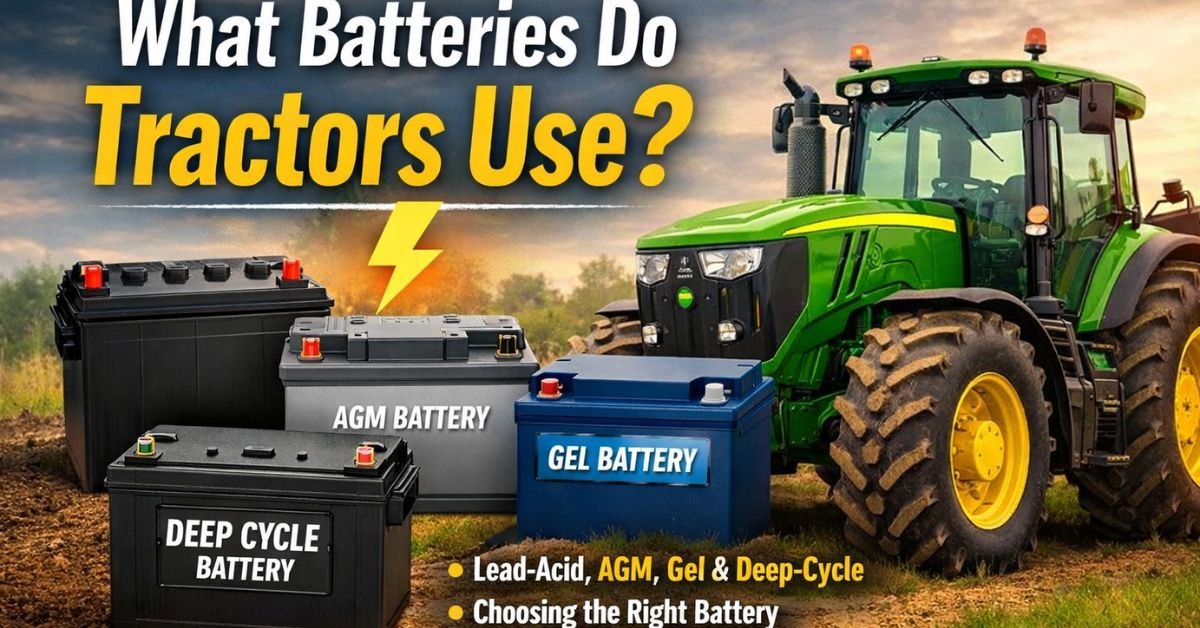
Tractors are powerful machines designed to handle demanding agricultural and industrial tasks. Whether you’re plowing fields, hauling heavy loads, or running attachments, your tractor relies heavily on a dependable battery to start and operate efficiently. But many people ask: what batteries do tractors use? In this guide, we’ll break down the different types of tractor batteries, their features, and how to choose the right one for your needs.
What Batteries Do Tractors Use? A Complete Guide
Understanding Tractor Batteries
Tractor batteries are typically lead-acid batteries, similar to those used in cars, but they are often built to withstand tougher conditions. Tractors operate in environments that include extreme temperatures, dust, vibration, and long idle periods, so their batteries must be durable and reliable.
Unlike regular car batteries, tractor batteries are designed with higher cranking power and stronger construction to handle heavy-duty engine starts and long working hours.
Common Types of Tractor Batteries
1. Flooded Lead-Acid Batteries
Flooded lead-acid batteries are the most common type used in tractors. They contain liquid electrolyte (a mix of sulfuric acid and water) and are known for being cost-effective and widely available.
Key features:
- Affordable and easy to replace
- Reliable performance in most conditions
- Requires regular maintenance (checking water levels)
These batteries are ideal for farmers or operators looking for a budget-friendly solution and who don’t mind occasional maintenance.
2. AGM (Absorbent Glass Mat) Batteries
AGM batteries are a more advanced version of lead-acid batteries. Instead of liquid electrolyte, they use a fiberglass mat to hold the acid in place. This makes them spill-proof and more resistant to vibration.
Key features:
- Maintenance-free
- Better performance in extreme temperatures
- High resistance to vibration and shocks
- Longer lifespan compared to flooded batteries
AGM batteries are great for modern tractors or equipment that operates in rough environments.
3. Gel Batteries
Gel batteries use a thick, gel-like electrolyte instead of liquid. They are sealed and maintenance-free, making them convenient for users who prefer low upkeep.
Key features:
- Completely sealed and spill-proof
- Long service life
- Performs well in deep-cycle applications
However, they are generally more expensive and sensitive to overcharging, so they require compatible charging systems.
4. Deep-Cycle Batteries
Some tractors, especially those running multiple electrical accessories or attachments, use deep-cycle batteries. These batteries are designed to provide a steady amount of power over a longer period rather than a quick burst for starting.
Key features:
- Ideal for powering attachments and electronics
- Can handle repeated discharge and recharge cycles
- Longer durability under heavy usage
Deep-cycle batteries are often used alongside starter batteries in larger or specialized tractors.
Must Read: How to Change the Battery in a Honda Key Fob?
Key Specifications to Consider
When choosing a tractor battery, you should pay attention to the following factors:
Cold Cranking Amps (CCA)
CCA measures the battery’s ability to start the engine in cold weather. Tractors often require higher CCA ratings because of their larger engines.
Voltage
Most tractors use 12-volt batteries, but some older or larger models may use 6-volt systems or multiple batteries combined.
Battery Size and Fit
Tractor batteries come in different sizes (group sizes). Always check your tractor’s manual to ensure the battery fits properly in the compartment.
Durability
Since tractors operate in rough conditions, look for batteries that are resistant to vibration and extreme temperatures.
Choosing the Right Battery for Your Tractor
The best battery for your tractor depends on how you use it:
- Light use or small farms: A standard flooded lead-acid battery is usually sufficient.
- Heavy-duty or commercial use: AGM batteries offer better performance and durability.
- Frequent use of attachments: Consider adding or using a deep-cycle battery.
- Low-maintenance preference: AGM or gel batteries are the best options.
Maintenance Tips for Longer Battery Life
To get the most out of your tractor battery, follow these simple tips:
- Maintain the battery terminals’ cleanliness and corrosion resistance.
- Check and maintain proper charge levels
- Store the tractor in a dry, sheltered place when not in use
- For flooded batteries, regularly check electrolyte levels
- Avoid letting the battery fully discharge
Conclusion
Tractors primarily use lead-acid batteries, including flooded, AGM, gel, and deep-cycle types. Each type has its own advantages depending on your usage, budget, and maintenance preferences. By understanding the differences and choosing the right battery, you can ensure reliable performance and extend the life of your tractor.
Investing in a quality battery and maintaining it properly will keep your tractor running smoothly for years to come.