
If your engine has lost power, developed rough idling, or uses more fuel than usual, carbon buildup on the pistons may be part of the problem. Many vehicle owners assume the cylinder head must be removed to clean the pistons, but that’s not always necessary. In many cases, you can reduce carbon deposits using less invasive methods that save both time and money.
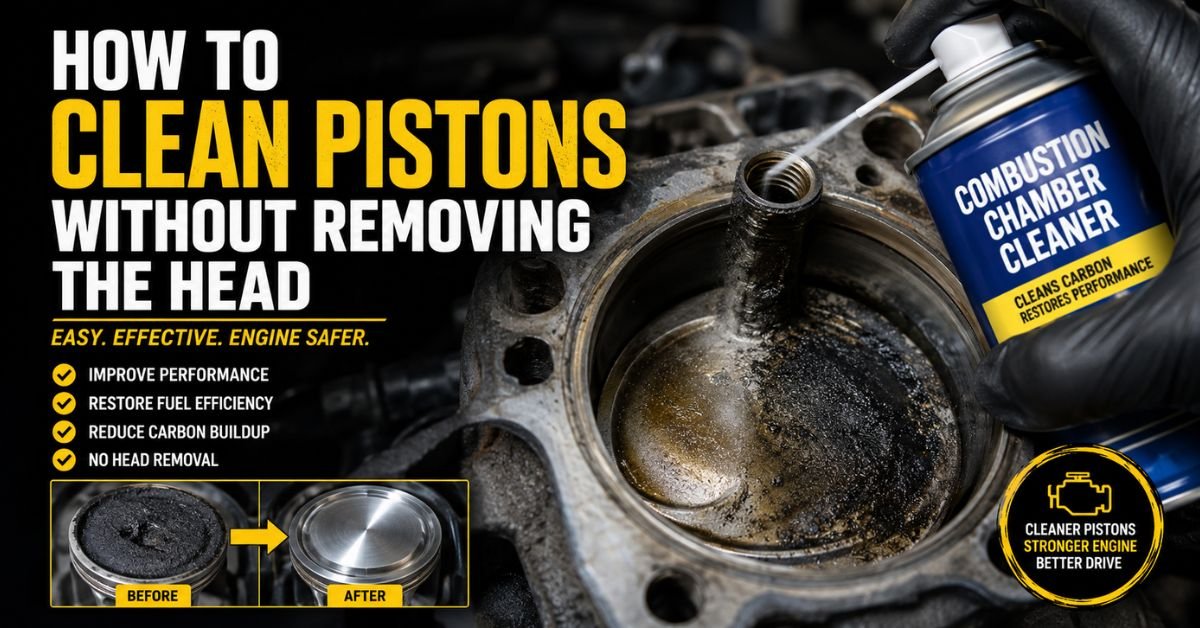
How to Clean Pistons Without Removing the Cylinder Head (Complete DIY Guide)
In this guide, you’ll learn how to clean pistons without removing the head, which methods work best, the tools you’ll need, and when a full engine teardown is unavoidable.
Can You Clean Pistons Without Removing the Head?
Yes, you can clean piston tops without removing the cylinder head, but only to a certain extent. Since the pistons remain inside the engine, you’ll only be able to remove carbon deposits from the exposed surfaces through the spark plug holes or by using intake cleaning methods.
These techniques are ideal for:
- Light to moderate carbon buildup
- Routine engine maintenance
- Improving combustion efficiency
- Reducing engine knocking caused by deposits
However, they won’t remove heavy sludge, repair damaged pistons, or clean piston rings that are severely stuck.
Signs Your Pistons May Need Cleaning
Carbon deposits build up gradually over thousands of miles. You may notice the following symptoms:
- Engine knocking or pinging
- Rough idle
- Reduced fuel economy
- Loss of engine performance
- Increased exhaust emissions
- Hard starting
- Occasional misfires
If these symptoms are caused by carbon buildup rather than mechanical damage, cleaning the pistons may help restore performance.
Tools and Materials You’ll Need
Before getting started, gather these supplies:
- Piston or combustion chamber cleaner
- Fuel system cleaner (optional)
- Spark plug socket
- Ratchet and extension
- Compressed air
- Small inspection camera (optional)
- Shop towels
- Safety gloves
- Safety glasses
Avoid using screwdrivers, wire brushes, or metal tools inside the combustion chamber, as they can scratch the piston or cylinder walls.
Method 1: Clean Through the Spark Plug Holes
This is one of the most effective ways to clean piston tops without removing the head.
Step 1: Allow the Engine to Cool
Spark plugs should never be taken out of a hot engine. Wait until the engine is completely cool to avoid thread damage.
Step 2: Remove the Spark Plugs
Carefully remove all spark plugs using the correct socket. Label ignition coils or wires if necessary.
Step 3: Position the Pistons
Rotate the engine by hand until the piston you’re cleaning is near the top of its travel. This reduces the chance of cleaner pooling inside the cylinder.
Step 4: Apply Combustion Chamber Cleaner
Spray the recommended amount of cleaner through the spark plug hole.
Allow it to soak for 15–30 minutes or follow the instructions on the product label.
Step 5: Remove Loosened Deposits
After soaking:
- Rotate the engine by hand several times.
- Blow compressed air into the spark plug hole.
- Use a vacuum adapter if available to remove loosened carbon.
Repeat the process if necessary.
Step 6: Reinstall Spark Plugs
Reinstall the spark plugs using the correct torque specification.
Start the engine. Some smoke from the exhaust is normal while the cleaner burns off.
Method 2: Use an Intake System Cleaner
Many manufacturers produce intake cleaners designed to remove carbon deposits from combustion chambers while the engine is running.
The process usually involves:
- Warming up the engine.
- Spraying cleaner into the intake according to the product instructions.
- Allowing the engine to idle.
- Driving the vehicle afterward to burn away loosened deposits.
This method cleans:
- Intake valves (on many port-injected engines)
- Combustion chambers
- Piston crowns
Although it won’t make the pistons look brand new, it can significantly reduce carbon buildup over time.
Method 3: Fuel System Cleaners
Fuel additives are the easiest solution, although they work more slowly.
Simply pour the recommended amount into your fuel tank before filling up.
Over several tanks of fuel, high-quality cleaners can help reduce combustion chamber deposits while also cleaning injectors and fuel passages.
This method is best used as preventive maintenance rather than for severe carbon buildup.
Must Read: Are Rotor Engines Louder Than Piston Engines?
What You Should Never Do
Avoid these common mistakes:
- Never scrape the piston with metal tools.
- Do not pour excessive amounts of liquid into the cylinder.
- Never crank the engine if a cylinder is filled with cleaner, as this can cause hydrolock.
- Avoid household chemicals that aren’t designed for engines.
- Do not ignore torque specifications when reinstalling spark plugs.
These mistakes can cause expensive engine damage.
When Cleaning Isn’t Enough
Sometimes carbon isn’t the real problem.
If your engine still has:
- Low compression
- Excessive oil consumption
- Persistent misfires
- Damaged piston rings
- Burned valves
then cleaning alone won’t solve the issue.
In these cases, removing the cylinder head for inspection and repair is the proper solution.
Tips to Prevent Future Carbon Buildup
You can reduce future deposits by following these maintenance habits:
- Use high-quality fuel.
- Change engine oil on schedule.
- Replace air filters regularly.
- Avoid frequent short trips where the engine never reaches operating temperature.
- Occasionally drive at highway speeds to help burn off deposits.
- Use a quality fuel system cleaner every few thousand miles if recommended for your vehicle.
Proper maintenance is far easier than removing carbon after it has accumulated.
Frequently Asked Questions
Does cleaning pistons improve performance?
Yes. Removing carbon deposits can improve combustion, reduce knocking, restore smoother idling, and sometimes improve fuel economy.
Can I use Sea Foam or similar products?
Many combustion chamber cleaners and fuel additives can help reduce carbon deposits when used according to the manufacturer’s instructions. Always follow the product directions for your specific engine.
Will piston cleaning fix oil burning?
Not usually. Oil burning is commonly caused by worn piston rings, valve seals, or other mechanical issues that require repair rather than cleaning.
How often should pistons be cleaned?
Most engines don’t require regular manual piston cleaning. Good maintenance practices and occasional use of appropriate fuel system cleaners are generally sufficient unless symptoms of carbon buildup appear.
Final Thoughts
Cleaning pistons without removing the cylinder head is a practical way to address light to moderate carbon buildup and may improve engine performance, fuel efficiency, and idle quality. Methods such as using a combustion chamber cleaner through the spark plug holes, applying an intake cleaner, or adding a quality fuel system cleaner can all help reduce deposits without the labor of a major engine teardown.
However, these techniques have their limits. If your engine has severe carbon accumulation, worn piston rings, or internal mechanical damage, removing the cylinder head and performing a thorough inspection is the only reliable solution. By combining proper maintenance with periodic carbon-cleaning treatments, you can keep your engine running more efficiently and help extend its service life.